
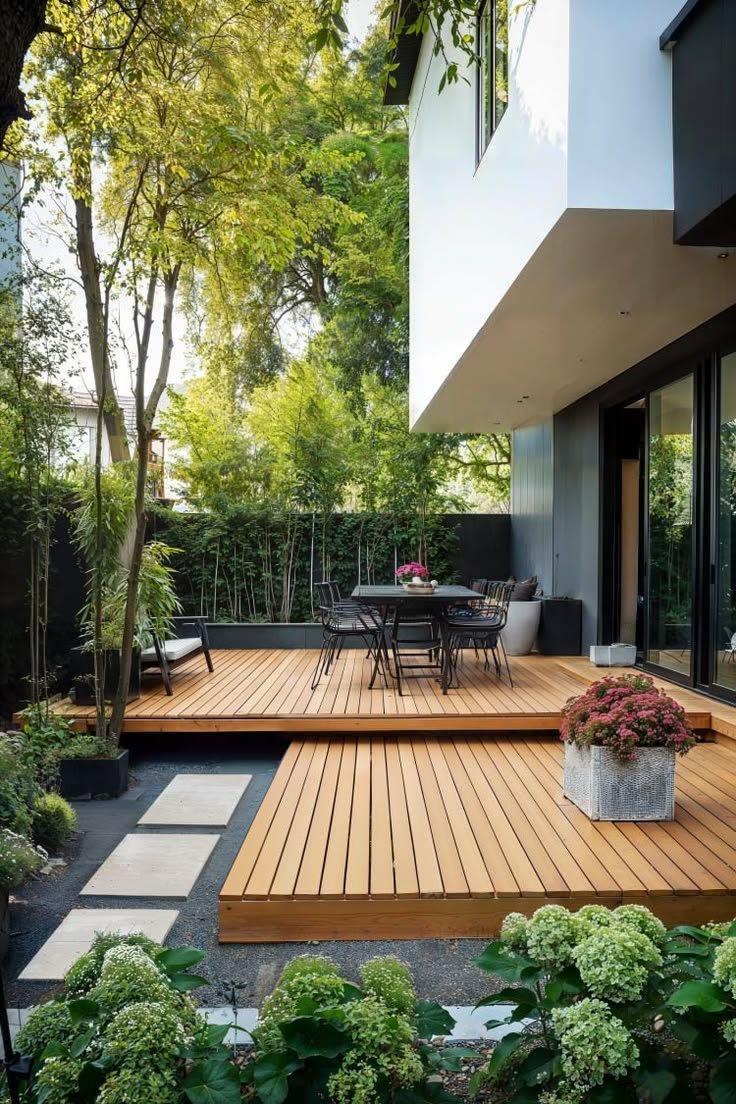
You’re dreaming of outdoor living space — morning coffee outside, summer dinners under the stars. But should it be a deck or a patio? The decision affects cost, maintenance, lifespan, and resale. So is it cheaper to build a deck or a patio? Almost always the patio — typically half the cost. But “cheaper” isn’t the whole story. Here’s the full comparison so you choose for the right reasons.
The Cost Comparison (2026 Averages)
- Ground-level patio (pavers/concrete): $8–$25/sq ft installed. A 300 sq ft patio: $2,500–$7,500. DIY paver patios run $5–$12/sq ft in materials.
- Wood deck (pressure-treated): $15–$35/sq ft installed. A 300 sq ft deck: $4,500–$10,500.
- Composite deck: $25–$45+/sq ft installed. A 300 sq ft deck: $7,500–$13,500+.
- Second-story deck: $30–$60+/sq ft — stairs, railings, and structural requirements escalate costs fast.
So yes — a patio typically costs 40–60% less than a comparable deck. A basic paver patio is the cheapest outdoor living space you can build. HomeAdvisor’s project cost data consistently shows patios as the budget winner across regions.
Is It Cheaper to Build a Deck or a Patio? Beyond the Build Cost
Maintenance
- Patio: nearly zero. Occasional weed-pulling between pavers, resealing every few years. Concrete may crack (control joints minimize this); pavers can be individually replaced.
- Wood deck: staining/sealing every 2–3 years ($500–$1,500 each time professionally, or a weekend DIY). Boards eventually need replacement (15–20 year lifespan typical).
- Composite deck: minimal — soap and water cleaning. Higher upfront, lower lifetime maintenance. 25–30 year lifespan.
Lifetime cost often favors the patio even more strongly than build cost does.
Lifespan and durability
Patios (pavers/concrete): 25–50+ years. Wood decks: 15–20 years. Composite: 25–30 years. A patio is a multi-decade investment; a wood deck is a recurring one.
Terrain and use case
This is where decks fight back: sloped yards need decks (or expensive retaining walls + fill for a patio). Raised access — a second-floor door to nowhere needs a deck, not a patio. Views: a raised deck captures views a ground patio can’t. Wet/low areas: decks stay above mud and drainage issues. If your yard is flat, the patio wins on every metric. If it’s not, the deck may be your only practical option.
Permits and complexity
Ground-level patios usually need no permit. Decks — especially raised designs or ones attached to the house — typically require permits, inspections, and code-compliant footings, railings, and ledger connections. More paperwork, more cost, more time.
Resale value
Both add value, but differently: decks historically recoup ~60–70% of cost at resale (composite slightly less due to higher cost basis); patios recoup ~50–60% but cost less to begin with. Neither is a profit center — build for your enjoyment, treat resale as a bonus.
The Hybrid Answer
Many homeowners do both: a ground-level patio for dining (cheap, durable, low-maintenance) plus a small deck or landing where elevation demands it. And don’t overlook the simplest option — a well-designed patio with low-maintenance landscaping around it delivers 90% of the outdoor-living joy at a fraction of either project’s cost.
DIY Potential
- Paver patio: very DIY-friendly. Excavate, compact gravel base, screed sand, lay pavers, sweep polymeric sand. A weekend warrior project — the work is laborious, not technical. Saves 50%+.
- Wood deck: DIY-able for ground-level simple rectangles if you’re comfortable with structural basics. Multi-story or complex designs: hire out (structural failures injure people).
- Composite deck: similar to wood for DIY, but material costs hurt mistakes more.
Making the Space Livable: Beyond the Surface
The deck-vs-patio decision is about the platform — but the space becomes livable with what surrounds it:
- Shade. An unshaded southern deck or patio is unusable on summer afternoons. Options by budget: umbrella ($100–$300), shade sail ($50–$200 + posts), pergola ($1,000–$3,000 DIY), retractable awning ($1,500–$4,000). Shade is the difference between a space you use and a space you photograph.
- Lighting. String lights ($20–$50) transform evening usability more than any other cheap upgrade. Solar path lights mark edges; a single warm floodlight extends the season.
- Privacy. Lattice screens, tall planters, or fast-growing hedges turn an exposed platform into a retreat. Privacy is the most underrated outdoor comfort factor.
- Traffic flow. Leave 3–4 feet of clear walking space around furniture groupings. Cramped layouts don’t get used — measure before buying the sectional.
- The ground around it. Mud pit surrounding a beautiful patio ruins the effect. Extend the hardscape with a gravel border, or tie it into the landscape with low-maintenance plantings that don’t demand weekend labor.
Budget the surroundings, not just the surface. A $4,000 patio with $800 of shade, lighting, and planting gets used daily; a $9,000 deck with nothing around it gets admired from the window. And the whole project should serve the home’s first impression too — outdoor living space done well is curb appeal you can sit in, visible from the street and the soul of summer evenings alike.
The Permit Question (Don’t Skip This)
Decks usually need permits; patios often don’t — but “usually” isn’t a building code. Call your local permit office before buying materials: setback requirements, footing depths, and railing codes vary wildly by municipality, and an unpermitted deck can torpedo a future home sale (buyers’ inspectors check). Permit fees typically run $100–$500 — cheap insurance against a teardown order. Patios aren’t automatically exempt either: some areas regulate impervious surface coverage, and large patios can trigger drainage requirements. Ten minutes on the phone saves ten thousand dollars of regret. Also ask whether your municipality offers pre-approved deck plan templates — many do, and using one can fast-track approval from weeks to days.
The Practical Takeaway
A patio is cheaper to build (40–60% less), cheaper to maintain (nearly zero), and lasts longer (decades) than a deck — making it the clear winner for flat yards and tight budgets. Choose a deck when the terrain demands it (slopes, elevation, views, drainage) or when you specifically want that raised-deck experience. For most suburban flat lots, the smart money is a DIY paver patio: a few thousand dollars, one hardworking weekend, and an outdoor space you’ll use for decades.


