
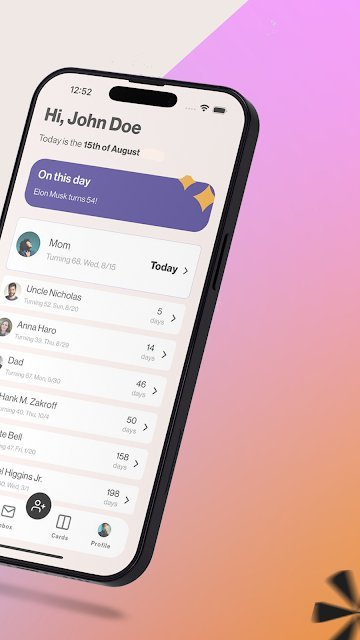
What Is the Best Way to Remember Important Birthdays? (Never Forget Again)
What is the best way to remember important birthdays? A system you set up once and then trust — because memory alone will betray you, every time. Forgetting a birthday feels awful for everyone: you’re embarrassed, they’re hurt, and the apology never quite lands the way remembering would have.
The good news: this is a solved problem. You don’t need a better memory; you need a capture system, automated reminders with enough lead time, and a gift-planning habit. Set it up in one 30-minute session and you’re covered for years.
Here’s the complete system.
Step 1: Capture Every Birthday Once (30 Minutes)
Sit down once and collect them all: scroll your contacts, check social media birthdays, ask your partner and parents for the extended family dates. Enter every single one into your phone’s calendar as an all-day recurring yearly event. Include the birth year if you know it — future milestone birthdays (30th, 50th) matter, and the calendar can compute ages.
Pro tip: add context in the event notes — “Mom — loves gardening, hates surprise parties.” Future gift-buying you will be grateful.
Step 2: Set Reminders With Real Lead Time
A day-of reminder is useless — you can’t buy and send a gift in hours. Set two alerts per birthday:
- Two weeks out: “buy/make gift for [name].” This is the action reminder — enough time to order online or shop thoughtfully.
- Day of (morning): “text/call [name] happy birthday.” The contact reminder.
For far-away people needing mailed gifts, add a three-week alert. The system works because the thinking happens at reminder time, not at panic time.
What Is the Best Way to Remember Important Birthdays Beyond Your Phone?
- Shared family calendar. Put birthdays on the family shared calendar so partners can cover for each other — and so nobody double-buys gifts.
- The birthday list on the fridge. A simple month-by-month list where everyone sees it. Low-tech, high-visibility, and kids learn the dates too.
- Annual review. Every January, spend 10 minutes reviewing the year’s birthdays: any milestones? Anyone new to add? Anyone to remove? Relationships change; the list should too.
The Gift Side: Never Scramble Again
- Keep a running gift-ideas note. When someone mentions wanting something in March, note it. By December you’re a gift genius instead of a panicked shopper.
- Batch the buying. Two online orders a year covering multiple upcoming birthdays beats twelve separate panics.
- Default gifts ready. Have a go-to for each category: the book you always gift, the restaurant gift card, the donation-in-their-name. Defaults eliminate decision fatigue.
- Experiences over stuff. “Dinner on me next month” or a planned outing is memorable, personal, and never the wrong size.
Thoughtful gift-giving is part of what makes family traditions meaningful — birthdays are often the anchor rituals families remember most. And for the holiday-adjacent birthdays, our family gathering guide helps when celebrations collide.
When You Forget Anyway (Recovery Protocol)
It’ll happen once. The recovery: acknowledge promptly and warmly (“I missed your birthday and I’m sorry — you deserved better”), then make it right with something personal and slightly extra — the lunch date, the handwritten note, the gift that shows thought. Belated + thoughtful beats on-time + generic. And add the extra reminder alert so it doesn’t happen twice.
Birthday Traditions Worth Starting
- The birthday interview. Same questions yearly (favorite thing, best memory, wish for next year) — recorded or written. The answers over a decade are priceless.
- The birthday breakfast. Their favorite, in bed or at the table with candles. Simple, personal, repeatable.
- Choose-your-day. The birthday person picks everything for one day — meals, activities, no compromises. Autonomy is the gift.
- The letter. A real handwritten letter every year, kept in a box. In the age of texts, a letter is an heirloom.
- Experience over stuff. The trip, the class, the show together. Memories appreciate; objects depreciate.
- The reverse birthday. On your birthday, you do something kind for someone else. Teaches kids the joy loop early.
Remembering the Hard Birthdays (Milestones and Grief)
Milestone birthdays (30, 40, 50, 60…) deserve extra thought — they’re identity moments, not just dates. Ask what would feel meaningful rather than assuming a party: some want celebration, others want quiet acknowledgment. The 40th birthday trip with old friends beats the surprise party for the introvert who hates surprises.
And remember the birthdays of people who’ve died — for the grieving, that date still matters enormously. A text (“thinking of you and your mom today”) costs nothing and means everything. Hallmark’s card-sending reminders can help track these, but the real system is caring enough to note them. The birthdays we remember for others are really about telling people they matter — living or gone.
Birthday Money Etiquette
The awkward parts, answered: how much to spend (spend what the relationship warrants, not what the invitation implies — the $50 kids’ party doesn’t obligate $50), group gifts (almost always better — one great gift beats five mediocre ones, and it removes the competition), cash vs. gift (cash is fine and often preferred — the “impersonal” worry is outdated; pair it with a real card), regifting (acceptable if it’s new, suits the recipient, and isn’t from someone in the same circle), and thank-yous (send them — the two-minute note is increasingly rare and therefore increasingly valued).
For kids’ birthdays specifically: the present-opening performance matters less than you think, experiences beat objects for most kids over 8, and the best gift is often your full attention (the birthday date with a parent beats the pile of toys). Money etiquette isn’t about the money — it’s about making people feel valued without making anyone uncomfortable, including yourself.
The Bottom Line
Remembering birthdays reliably takes one 30-minute setup: capture every date as a recurring calendar event with context notes, set two-week and day-of reminders, keep a running gift-ideas note, and review annually. Memory is unreliable; systems aren’t. Set it up once, and you’ll be the person who always remembers — which is a lovely reputation to have.


