
What Is the Best Way to Organize Kitchen Cabinets? (Zone by Zone)
What is the best way to organize kitchen cabinets? Zone them by task — cooking, prep, dishes, food storage — so everything lives where you actually use it. Most kitchen chaos isn’t a space problem; it’s a logic problem. The spatulas live three steps from the stove, the coffee stuff is scattered across two cabinets, and nobody can find the lids.
I reorganized my kitchen using the zone method last spring, and cooking genuinely got faster and less annoying. Here’s the full process, zone by zone.
One rule before we start: declutter first, organize second. Organizing clutter just gives mess a nicer container.
Step 1: Empty, Purge, Then Zone
Take everything out — yes, everything. It’s the only way to see what you actually own. Purge ruthlessly: duplicates, gadgets you used once, chipped dishes, expired food, the plastic container graveyard. If your purge stalls, our weekend decluttering plan has the kitchen section covered.
Then assign zones based on your kitchen’s workflow:
- Cooking zone (around the stove): oils, spices, spatulas, pots, pans. Everything you grab while cooking.
- Prep zone (near the main counter/sink): cutting boards, knives, mixing bowls, colander.
- Dishes zone (near the dishwasher/sink): everyday plates, bowls, glasses, mugs.
- Food storage zone (pantry area): dry goods, canned items, snacks.
- Coffee/breakfast station: group it together — maker, mugs, filters, sweeteners. One cabinet, morning solved.
The Principles That Make It Stick
- Store things where you use them. This is the whole game. Glasses near the fridge/dishwasher, pots near the stove. Every step saved, multiplied by daily use, is real time back.
- Everyday items at eye level. Prime real estate goes to daily-use items. Occasional stuff (the turkey roaster, fondue set) goes high or low.
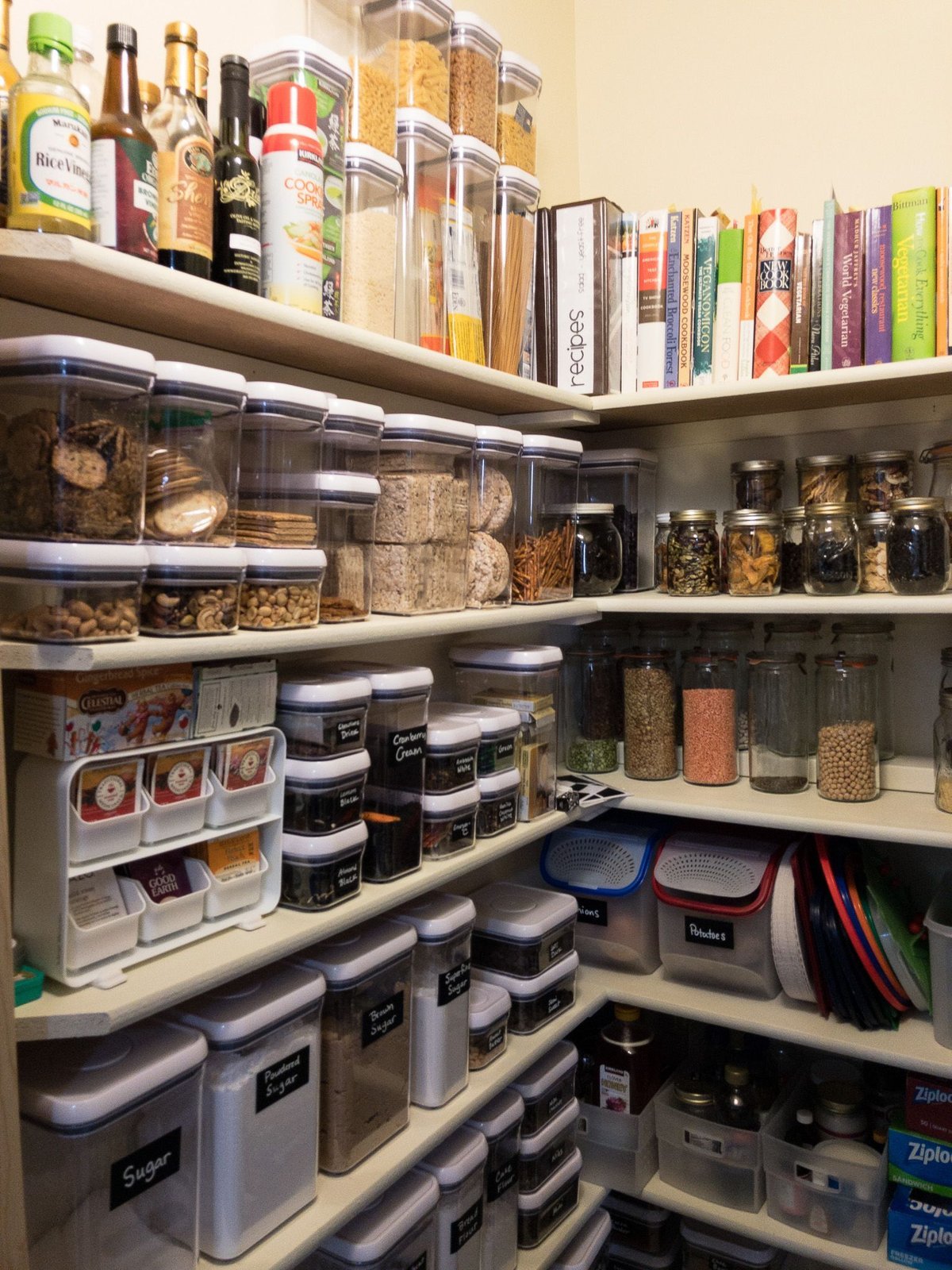
- Decant the chaos. Matching clear containers for flour, sugar, rice, snacks — you see what you have, things stack neatly, and the pantry looks calm.
- Contain small things. Bins and baskets turn cabinet interiors from junk drawers into filing systems. Label them if your household needs the hint.
- Use vertical space. Shelf risers double cabinet capacity. Hooks inside doors hold measuring cups. A lazy Susan rescues deep corner cabinets from the void.
What Is the Best Way to Organize Kitchen Cabinets on a Budget?
You don’t need a container-store overhaul. Dollar-store bins, tension rods as dividers, shelf risers from discount stores, and repurposed jars handle 90% of it. The expensive organizers are nice, but the zone logic matters ten times more than the products.
Best $20 you’ll spend: a set of shelf risers and a couple of turntables. They open up the dead space in deep cabinets that currently swallows your stuff.
Tackle the Usual Problem Spots
- Under the sink: tension rod for spray bottles, small bin for sponges and brushes, pull-out caddy if you can. Toss the 14 half-used cleaners — keep one all-purpose.
- The lid situation: a file organizer or rack stores lids vertically. Life-changing, I’m not exaggerating.
- Spices: one system — all in a drawer on risers, or all on a tiered rack. Alphabetical if you’re that person (no judgment).
- Junk drawer: everyone gets one. Drawer dividers keep it from becoming a black hole. Purge it quarterly.
- Pantry: group by category, oldest in front, bins for packets and snacks. A 10-minute monthly reset keeps it from reverting.
Once the kitchen’s dialed in, apply the same zone thinking house-wide — it pairs naturally with a realistic weekly cleaning schedule since an organized kitchen is dramatically faster to clean.
Maintain It (The 2-Minute Rule)
Organization decays without maintenance, but maintenance is tiny: put things back in their zone immediately (the 2-minute rule — if it takes less than two minutes, do it now), and do a 5-minute cabinet reset weekly when you wipe counters. Systems survive on small consistent inputs, not big reorganizations.
Small Kitchen? The Cabinet Strategy Changes
Tiny kitchens need ruthless prioritization: if you use it weekly, it earns cabinet space; if monthly, it goes high/low; if yearly, it leaves the kitchen entirely (the turkey roaster lives in the garage now). In small kitchens, the prime real estate rule is absolute — everyday items at eye level near their use point, everything else exiled.
Maximize with vertical thinking: risers in every cabinet, hooks on every door interior, a magnetic knife strip instead of a block, and wall-mounted storage for the frequently used. Better Homes & Gardens’ small-kitchen storage ideas have visual inspiration if you need to see it to believe it. And remember the multiplier: in a small kitchen, every organized cabinet saves you daily minutes — the ROI on an hour of organizing is enormous.
The Pantry Deep-Dive
- Empty it completely. Once a year, everything out. You’ll find the archaeological layers — the 2019 coconut flour, the three half-used baking sodas.
- Check every date. Toss the expired, plan meals around the soon-to-expire. This one purge often reveals a week of meals.
- Decant the staples. Clear airtight containers for flour, sugar, rice, pasta, snacks. Uniform containers transform chaos into calm — and you can see at a glance what needs restocking.
- Zone it like the cabinets. Baking zone, breakfast zone, snacks zone, canned goods zone. Labels on bins if your household needs them (they do).
- The “eat me first” bin. One clear bin for items nearing expiration or already open. Check it when meal planning — it’s the anti-waste engine.
Drawer Organization in 20 Minutes
Drawers are where kitchen organization goes to die — or gets reborn in 20 minutes. Empty one drawer completely, toss the broken and duplicate, then add dividers (bamboo trays, or even small boxes). The rule: everything visible at a glance, nothing stacked more than two deep. Utensil drawer, junk drawer, spice drawer — one per week and the whole kitchen’s drawers transform in a month. The test: can you find anything in 5 seconds with one hand? If yes, the drawer works.
The Bottom Line
The best way to organize kitchen cabinets is to declutter first, then zone by task — cooking near the stove, prep near the sink, dishes near the dishwasher — with everyday items at eye level and simple organizers that open up vertical space. Do it once, maintain it in minutes, and your kitchen stops fighting you.


