
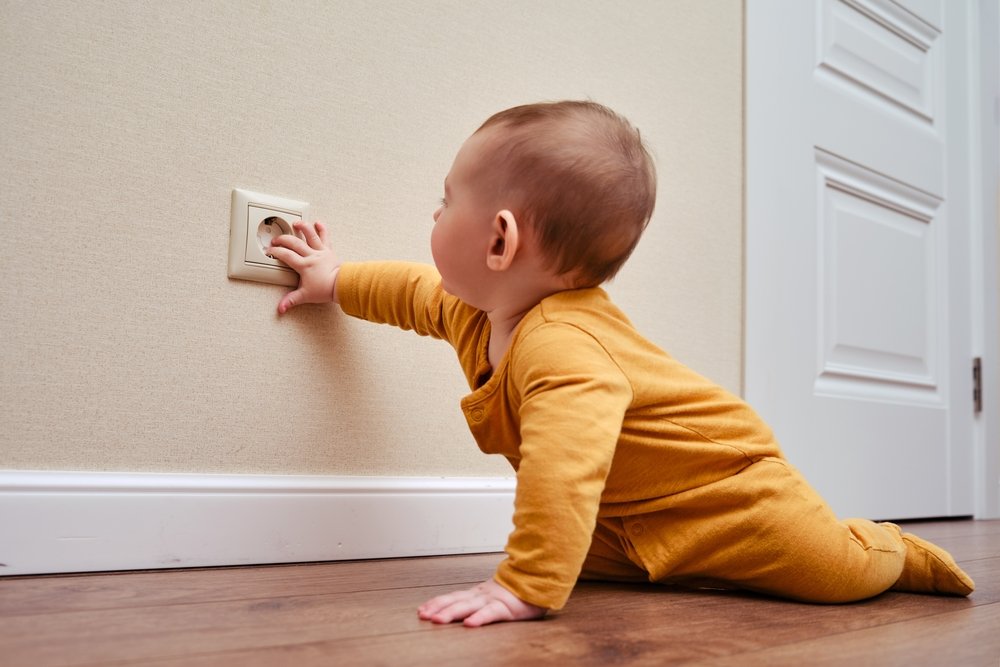
Babies are adorable chaos agents with no sense of self-preservation and an unerring instinct for the most dangerous object in any room. Childproofing isn’t about wrapping your home in bubble wrap — it’s about neutralizing the real hazards efficiently. So what is the best way to childproof a home? Get on the floor at your child’s eye level, think like a curious toddler, and work room by room through this checklist. Here’s what matters, in priority order.
The Big Three (Do These First, Today)
These cause the most serious injuries — handle them before anything else:
- Anchor all furniture. Dressers, bookshelves, TVs — anything that can tip. Furniture tip-overs kill a child every couple of weeks in the US, per CPSC data. Anti-tip straps ($10–$15 per piece) screw into studs. Do every tall piece, even ones that “seem stable.” This is the single most important childproofing task.
- Secure cords and cover outlets. Blind cords are a strangulation hazard — cut looped cords, install cord cleats, or replace with cordless coverings. For outlets, sliding plate covers beat plug-in caps (kids can remove the caps; they can’t defeat the sliding mechanism).
- Lock away hazards. Cleaning products, medications, sharp objects, plastic bags — under-sink cabinet locks ($15 for a multi-pack) and a high locked spot for medications. All medications need to be up and locked, not just “on a high shelf” — kids climb.
Safe Kids Worldwide has excellent data-driven checklists that align with pediatric safety research — worth bookmarking.
What Is the Best Way to Childproof a Home? Room by Room
Kitchen
- Stove knob covers or remove knobs when not cooking; use back burners preferentially.
- Oven lock — the door gets hot enough to burn.
- Knife block to a high cabinet; relocate sharp utensils from low drawers.
- Trash can with locking lid or inside a latched cabinet.
- Move cleaning products from under-sink to a high locked spot (or lock the cabinet).
- Table corners: foam bumpers help, but teaching “careful” matters more. Pad the worst offenders (coffee table at head height).
Bathroom
- Toilet lock — drowning risk in inches of water is real for toddlers.
- Non-slip mat in the tub; never leave a child unattended in water, ever.
- Medications, razors, and cosmetics to locked/high storage.
- Set water heater to 120°F max to prevent scalding.
- Hair dryers and appliances unplugged and stored — water + electricity.
Living areas
- Anchor TVs (wall-mount or strap) — old CRTs and new flat-screens both tip.
- Fireplace: hearth gate or bumper; lock away matches/lighters.
- Houseplants: move toxic ones out of reach or out of the house (check the ASPCA list).
- Secure rugs (non-slip pads) — slipping rugs cause nasty falls.
- Cover sharp furniture corners at toddler head height.
Bedrooms and nursery
- Crib safety: bare is best — no blankets, pillows, bumpers, or toys (safe sleep guidelines). Mattress firm and flat, fitted sheet only.
- Anchor dressers and bookshelves (yes, in every room).
- Window locks + window guards on upper floors — screens do NOT prevent falls.
- Keep crib away from windows, cords, and wall hangings.
Stairs
- Gates at top AND bottom. Hardware-mounted at the top (pressure gates can fail); pressure-mounted is fine at the bottom.
- Keep stairs clear of clutter and well-lit.
- Teach stair skills early — supervised practice beats total avoidance as they grow.
Garage, laundry, and outdoors
- Lock the garage — tools, chemicals, and cars are all hazards.
- Front-loading washer/dryer doors: keep closed and latched (climbing-in risk).
- Fence pools with self-closing, self-latching gates — non-negotiable.
- Secure or remove trampolines’ worth of backyard hazards: cover sandboxes, store tools, fence ponds.
The Mindset That Matters More Than Products
- Supervision is the real safety device. No product replaces watching. Childproofing buys you seconds; supervision buys safety.
- Re-childproof as they grow. A crawler’s hazards differ from a climber’s. Reassess every few months — the 18-month-old defeats systems that stumped the 12-month-old.
- Teach, don’t just block. “Hot!” “Gentle!” “Stop!” — as language develops, instruction compounds with barriers.
- Visitors’ homes and grandparents’ houses won’t be proofed. Bring a small kit (outlet covers, a door knob cover) and supervise extra closely.
- Don’t aim for zero risk. Kids need to explore, bump, and learn. You’re eliminating serious hazards (tipping, poisoning, drowning, strangulation), not every bruise.
What You Can Skip (or Deprioritize)
Toilet paper unrollers, refrigerator locks (annoying, low risk), and padding every single edge in the house — diminishing returns. Focus energy on the big three (anchoring, cords/outlets, locked hazards) and water safety. A $200 well-spent on anchors, gates, and locks beats $500 scattered across novelty gadgets.
Childproofing Grandparents’ Homes (and Other People’s Houses)
Your home is proofed. Grandma’s isn’t — and that’s where kids spend unsupervised-adjacent time. The diplomatic approach:
- Bring a travel kit. Outlet covers, a few cabinet locks, a door-knob cover, and a pack-and-play for safe sleep. Fifteen minutes of setup on arrival, removed at departure. No permanent changes, no awkward asks.
- Focus on the big three. You can’t proof someone else’s whole house — prioritize: medications (get them moved/locked — this is the highest-risk item in older homes), cleaning products under sinks, and any tall furniture the child will be near.
- Have the conversation kindly. “We’re bringing some baby-proofing gear — it keeps us from hovering and lets everyone relax” frames it as consideration, not criticism. Most grandparents are happy to help once they understand the specific risks (medications especially — older adults often don’t realize how dangerous their pill organizer is to a toddler).
- Designate one safe room. If full proofing isn’t feasible, make one room genuinely safe (playpen, gated, hazards removed) for naps and independent play.
- Supervise differently. In unproofed spaces, supervision shifts from “aware” to “active” — eyes on, within arm’s reach near stairs, kitchens, and bathrooms. It’s tiring but temporary.
For regular caregivers: if grandparents provide ongoing childcare, invest in permanent proofing for their home — anchors, gates, locks. It’s a few hundred dollars that protects the child across thousands of hours. And fold childproofing re-checks into the same routine as everything else: your yearly home inspection is the natural moment to verify anchors are tight, gates still latch, and locks haven’t been defeated by a determined toddler. Treat it as scheduled home maintenance — because that’s exactly what it is, with higher stakes than most.
The Practical Takeaway
Childproofing a home effectively means: anchor every piece of tall furniture today, secure blind cords and outlets, lock away chemicals and medications, gate the stairs, and address water hazards (toilets, tubs, pools). Work room by room from the checklist, get on the floor to see hazards at child height, and re-assess as your child grows from crawler to climber. Products help, but supervision and teaching are the real safety system. Start with the big three — everything else is refinement.


