
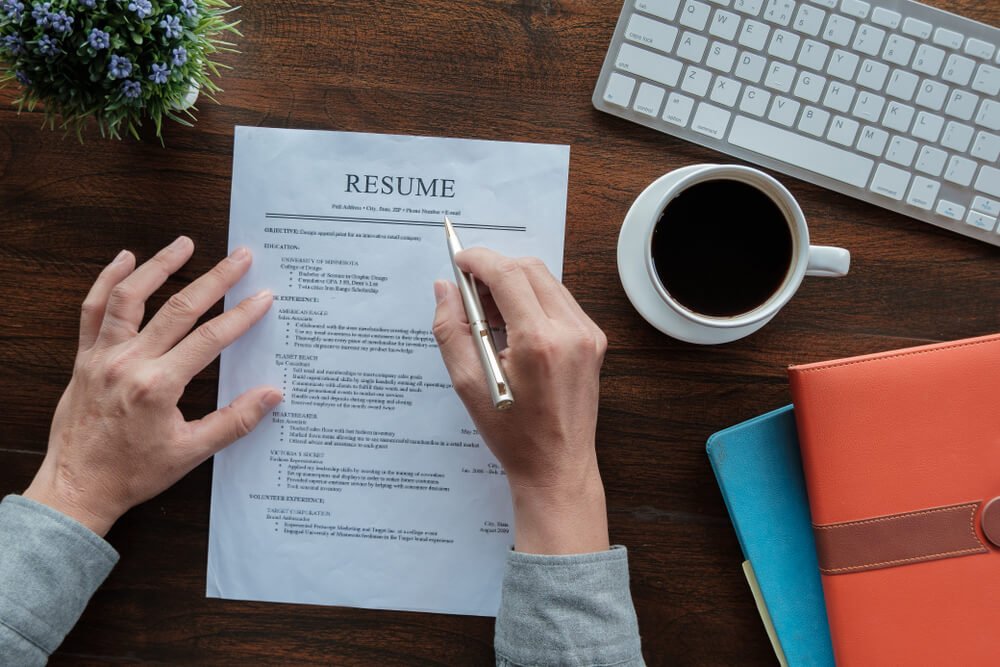
Your resume has about six seconds to survive a recruiter’s first glance — and before that, it has to survive the applicant tracking system. So what is the best AI tool for creating a resume? The answer depends on what you need: writing help, formatting, or ATS optimization. Here’s the honest breakdown of what’s worth using and what’s hype.
What Is the Best AI Tool for Creating a Resume? Start With a Chatbot
The best resume-writing AI is the general chatbot you already use — ChatGPT or Claude — because resume writing is just writing with very specific constraints. Paste your work history as rough bullets and prompt: “Turn these into strong resume bullets with quantified achievements, active verbs, for a [target role]. Keep each bullet to one line.” The results are usually dramatically better than what people write themselves, because most people undersell their work terribly.
The key technique: feed it the job posting too. “Here are my raw bullets and the job description — rewrite my bullets to highlight the most relevant experience, honestly, without inventing anything.” That last clause matters. AI will happily invent achievements if you let it, and lying on a resume is a firing offense. Use AI to phrase your truth better, never to create a better truth.
Then pair it with AI help for your cover letter — the two documents should tell one coherent story, and generating them together keeps the narrative consistent.
For Building and Formatting: Dedicated Tools
Once the content is strong, you need it to look professional and parse correctly. Rezi and Teal are the standouts: they score your resume against ATS criteria, flag formatting that breaks parsers (tables, graphics, weird fonts — all the pretty things that get your resume auto-rejected), and help tailor versions per application. Teal’s free tier is generous enough for most job seekers.
Kickresume offers nice templates with AI writing help built in, good if you want guidance and design in one place. Canva’s resume templates look great but beware: heavily designed resumes often fail ATS parsing. Pretty doesn’t matter if the robot can’t read it. One page, clean fonts, standard headings — boring is a feature here.
For the fundamentals of what belongs on the page, CareerOneStop’s resume resources (run by the U.S. Department of Labor) remain the gold standard — free, authoritative, and ATS-aware.
Beating the ATS (Without Gaming It)
Applicant tracking systems aren’t the enemy; they’re a filter. They look for keywords from the job posting, standard section headings, and parseable formatting. Mirror the posting’s language naturally — if it says “client relationship management” and you wrote “account management,” use their term. Save as PDF unless the posting asks for .docx (some older systems parse Word better). No text boxes, no headers/footers with critical info, no fancy graphics.
What doesn’t work: keyword stuffing in white text, lying about skills, or mass-applying with a generic resume. The AI tools help you tailor faster — a tailored resume per application is now feasible in 15 minutes instead of an hour. Use that speed advantage; it’s the real edge AI gives you.
Resume Mistakes AI Can’t Fix for You
AI polishes language, but some resume problems are structural — no chatbot can fix them without your action.
Mistake 1: No quantified achievements. “Responsible for social media” tells nothing; “grew Instagram from 2K to 25K followers in 14 months, driving 30% of web traffic” tells everything. AI can phrase your numbers beautifully, but it can’t invent them. Dig through old emails, reports, and memories — the numbers exist, you just haven’t collected them. Start a “wins” document today for future resumes.
Mistake 2: The generic objective statement. “Seeking a challenging position where I can utilize my skills” wastes the most valuable resume real estate — the top third. Replace with a 2-3 line professional summary tailored to the target role: who you are, your standout value, what you’re seeking. AI drafts this well if you feed it specifics.
Mistake 3: Listing duties instead of impact. Every bullet should answer “so what?” — not what you were assigned, but what changed because of you. “Managed team of 5” → “Led team of 5 to deliver project 2 weeks early, saving $40K.” The transformation is always available; it just requires thinking in outcomes.
Mistake 4: The kitchen-sink resume. Fifteen-year careers don’t fit on one page without curation — and they shouldn’t try. For each application, cut ruthlessly: if a bullet doesn’t serve this role, it’s noise. AI’s tailoring speed makes per-application curation feasible; use it.
Mistake 5: Ignoring the human after the robot. The ATS gets you past the filter; a human decides in six seconds. That means: clear hierarchy, white space, no walls of text, most impressive content in the top half. Print it and glance for six seconds — what stuck? If nothing, redesign. AI optimizes words; you optimize the six-second impression. Both matter, and neither replaces the other.
AI Resume FAQs
Do recruiters dislike AI-written resumes?
Recruiters dislike bad resumes — generic, vague, or dishonest ones. A well-crafted resume that happens to be AI-assisted is indistinguishable from a well-crafted human one, because the quality comes from your real achievements and specific tailoring. What recruiters actually flag: obvious template language and claims that don’t survive a 30-second interview probe.
Should my resume be one page?
For most people under 10-15 years of experience: yes. Recruiters skim; density beats length. Senior executives with extensive relevant history can justify two pages. The test: if removing the second page loses nothing a hiring manager needs, it shouldn’t exist.
How often should I update my resume?
Continuously, not just when job hunting. Add achievements quarterly to a running “wins” document — numbers fade from memory fast. When opportunity knocks (and it knocks unexpectedly), you want a current resume in an hour, not a weekend archaeology project.
The Human Step Nobody Can Skip
After the AI drafts and the tools format, do the human pass: read it aloud, cut every buzzword (“synergy,” “ninja,” “guru”), verify every number, and have one employed friend in your field review it. Then prepare for what comes next — using AI for job interview preparation — because the resume only gets you the conversation. The best AI resume tool is the one that gets your real achievements in front of a human quickly. Everything else is polish.


