
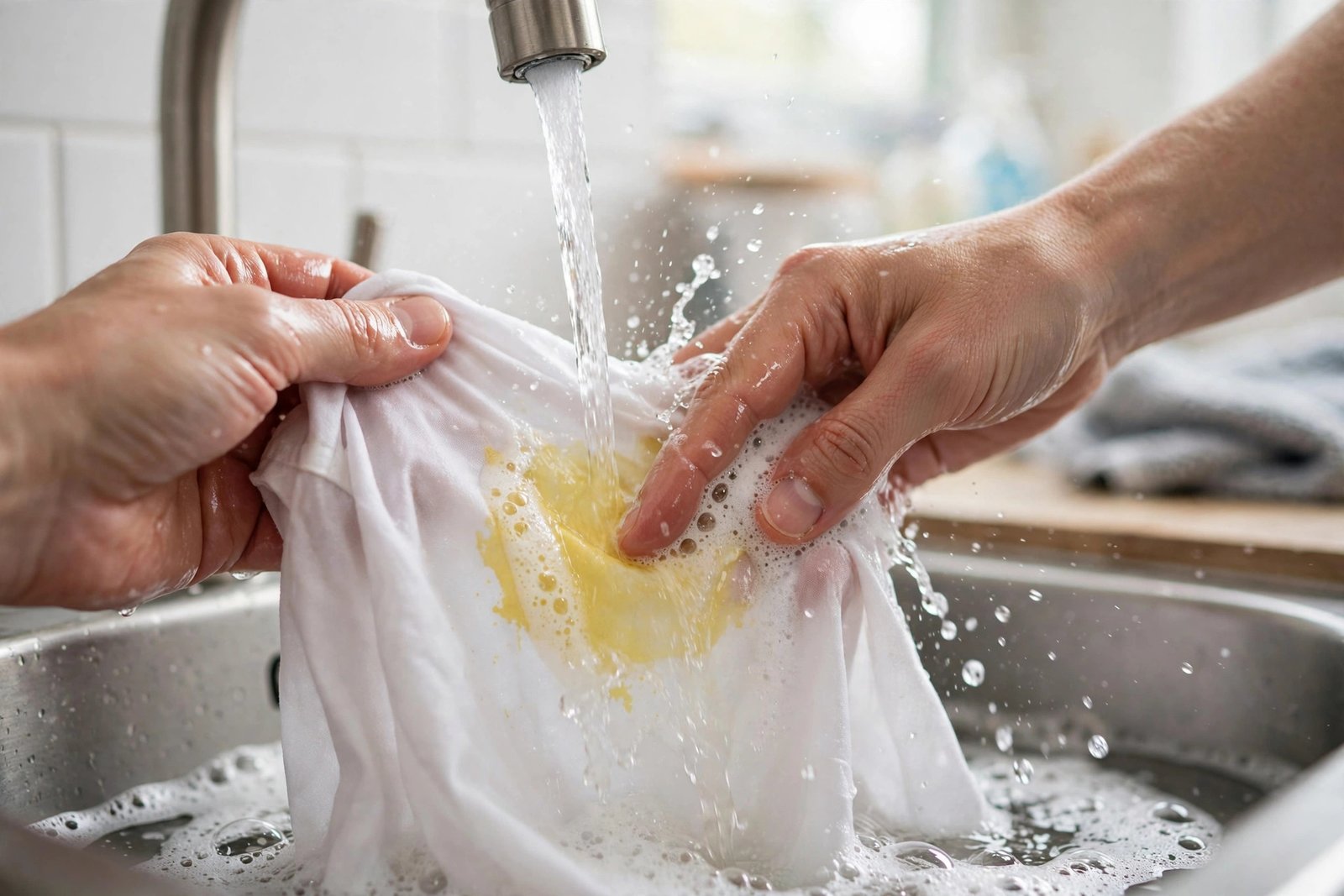
How to Remove Mustard Stains: Step-by-Step Guide (2026)
To remove a mustard stain, scrape off the excess immediately, rinse from the back with cold water, apply liquid dish soap or laundry detergent directly to the stain, let it sit 10–15 minutes, then wash in the hottest water the fabric allows. Mustard’s yellow pigment (curcumin from turmeric) is the real enemy — it dyes fibers fast, so speed matters more than anything else.
Mustard stains are disproportionately feared among food stains, and for good reason. The combination of turmeric-based dye, oil, and vinegar sets quickly and laughs at a casual wipe with a napkin. Whether it’s a hot dog at a Yankees game, a deli sandwich from a Midtown cart, or a cooking splatter, the method below works on clothes, upholstery, and carpet.
Why Mustard Stains Are So Stubborn
Mustard gets its staining power from curcumin, the natural yellow pigment in turmeric — the same compound that permanently dyes everything it touches in Indian cooking. Curcumin binds to fibers quickly, especially in heat, and it’s oil-soluble, which means water alone barely touches it. The vinegar in mustard can also act as a mild mordant, helping the dye set. Translation: treat it fast, keep it cool, and use a surfactant (soap) to break the oil bond.
Step-by-Step: Mustard Stain Removal from Clothes
Step 1: Remove the excess immediately
Use a dull knife, spoon, or old credit card to lift off as much mustard as possible. Scrape outward-in — working from the outside of the stain toward the center so you don’t spread it. Never rub at this stage; rubbing grinds the pigment deeper into the fibers.
Step 2: Rinse from the back with cold water
Turn the garment inside out and run cold water through the back of the stain. This pushes the mustard out the way it came in instead of driving it deeper. Hot water at this stage will set the stain permanently — cold only.
Step 3: Apply dish soap or liquid laundry detergent
Work a few drops of liquid dish soap (Dawn and similar cut grease well) or liquid laundry detergent directly into the stain with your fingers or a soft brush. Dish soap is ideal because it breaks down the oil base carrying the pigment. Let it sit for 10–15 minutes.
Step 4: Treat with white vinegar (optional but effective)
For stubborn stains, soak the spot in a solution of one part white vinegar to two parts cool water for 15–30 minutes. The mild acid helps loosen the turmeric dye. This is safe for most washable fabrics — skip it on silk or wool and go straight to the next step.
Step 5: Wash in the hottest safe water
Launder the garment in the hottest water the care label allows, with your regular detergent plus a scoop of oxygen-based bleach (OxiClean) for whites and colorfast fabrics. Check the stain before the garment goes in the dryer — dryer heat sets any remaining stain permanently. If a shadow remains, repeat steps 3–5 before drying.
For dried or old mustard stains
Old stains need a longer soak: submerge the garment in cool water with oxygen bleach for 1–6 hours (overnight for whites), then wash as above. Glycerin-based stain pretreaters also help rehydrate old stains. Be patient — a stain that’s been through the dryer may lighten significantly but might not disappear 100%.
Mustard Stains on Upholstery and Carpet
You can’t throw the couch in the wash, so the approach shifts:
- Scrape off excess mustard with a dull knife.
- Mix one tablespoon of dish soap with two cups of cool water.
- Blot (don’t rub) the stain with a clean white cloth dipped in the solution, working from the outside in. Rinse the cloth and repeat.
- Follow with a cloth dampened with plain cool water to rinse out the soap.
- Blot dry with a clean towel and let air-dry. A fan speeds things up.
- For lingering yellow, dab with a solution of one tablespoon white vinegar in one cup of cool water, then rinse-blot again.
Always test any cleaning solution on a hidden spot first — some upholstery fabrics water-spot or fade. For expensive furniture, silk upholstery, or wool rugs, call a professional cleaner rather than experimenting.
Mustard on Hard Surfaces
Countertops, plastic containers, and dishes: mustard dye can stain porous surfaces like plastic, grout, and unsealed stone. Wipe immediately, then clean with dish soap and warm water. For plastic stained yellow, make a paste of baking soda and water, coat the stain, and leave it in sunlight for a few hours — UV light breaks down curcumin surprisingly well. A diluted bleach solution works on white grout and ceramic.
Mistakes to Avoid
- Using hot water first. Heat sets mustard stains. Always start cold, finish hot.
- Rubbing the stain. Rubbing spreads the pigment and pushes it deeper. Scrape, blot, dab — never rub.
- Putting it in the dryer before checking. If any yellow remains, the dryer’s heat bakes it in permanently. Air-dry until you’re sure the stain is gone.
- Using chlorine bleach on colors. It’ll remove the yellow — along with the fabric’s actual color. Use oxygen bleach for anything that isn’t white.
- Waiting. Every minute counts with turmeric-based stains. A stain treated in 5 minutes is ten times easier than one treated the next day.
Mustard Stains on Delicate Fabrics
- Silk and wool: Skip the vinegar and oxygen bleach. Scrape, cold-rinse, and treat gently with a mild detergent or a dedicated delicates stain remover, then hand wash. If the stain persists, take it to a dry cleaner and point out the stain — don’t try stronger chemistry at home.
- Denim: Denim handles the full treatment well, but wash jeans inside out in cold water to protect the dye. Oxygen bleach is safe for most denim.
- White cotton: Your easiest case — the full protocol plus a hot wash with oxygen bleach, finished with sun-drying, removes even set-in stains most of the time.
- Synthetics (polyester, nylon): These release mustard stains more easily than natural fibers, but avoid high dryer heat, which can melt-set a stain into polyester permanently.
FAQs
Does mustard stain permanently?
It can, if heat-set or left too long. But fresh mustard stains come out of most washable fabrics completely with prompt cold-water treatment and dish soap. The key variables are speed and keeping heat away until the stain is gone.
Will OxiClean remove mustard stains?
Yes — oxygen-based bleach is one of the best tools for mustard stains. Soak the stained garment in OxiClean solution for 1–6 hours before washing. It’s color-safe for most fabrics, unlike chlorine bleach.
How do you get mustard out of white clothes?
Scrape, cold-rinse from the back, treat with dish soap, then soak in oxygen bleach and wash hot. For whites you can also use a diluted chlorine bleach soak as a last resort — but try oxygen bleach first, since it’s gentler on fabric.
Does sunlight remove mustard stains?
Yes, partially. UV light breaks down curcumin, the yellow pigment. Drying a faintly stained white garment in direct sunlight can fade the remaining shadow. It works best as a finishing step after washing, not as the primary treatment.
How do you get mustard stains out of carpet?
Scrape off excess, blot with a dish-soap-and-cool-water solution from the outside in, rinse-blot with plain water, and repeat. Avoid over-wetting the carpet pad underneath. For old or large stains, a carpet cleaner or professional is worth it.


