
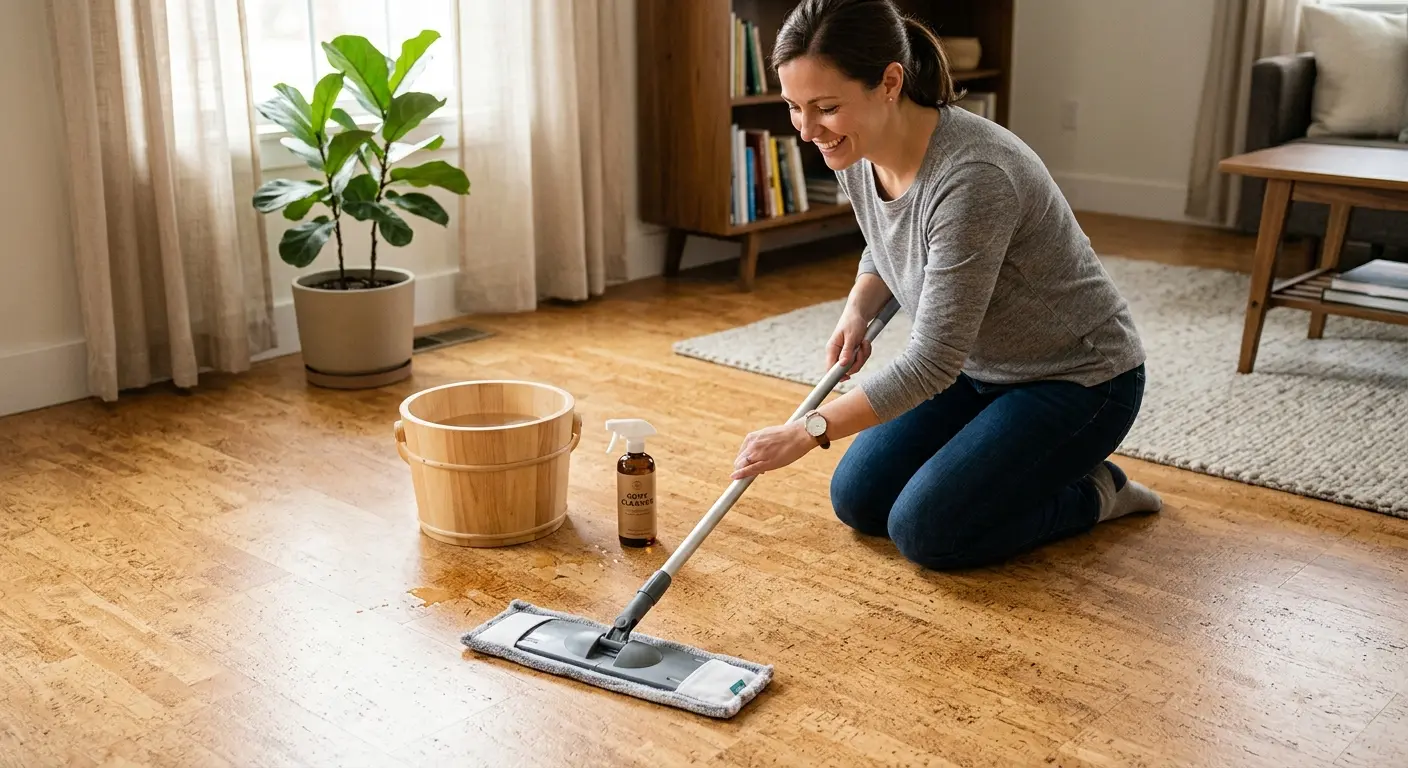
Quick answer: To clean cork flooring, sweep or vacuum with a soft brush attachment, then go over it with a well-wrung microfiber mop and a pH-neutral cleaner diluted in water. Dry the floor right away so no moisture sits on the seams. Skip steam mops, soaking, and harsh chemicals, because cork and water don’t get along for long.
I’ve had cork in my kitchen for about six years. It’s warm underfoot and quiet to walk on, and it’s much easier to keep clean than most people expect. I also made a few mistakes early on that dulled the finish in one corner. Here’s what I’ve learned, so you can skip that part.
Why Cork Flooring Needs Different Care
Cork comes from the bark of the cork oak tree, and it’s full of tiny air pockets. That’s why it feels soft and springy, but it also means the material can absorb moisture and swell if the surface protection fails.
Most modern cork floors have a polyurethane or UV-cured finish that seals the surface. Some older or specialty floors use wax instead. Before you clean anything, find out which one you have:
- Sealed (polyurethane): A drop of water beads up and sits on top. This is the most common type, and it’s the easiest to maintain.
- Wax-finished: The floor has a softer, satin look, and water may darken the cork after a few minutes. It needs gentler cleaning and occasional re-waxing.
If you’re not sure, check your installation paperwork or test a drop of water in a hidden spot, like inside a closet.
What You’ll Need
You don’t need much:
- A soft-bristle broom or a vacuum with a hard-floor setting (no beater bar)
- A flat microfiber mop with washable pads
- A pH-neutral hard floor cleaner, or mild dish soap
- A bucket of lukewarm water
- A few soft, dry towels
- Felt pads for furniture legs
How to Clean Cork Flooring Step by Step
Step 1: Remove Dust and Grit
Grit does more damage to cork than water does. It acts like sandpaper under your shoes and leaves tiny scratches that dull the finish. I sweep or vacuum every couple of days. If you use a vacuum, switch off the rotating brush, since it can scuff the surface.
Step 2: Mix a Gentle Cleaning Solution
Fill a bucket with lukewarm water and add a pH-neutral floor cleaner, following the dilution on the label. If you don’t have one, a few drops of mild dish soap in a gallon of water works fine. Keep it weak. More soap doesn’t mean cleaner floors. It just leaves a sticky film that attracts dirt.
Step 3: Wring the Mop Almost Dry
This is the step that matters most. Dip the microfiber pad, then wring it out until it’s barely damp. If you can see water on the floor when you mop, you’re using too much. A good test is whether the floor looks dry again within a minute or two.
Step 4: Mop in the Direction of the Planks
Work in small sections and follow the length of the planks or tiles. This picks up dirt without pushing it into the seams. Rinse the pad often so you aren’t spreading dirty water around.
Step 5: Dry Immediately
Go over the floor with a dry towel or a fresh dry microfiber pad, especially near seams, edges, and doorways. It takes an extra two minutes and protects the floor from swelling and cupping.
My Simple Weekly Routine
After some trial and error, this is what works in my house:
- Every 2 to 3 days: Sweep or vacuum
- Once a week: Damp-mop with a pH-neutral cleaner
- As needed: Wipe spills right away with a dry or barely damp cloth
- Every few months: Check high-traffic spots for worn finish
In my kitchen, a quick sweep before bed takes under three minutes and has made a real difference. The floor looks newer than some of my neighbors’ floors that are half its age.
How to Remove Common Stains From Cork Floors
Always test any spot treatment on a hidden area first, and always blot rather than rub.
Red Wine, Coffee, and Juice
Blot up as much as you can with a dry cloth. Then wipe the spot with a cloth dampened with mild soapy water and dry it. I once knocked a full glass of red wine onto my floor at a dinner party. I got to it within a minute, and nothing showed the next morning. Speed matters more than any product.
Pet Accidents
Pet urine is the biggest risk, because it can seep into the seams. Blot it up quickly, wipe with a barely damp cloth and mild cleaner, then dry thoroughly. If it’s been sitting a while, check the seam for any swelling over the next few days.
Grease and Oil
Wipe up the excess, then use a cloth with a small amount of diluted dish soap. Don’t scrub hard, since you could wear down the finish.
Scuff Marks
For black scuffs from shoes or furniture, I use a clean white pencil eraser. It lifts the mark without harming the sealed surface.
Ink or Marker
On a sealed floor, dab a little isopropyl alcohol on a cloth and gently blot the mark. Test in a hidden spot first, and don’t use this on wax-finished cork.
Best Cleaners for Cork Floors (and What to Avoid)
Safe options:
- pH-neutral cleaners made for sealed hard floors
- Mild dish soap in a small amount of water
- Cleaners recommended by your floor’s manufacturer
If you want greener products, the EPA’s Safer Choice program lists cleaning products that meet its safety standards. Still check that the cleaner is pH-neutral and approved for sealed floors.
Avoid:
- Ammonia, bleach, and abrasive powders
- Oil soaps, which can leave a residue
- Wax or polish on a polyurethane-sealed floor
- Steam mops, which push heat and moisture into the seams
I’d also skip vinegar for routine cleaning. Some manufacturers allow heavily diluted vinegar, but it’s easy to overdo, and it can dull a finish over time. Check your warranty before using it.
Common Mistakes to Avoid When Cleaning Cork Flooring
1. Using too much water. This is the number one cause of damage. Standing water can get into the seams, and cork can swell or lift.
2. Using a steam mop. The combination of heat and moisture is hard on both the finish and the underlying material.
3. Skipping the dry-off. Even a damp mop can leave moisture behind. Dry the floor, especially along the edges.
4. Using harsh or abrasive products. Bleach, ammonia, and scouring pads strip the finish and can leave permanent dull patches. I dulled a corner near my sink early on by using a kitchen scrub sponge on a stubborn spot. It never looked quite the same again.
5. Letting spills sit. Cork is more forgiving than people think, but a spill left overnight is a different story.
6. Dragging furniture. Heavy items without felt pads leave deep dents and scratches. Lift, don’t slide.
7. Ignoring grit at the door. Most of the dirt on your floor walks in on your shoes. A good doormat saves a lot of cleaning.
How to Protect Cork Flooring Long-Term
Cleaning is only half of it. A few habits keep cork looking good for decades:
- Use felt pads under chairs, tables, and sofas.
- Place mats at entrances and in front of the sink.
- Keep indoor humidity in a steady range, ideally around 40 to 60 percent, to prevent shrinking or swelling.
- Close curtains in strong sun. Direct sunlight can fade cork unevenly over time.
- Trim pet nails to cut down on scratches.
- Recoat when needed. Over many years, a worn polyurethane finish may need a light recoat. Wax-finished floors need periodic re-waxing.
If you want to learn more about the material itself, the Portuguese Cork Association (APCOR) has solid background on how cork is harvested and why it’s so durable, and the cork material page on Wikipedia is a good quick overview of its properties.
Final Thoughts
Cleaning cork flooring is simple once you know the rules: remove grit often, use as little water as possible, stick to gentle cleaners, and dry as you go. Follow that routine and your floor will stay warm, quiet, and good-looking for years.
FAQs About Cleaning Cork Flooring
1. Can I use a regular mop on cork flooring?
Yes, if it’s a damp mop that’s wrung out well. A flat microfiber mop is better than a string mop, which tends to hold too much water.
2. Can I use a steam mop on cork?
No. Steam forces heat and moisture into the seams and can damage the finish and the cork itself.
3. How often should I clean cork floors?
Sweep or vacuum every few days and damp-mop once a week. In busy areas like kitchens and hallways, you may want to sweep more often.
4. Is vinegar safe for cork flooring?
It’s not the best choice. Some manufacturers allow very diluted vinegar, but many recommend against it because it can dull the finish. A pH-neutral cleaner is safer.
5. How do I get pet urine out of cork flooring?
Blot it up right away, wipe with a barely damp cloth and mild cleaner, and dry the area well. Act fast, because urine that reaches the seams can cause swelling and odor.
6. What’s the best cleaner for cork floors?
A pH-neutral hard floor cleaner approved for sealed floors is the best choice. Mild dish soap in water is a good backup.
7. Can cork floors get wet?
Sealed cork handles small spills well, as long as you wipe them up quickly. It isn’t waterproof, though, so avoid standing water and heavy mopping.
8. How do I make dull cork flooring shine again?
Clean off any residue with a lightly damp mop and mild cleaner, then dry it. If the dullness comes from a worn finish, you may need a recoat. Ask a flooring professional or check your manufacturer’s guidelines.


