
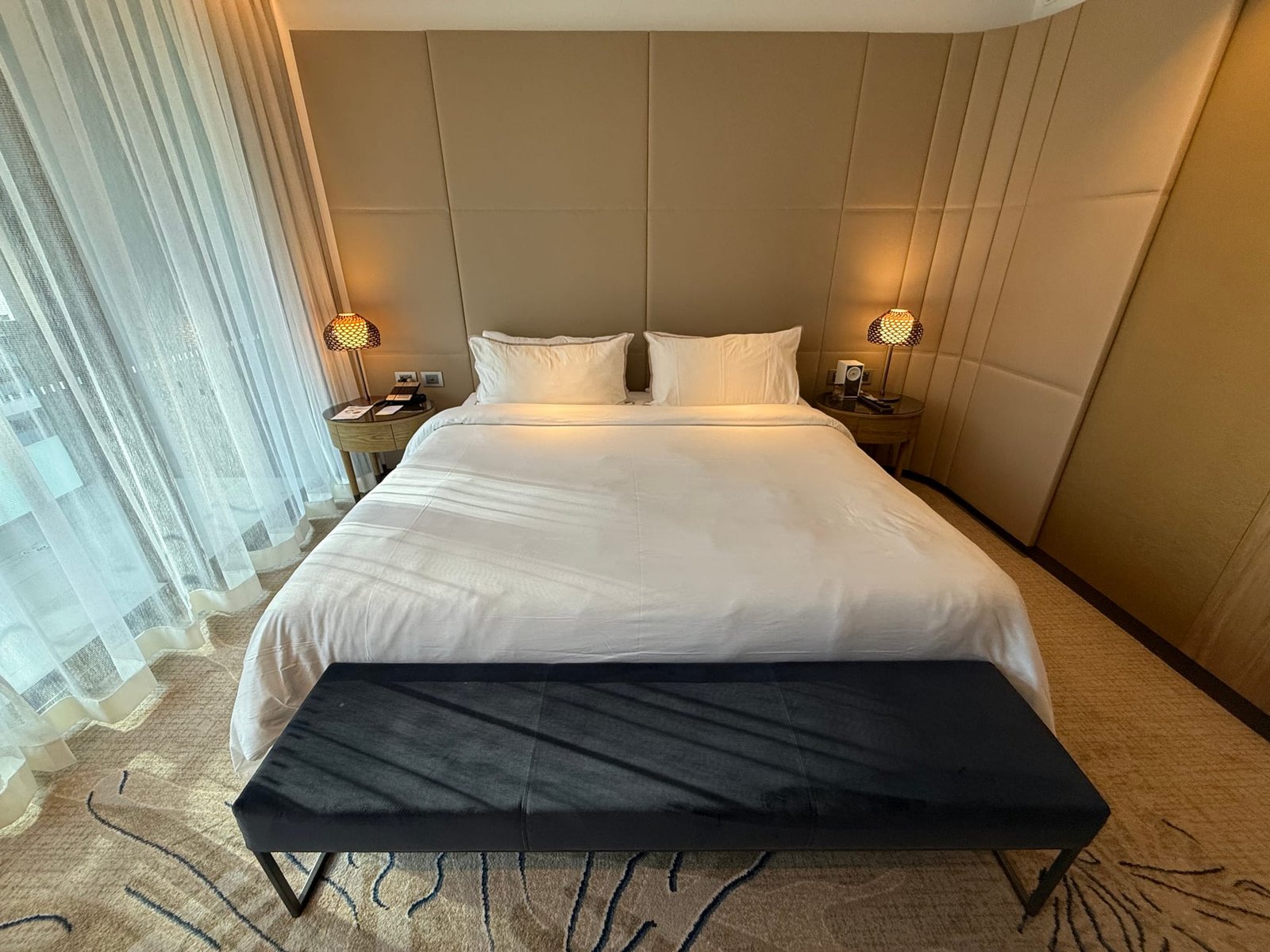
You know the drill: you check into a hotel exhausted, fall into a bed that’s technically fine, and then… stare at the ceiling until 3am while the hallway ice machine performs its nightly symphony. So how can I sleep better in hotels? It’s a skill, honestly — frequent travelers develop a whole system for it. I’ve spent hundreds of nights in hotels, from budget motels to nice resorts, and these are the tricks that actually work, starting with the free ones.
Before You Book: Choose Sleep-Friendly
Sleep quality starts at booking. A few things to look for:
- High floor, away from the elevator. Request it in the booking notes or at check-in. Elevator dings, foot traffic, and street noise all decrease with height and distance.
- Not facing the pool or bar. Fun at 8pm, miserable at 1am. If the hotel has nightlife, ask for the quiet side.
- Check recent reviews for noise complaints. Search reviews for “noise,” “thin walls,” “loud.” Patterns matter more than one complaint.
- Consider the building. Concrete high-rises are quieter than wood-frame motels. Older grand hotels can have thin walls; newer builds usually insulate better.
If you’re a light sleeper, this step alone is worth more than any gadget. A quiet room beats a noisy room with earplugs every time.
How Can I Sleep Better in Hotels? The Essential Kit
Frequent travelers carry a small sleep kit. It fits in a toiletry bag and transforms any room:
- Earplugs or a white noise app. Foam earplugs are cheap and effective; silicone ones are more comfortable for side sleepers. Alternatively, a white noise app (or a portable white noise machine) masks hallway chatter, AC cycling, and street sounds. Brown noise is deeper and many people prefer it for sleep.
- A sleep mask. Hotel blackout curtains are a lie told by optimists — there’s always a gap. A contoured sleep mask (the kind that doesn’t touch your eyelids) fixes it completely. This is the highest ROI item in the kit.
- Your own pillowcase. Sounds fussy; isn’t. Familiar smell and texture signal “bedtime” to your brain. Some travelers bring a small pillow — worth it on long trips.
- Magnesium or herbal tea. Not medical advice, but many travelers swear by magnesium supplements or chamomile tea as part of a wind-down routine. Keep it consistent with what you do at home.
Tame the Room on Arrival
Do a 5-minute sleep setup when you arrive, not when you’re exhausted at midnight:
- Set the temperature. The Sleep Foundation recommends around 65°F (18°C) for sleep. Hotel rooms run warm; crank the AC early so it’s cool by bedtime.
- Kill the lights. Unplug or cover the LED blazers: the TV standby light, the smoke detector glow, the hallway light under the door (roll up a towel — the classic move). One small light can measurably disrupt sleep.
- Check the bed. Too many pillows? Stash the decorative ones. Mattress too firm? Ask for a mattress topper — many hotels have them. Duvet too hot? Sleep under the top sheet.
- Run the fan. Set the AC fan to “on” rather than “auto” — continuous airflow means continuous white noise instead of jarring on/off cycles.
Beat Jet Lag and Schedule Disruption
Hotel sleep problems are often circadian problems in disguise:
- Get morning light. Sunlight in the first hour after waking is the strongest circadian reset available. Open the curtains, step onto the balcony, take a walk.
- Anchor your meals. Eating at local mealtimes helps your body clock adjust faster than anything except light.
- Strategic caffeine. Coffee in the morning at your destination: yes. After 2pm local time: no. This rule alone fixes half of travel insomnia.
- Don’t nap wrong. If you must nap, keep it to 20 minutes before 3pm. A 2-hour evening nap guarantees a 3am wake-up.
- Consider melatonin. Low-dose melatonin (0.5–1mg) taken 30 minutes before desired bedtime can help reset your clock for a few nights. Talk to your doctor if you use it regularly.
The Wind-Down Routine (Yes, Even on Vacation)
Your brain doesn’t know it’s on vacation — it knows routines. Keep your home wind-down: same book, same podcast, same stretches. Avoid the two big sleep killers: working in bed (your brain starts associating the bed with email) and scrolling until your eyes burn (the blue light is real, but the mental stimulation is worse). Set a “screens off” time and actually honor it. Boring advice; works every time.
If anxiety keeps you up — the unfamiliar sounds, the “did I lock the door” loop — a quick room check ritual helps: lock, chain, bathroom, thermostat, alarm set. Do it once, deliberately, then let it go. Some travelers also find that planning trips the night before travel causes excitement insomnia; a brain-dump list on paper gets the thoughts out of your head.
When It’s the Hotel’s Fault
Sometimes the room is just bad — construction next door, a broken AC, party neighbors. Don’t suffer nobly: call the front desk. Hotels can move you, and they’d rather do that than get a bad review. Be polite but specific: “There’s loud music from the room next door, could I move to a quieter floor?” If they can’t fix it, ask for a partial credit. You paid for a room you can sleep in; that’s the deal.
The Business Traveler’s Sleep System
Vacation sleep is one thing — you can afford to be groggy at the beach. Business travel is where hotel sleep really matters, because you need to perform the next morning. Road warriors develop ruthless consistency:
- Same brand, same room type when possible. Familiarity is a sleep aid. Many frequent travelers stick to one hotel chain — they know the bed, the blackout curtains, the thermostat. Novelty is the enemy of sleep.
- Protect the first night. The “first-night effect” (sleeping poorly in a new place) is well-documented — your brain stays half-alert in unfamiliar environments. Counter it by arriving early enough for a real wind-down, not rolling in at midnight before an 8am meeting.
- Exercise early, not late. A morning workout at the hotel gym anchors your body clock and deepens that night’s sleep. Late-night intense exercise does the opposite.
- Eat like you’re at home. Heavy late restaurant dinners — the business-travel default — wreck sleep. Eat your big meal at lunch when you can; keep dinner light.
- Guard the morning. Set two alarms (phone + hotel clock), lay out everything the night before, and build a 30-minute buffer. Travel-morning panic is a sleep-quality issue disguised as a scheduling issue — knowing you’re prepared lets you actually fall asleep.
The meta-lesson: treat sleep as part of the trip’s logistics, not a thing that happens if you’re lucky. The travelers who sleep best aren’t blessed with adaptability — they’ve just built systems and follow them without negotiating. Your kit, your room setup routine, your wind-down: same every time, everywhere. Boring, effective, and the reason some people step off red-eyes looking human while others look haunted.
The Practical Takeaway
Sleeping better in hotels is a system, not a trick: book a quiet room (high floor, away from elevators), carry a minimal sleep kit (mask, earplugs, familiar pillowcase), do a 5-minute room setup on arrival (cool, dark, fan on), and protect your circadian rhythm (morning light, caffeine curfew, consistent wind-down). Do these consistently and hotel sleep stops being a gamble. Your trips get better when your sleep does — everything from rope-dropping Disney World to enjoying a late dinner is easier when you’re actually rested.


