
Budgeting apps have promised to fix our finances for a decade, with mixed results. Now AI is the new promise. So can AI help you manage your personal budget? Yes — meaningfully, in specific ways — but with caveats about privacy and over-reliance that you should hear before connecting your bank account to anything. Here’s the balanced picture.
Can AI Help Me Manage My Personal Budget? What AI Does Well
Categorization without the tedium. The soul-crushing part of budgeting — labeling every transaction — is exactly what AI automates. Modern budgeting apps (Rocket Money, Monarch, YNAB’s automation, Mint’s successors) categorize spending accurately, learn your patterns, and flag anomalies. What took a Sunday afternoon now takes a glance.
Finding the leaks. Ask an AI tool (or a chatbot with your exported, anonymized data): “Where am I overspending compared to last quarter?” It spots the subscription creep, the takeout inflation, the categories drifting upward — patterns humans miss because we see transactions, not trends. This pairs well with tracking business expenses if you’re self-employed and managing both.
Planning and forecasting. “Can I afford a $400/month car payment if I cut dining out by 30%?” AI models the trade-offs instantly. Scenario planning turns vague anxiety into concrete numbers — which is most of what budgeting is for.
Behavioral nudges. The best AI features aren’t analytical but psychological: alerts when you’re pacing over budget, weekly summaries that keep spending visible, gentle friction before impulse purchases. Awareness is half the battle, and automation provides it.
The Privacy Caveat (Read This)
Budgeting AI needs your financial data to work — that’s the deal. Before connecting accounts, check: does the service sell data? (Read the privacy policy’s data-sharing section, not just the marketing page.) Can you opt out of training/AI improvement use? Is it read-only access? The CFPB’s budgeting tools and guidance are a trustworthy starting point for understanding your rights.
The safer path many people prefer: export anonymized transaction data (no account numbers, no names) and analyze it with a general chatbot instead of granting account access. You get 80% of the insight with near-zero privacy risk. And review what’s safe to share with AI chatbots before pasting anything financial.
Where Humans Still Win
AI optimizes numbers; it doesn’t know what matters to you. It can’t tell you whether the vacation or the emergency fund deserves priority — that’s values, not math. It also can’t fix the behavioral core: no AI stops you from ordering takeout at 11pm. The tool provides clarity; discipline remains human. And for big decisions — debt payoff strategy, investment allocation — AI suggestions deserve verification against fiduciary advice, not blind trust.
The 50/30/20 Budget, AI-Assisted
Frameworks make budgeting stick. Here’s how to run the classic 50/30/20 with AI doing the math.
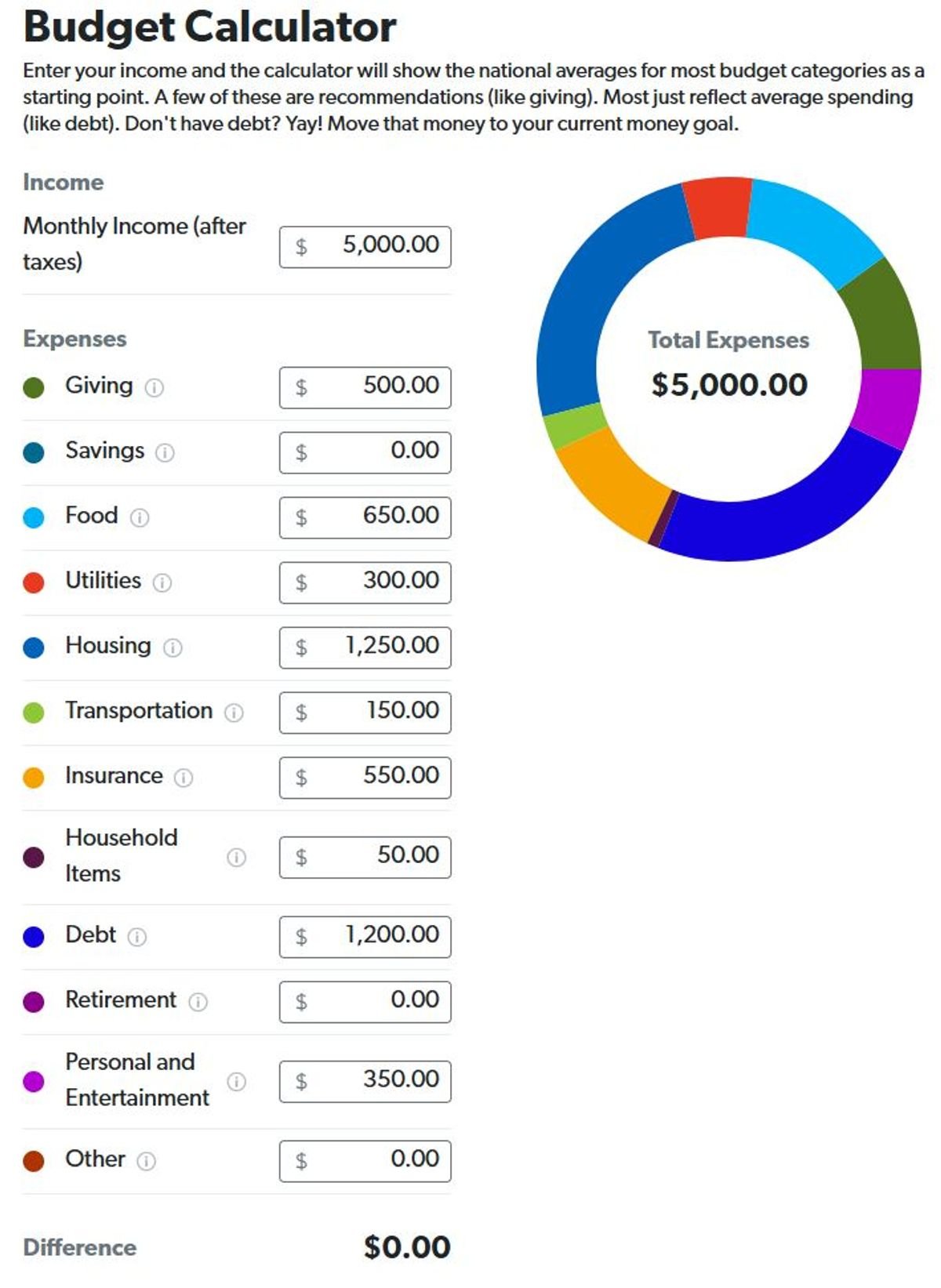
The framework: 50% of after-tax income to needs (housing, food, transport, minimum debt payments), 30% to wants (dining, entertainment, hobbies), 20% to savings and extra debt payoff. Simple, flexible, proven. The percentages adjust to your life — high-cost cities might run 60/20/20 — but the structure is what matters.
AI setup (one time, 30 minutes): Export 3 months of transactions (anonymized). Ask: “Categorize these into needs/wants/savings and show me my actual percentages vs. 50/30/20.” The gap between perception and reality is usually startling — most people discover their “30% wants” is actually 45%.
Monthly AI review (10 minutes): “Here’s this month’s spending [paste categorized totals]. Where did I drift from targets, and what’s the one change with the biggest impact?” One change per month — not ten. Sustainable adjustment beats annual overhauls.
AI for the hard parts: Subscription audit (“list every recurring charge and flag what I haven’t used in 60 days”), bill negotiation scripts (“write me a script to negotiate my internet bill”), and scenario planning (“if I redirect $200/month from dining to debt, when am I debt-free?”). The CFPB’s tools complement this with official calculators and worksheets.
The automation layer: Set automatic transfers on payday — 20% to savings before you see it. AI budgeting without automation is just expensive awareness; the transfer is what makes it real. Review quarterly, adjust percentages as income changes, and forgive the imperfect months. A budget you follow at 80% for years builds wealth; the perfect budget you abandon in February builds nothing. Let AI handle the arithmetic. You handle the one decision that matters: paying yourself first, automatically, every time.
AI Budgeting FAQs
What’s the best free budgeting app with AI?
The options change fast, but look for: automatic transaction categorization, anomaly alerts, and forecasting — the AI features that actually matter. Rocket Money, Monarch, and YNAB all offer automation at various price points; free tiers of several cover the basics. Pick the one whose interface you’ll actually open weekly — adoption beats features.
Is it safe to link my bank account?
Generally yes with reputable apps — they use read-only access via established aggregators (like Plaid) with bank-level encryption. The risks are data-breach exposure and the company’s data practices (read the privacy policy’s sharing section). If uncomfortable, the anonymized-export method gives most of the insight with minimal exposure. Match the method to your comfort.
How often should I review my budget?
Weekly glance (5 min — are categories on track?), monthly review (20 min — trends, one adjustment), quarterly deep dive (are the targets still right for your life?). More frequent than weekly is micromanagement; less frequent than monthly is neglect. The AI handles the daily math; you handle the periodic judgment.
The Sensible Setup
Start simple: pick one budgeting app with good automation (free tiers suffice for most), connect accounts or use the anonymized-export method, review the AI-categorized spending weekly for 10 minutes, and run one “what-if” scenario monthly. That’s it. AI makes budgeting nearly effortless to maintain — which is the actual breakthrough, because the best budget was never the cleverest one. It was the one you kept. Combine with AI help for busy parents or AI workout planning and you’ve got an AI-assisted life admin system running quietly in the background.


