
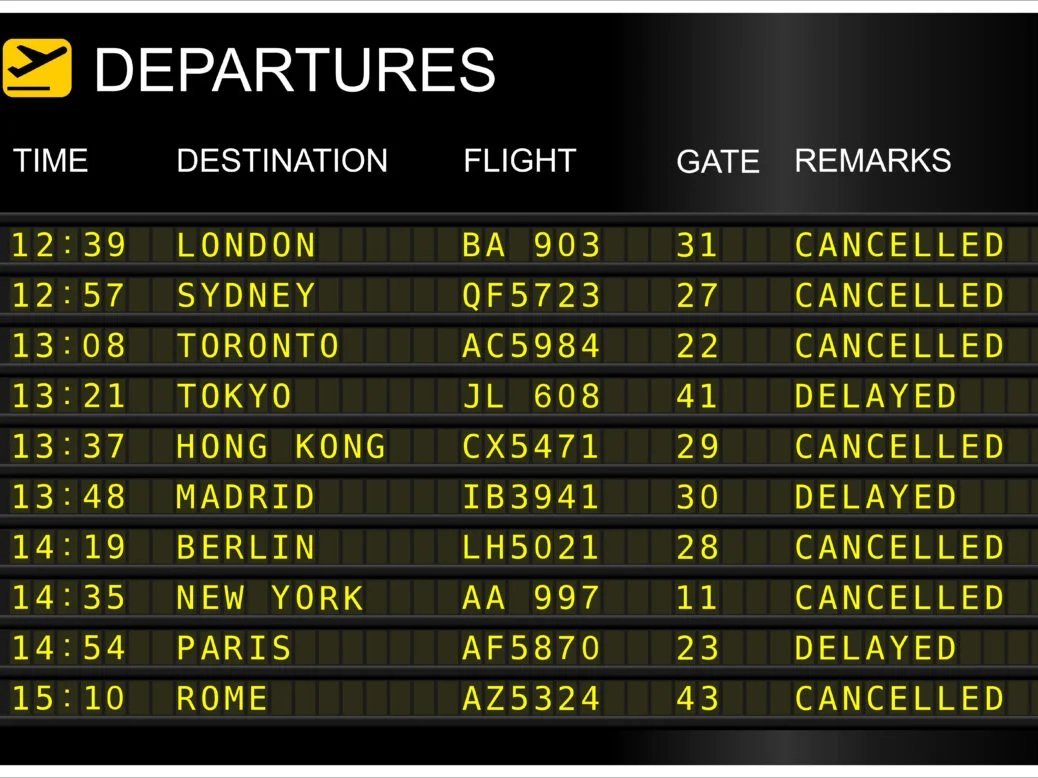
What Should I Do If My Flight Gets Canceled? (Step-by-Step Action Plan)
What should I do if my flight gets canceled? Act fast, know your rights, and don’t just stand in the rebooking line — because everyone else is doing that, and the fastest rebookings go to the people who work every channel simultaneously. A canceled flight is stressful, but it’s also a solvable logistics problem, and prepared travelers get home hours before the unprepared ones.
I’ve been through a dozen cancellations, including a full airport shutdown. The playbook below is battle-tested. Bookmark it — you’ll want it when you’re stressed, not before.
The First 10 Minutes: Act on Every Channel
- Don’t just join the line. The service-desk line is the slowest channel. While you’re in it (or instead of it): call the airline’s customer service number, use the airline app’s rebooking tool, and try their social media support DM. Work all channels; take the first good option.
- Know what you want before you call. Have the app open showing alternative flights — suggest specific flight numbers to the agent. “Can you put me on flight 1234 at 3 p.m.?” gets results; “what’s available?” gets the default (often terrible) option.
- Consider nearby airports. Ask about rerouting through different hubs or into alternate airports. Flexibility multiplies your options.
- Ask about partner airlines. Major carriers can rebook you on partner airlines (alliances) — agents don’t always volunteer this. Ask explicitly.
Know Your Rights (They’re Better Than You Think)
- US domestic: full refund. If the airline cancels (any reason) and you choose not to travel, you’re entitled to a full refund to your original payment method — even on “non-refundable” tickets. This is federal rule, not airline generosity.
- Rebooking is free. The airline must rebook you on their next available flight at no extra charge. “Next available” means their flights — push for the earliest workable one.
- EU flights: compensation. Under EU261, cancellations on EU carriers (or departing the EU) can mean €250–€600 compensation plus care (meals, hotels) — on top of rebooking or refund. Know this before accepting vouchers.
- Meals and hotels. US airlines’ customer service commitments (published on airline sites) typically include meal vouchers and hotel for overnight delays they caused — but not for weather. Ask; the worst they say is no.
- Don’t accept the first voucher. If offered travel credit instead of a refund you’re entitled to, know the difference. Credit expires; refunds don’t.
What Should I Do If My Flight Gets Canceled? The Survival Kit.
- Stay calm and be kind. The agent didn’t cancel your flight. Polite, prepared travelers get better help — agents have discretion, and they use it for people who aren’t yelling.
- Document everything. Screenshot the cancellation notice, save receipts for every expense (meals, hotel, transport). You’ll need them for claims.
- Protect the downstream trip. Call your hotel, rental car, and tour operators immediately — many will adjust without fees if you call before the no-show, but charge fully if you don’t.
- Know your credit card benefits. Many cards include trip delay coverage ($500+ for delays over 6 hours) — but you must pay for the trip with that card. File claims with receipts.
This is also where travel insurance earns its keep — trip interruption coverage handles the cascade costs. And booking timing matters upstream: when to book flights affects which fare rules protect you.
Preventing the Worst Outcomes
- Book the first flight of the day. Early flights have the lowest cancellation rates — delays cascade through the day, so the 6 a.m. departure is statistically safest.
- Avoid the last connection. Tight last-leg connections are cancellation bait. Longer layovers are boring insurance.
- Nonstop when it matters. For must-attend events, nonstop flights eliminate the #1 cancellation risk (missed connections).
- Track your flight. Flight tracking apps often show cancellations before the airline notifies you — those extra 20 minutes of rebooking head start matter enormously.
EU261 Compensation: Know Your Rights in Europe
Flying in Europe? EU261 is the strongest passenger-rights law in the world: cancellations (airline’s fault) on EU carriers or departing the EU can mean €250–€600 per passenger in compensation — on top of rebooking or refund, plus meals and hotels during the wait. The amounts scale with flight distance; the right applies even if you accept rebooking.
Key details: extraordinary circumstances (severe weather, air traffic control strikes) exempt the airline — but technical problems and staffing issues don’t. Claim directly with the airline first (their website has the form), escalate to the national enforcement body if denied, and don’t accept vouchers unless you prefer them — cash is your right. The U.S. Department of Transportation’s airline consumer pages cover your rights on the US side — read both before your next transatlantic trip.
Travel Insurance and Cancellations (The Backup Layer)
- Trip delay coverage: many credit cards cover $500+ in expenses for 6+ hour delays — meals, hotels, transport. File with receipts.
- Travel insurance: trip interruption covers the cascade — missed tours, extra hotel nights, rebooked connections the airline won’t cover.
- Document from minute one: screenshot the cancellation, save every receipt, note names and times. Claims without documentation die.
- Know the order: airline first (their obligation), credit card second, insurance third. Each covers what the previous didn’t.
The Hotel Voucher Game
When cancellations strand you overnight, the hotel situation has rules: if the airline caused it (mechanical, crew), ask for the hotel voucher — their contracts often include it, but agents don’t always volunteer. If weather caused it, you’re on your own (this is what credit card trip-delay coverage and travel insurance are for). Either way: get the agent to book it rather than finding your own (their rates are contracted), keep every receipt, and know that “we’re out of vouchers” sometimes means “ask the supervisor.” Polite persistence pays — literally.
The Bottom Line
When your flight gets canceled: work every rebooking channel at once (app, phone, social — not just the line), suggest specific alternative flights, know your refund rights (full refund in the US, EU261 compensation in Europe), document every expense, and protect your downstream bookings immediately. Book morning nonstops to prevent it next time — and stay kind to the agents; they’re your best asset in the crisis.


