
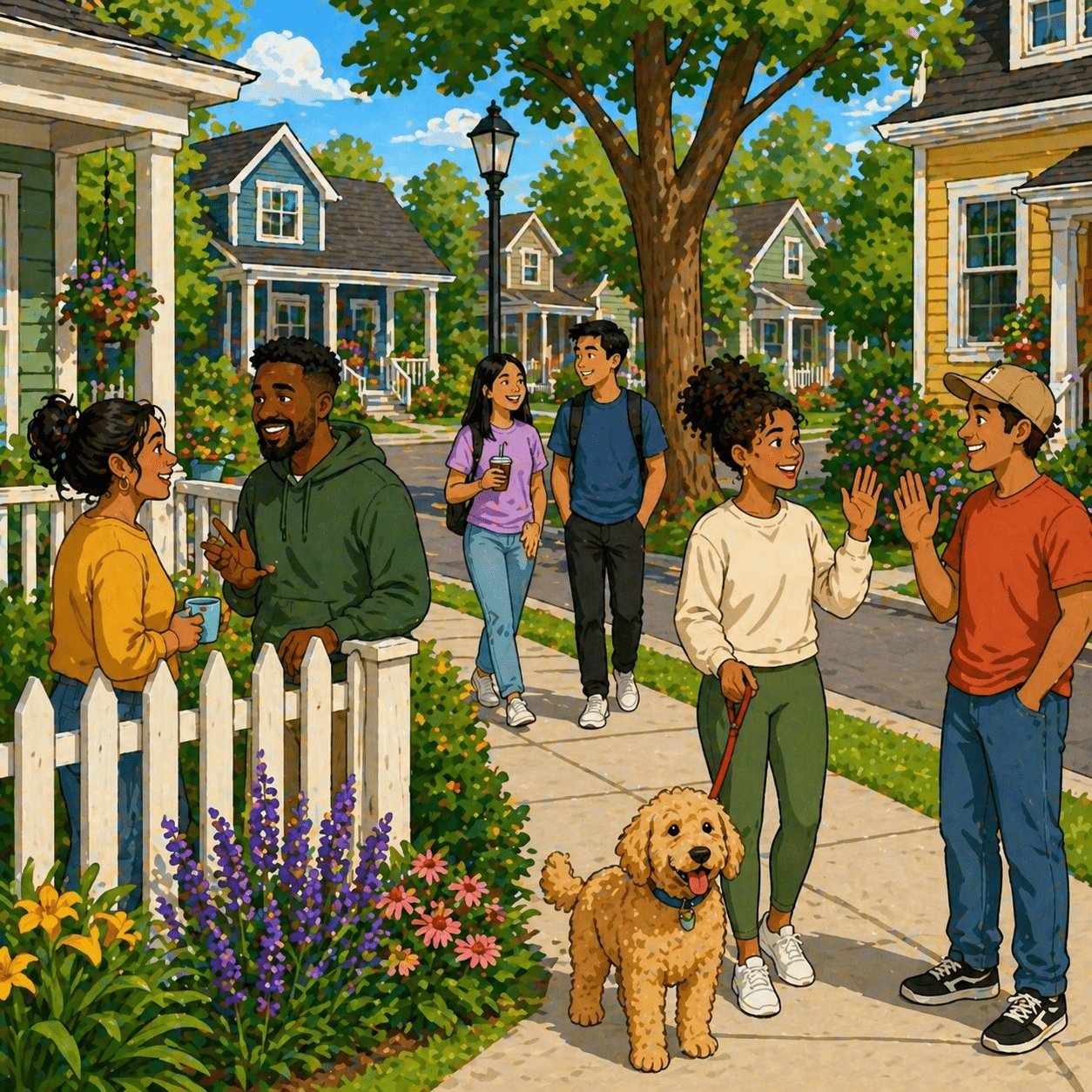
How Can I Build Better Relationships With My Neighbors? (Without Being Weird)
Wondering how can I build better relationships with my neighbors when everyone seems to go straight from car to front door without making eye contact? Modern neighborhoods can feel oddly lonely — dozens of people living feet apart who’ve never had a real conversation.
Good neighbor relationships are worth building deliberately. Beyond the obvious friendliness, neighbors are your package receivers, your emergency contacts, your “can you water the plants” people, and — in real crises — genuinely important. Communities with strong neighbor ties recover from disasters faster; researchers have documented this repeatedly.
The good news: it takes less than you think. Here’s how to start without feeling awkward.
Start Absurdly Small
You don’t need a block party. You need repeated micro-interactions:
- Learn and use names. “Hey, Marcus” beats “hey neighbor” enormously. Write them down if your memory is bad — no shame in a notes file.
- The wave and the chat. Wave every time. When the moment allows, stop for 60 seconds: “How’s the garden coming?” Small talk is the seed; don’t despise it.
- Notice and mention. “Your roses look amazing” or “Congrats on the new car.” Noticed people feel known, and known people become friendly.
- Remember details. Ask about the kid’s soccer game next time. This is the whole game, honestly.
Be Useful Before You’re Friends
Friendship often follows usefulness, not the other way around. Offer the specific, low-cost helps:
- Bring in their trash cans when you do yours. Takes 30 seconds, noticed immediately.
- Offer help visibly. “I’m heading to the hardware store, need anything?” during their project. Share tools, ladders, the pressure washer.
- Share abundance. Extra garden tomatoes, baked too much, kid outgrew the bike — offer it to neighbors first.
- Watch their place. “Text me when you travel, I’ll keep an eye out.” This single offer builds enormous trust.
Create Low-Pressure Gathering Moments
- The driveway hang. Be outside — front yard, porch, driveway — at predictable times. Presence creates opportunity. The neighbors who know each other are the ones whose paths cross.
- Simple invitations. “We’re grilling Saturday, come grab a burger” beats formal dinner invitations for neighbor-stage relationships.
- Seasonal excuses. Holiday cookies, Halloween candy table in the driveway, a summer popsicle handout for the block’s kids. Rituals build community on autopilot.
- Start or join the group chat. A block text group or app for “suspicious van on Elm” and “free moving boxes” weaves people together fast.
If meeting people generally feels hard, our guide on making new friends as an adult covers the deeper social mechanics — neighbors are just the closest application.
Handle the Hard Parts Gracefully
- Address issues early and kindly. The barking dog, the overgrown hedge, the loud parties — mention it friendly and early, before resentment builds. “Hey, any chance…?” beats a formal complaint every time.
- Don’t gossip about neighbors. The fastest way to be trusted by everyone is to never be the source of drama about anyone.
- Respect boundaries. Some neighbors want community; some want privacy. Offer warmth, accept the level they return. A friendly wave relationship is still a good relationship.
- Apologize when you’re the problem. Your party ran late, your dog got out, your project was noisy — a quick genuine apology preserves years of goodwill. See how to apologize sincerely if you need the words.
Think in Years, Not Weeks
Neighbor relationships compound slowly. The wave becomes the chat, the chat becomes the favor, the favor becomes the friendship. You won’t feel the shift for months — then one day you realize you know everyone’s name, someone has your spare key, and the street feels like yours. That’s community, and you built it one small interaction at a time.
How Can I Build Better Relationships With My Neighbors in an Apartment Building?
Apartment neighbor dynamics differ from houses: closer quarters, shared walls, thinner boundaries — which means both more friction potential and more connection opportunity. The playbook adapts:
- Master the hallway hello. In buildings, you pass neighbors constantly. Learn names, use them, add one sentence. The elevator ride is a relationship opportunity, not dead time.
- Respect the shared walls. Nothing builds goodwill like being a considerate neighbor — reasonable hours, heads-up about gatherings, quick apologies for the accidental noise. Consideration is the apartment version of bringing in trash cans.
- Use the building’s channels. Group chats, bulletin boards, Nextdoor for the wider neighborhood — join them, contribute usefully (package alerts, recommendations), and you’ll know everyone’s name within months.
- Share the amenities. Rooftop, gym, laundry room — be friendly in shared spaces. The regulars become familiar faces become friends.
- Host the floor. “Drinks in the hallway Friday, 7 p.m., bring your own” — low-effort, high-return. Apartment friendships often start with one person brave enough to knock.
Neighbor Gifts and Gestures That Work
- The move-in introduction. Knock, introduce yourself, small treat. Sets the tone for years.
- Holiday cookies or cards. The classic for a reason — annual, expected, appreciated.
- The “extra” share. Made too much soup, garden overflow, kid outgrew the scooter — neighbors first.
- Help in visible moments. Carrying groceries, jump-starting a car, watching a package. Crisis-adjacent help bonds fast.
- Remember the details. The new job, the kid’s game, the surgery — asking next time is the whole game, in apartments or houses.
Neighborhood Apps Done Right
Nextdoor and local Facebook groups are powerful community tools — if used well. The right way: introduce yourself when you join, contribute usefully (recommendations, found pets, safety alerts), and keep it kind. The wrong way: complaints, politics, and surveillance paranoia — the fastest route to a toxic feed. Curate aggressively: mute the chronic complainers, follow the helpful voices. Used right, these apps surface the block party, the lost dog, the trusted plumber recommendation — the connective tissue of modern neighborhoods.
The Bottom Line
Better neighbor relationships start with tiny consistent actions: learn names, wave, notice things, offer small specific helps, and be visibly present. Add one low-pressure gathering and a group chat, handle friction kindly and early, and give it time. The street where people know each other is a fundamentally better place to live — and you’re one friendly wave away from starting.


