
How Can I Save Money on Groceries Every Month? (Cut $200+)
Learning how can I save money on groceries every month is one of the highest-impact money moves a household can make. Groceries are most families’ biggest flexible expense — and unlike rent, you can shrink the bill starting with your very next shopping trip.
My family cut about $250 a month without eating worse. Honestly, we eat better now, because the savings came from planning and waste, not from buying sad food.
Here’s the full playbook, from the big wins to the small ones that add up.
The Big Win: Plan Meals Before You Shop
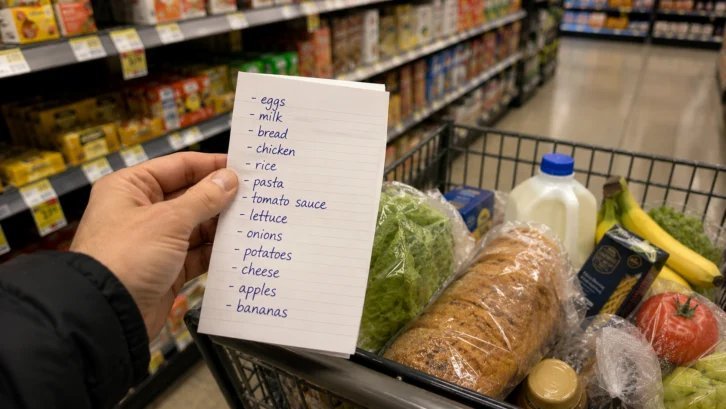
Unplanned shopping is where grocery budgets go to die. Wandering the aisles hungry, grabbing whatever looks good — that’s a $200 week. The fix takes 20 minutes: plan 5 to 6 dinners (leave room for leftovers or takeout), make a list from the plan, and buy only the list.
Plan around what’s on sale and what you already own. Check the pantry first — most of us could cook a week of meals from what’s already sitting there. The USDA’s MyPlate resources have free meal-planning templates if you want a starting structure.
Shop Smarter, Not Harder
- Never shop hungry. The oldest advice because it’s the truest. Eat before you go or you’ll buy the entire snack aisle.
- Store brands first. For staples — milk, eggs, canned goods, frozen veg, spices — store brands are usually identical and 20–40% cheaper. Try them blind; you won’t taste the difference.
- Buy produce in season. Strawberries in January cost triple and taste like cardboard. Seasonal produce is cheaper and better — that’s the whole trick.
- Hit the perimeter. The outer aisles hold produce, dairy, meat, and bakery — real food. The center aisles hold the expensive processed stuff. Shop the edges first.
- Compare unit prices. The shelf tag shows price per ounce. The big box isn’t always the better deal.
- Frozen is your friend. Frozen fruits and vegetables are picked ripe, just as nutritious, and never rot in your crisper. Same for buying meat on sale and freezing it.
Stop Throwing Money in the Trash
The average American family wastes hundreds of dollars of food a year. That wilted lettuce is cash you set on fire. Fight back:
- Eat the fridge first. One night a week, dinner comes only from what’s already open or about to turn. Call it fridge-cleanout night.
- Learn what dates mean. “Best by” is quality, not safety. “Use by” on meat matters; on crackers, it’s a suggestion. Stop tossing good food.
- Store produce right. Herbs in water like flowers, berries unwashed until eating, onions and potatoes apart. Ten minutes of proper storage doubles shelf life.
- Freeze the almost-gone stuff. Bread going stale? Freeze it for toast. Bananas browning? Freeze for smoothies. Milk nearing its date? Freeze it.
Level-Up Tactics for Bigger Savings
Once the basics are in place, these push savings further: buy pantry staples in bulk when they’re genuinely on sale (rice, beans, oats, oil), cook one big batch meal weekly for lunches, and consider a discount grocer like Aldi or Lidl for staples — the quality surprises people.
Also audit your subscriptions and convenience spending. The $6 daily coffee-shop run is $180 a month — that’s a grocery budget line item hiding in plain sight. Redirecting even half of it to savings accelerates building an emergency fund fast.
And teach the system early: teaching kids about money can start right in the grocery aisle — comparing unit prices is a genuinely fun game for school-age kids.
A Realistic Monthly Target
The USDA publishes food-cost plans monthly — a family of four on the “moderate” plan spends well over $1,000. Most families can land between the low-cost and moderate plans with planning and waste-cutting, saving $200–$400 a month. Track one month of receipts first so you know your real baseline; you can’t improve what you don’t measure.
How Can I Save Money on Groceries Every Month? Advanced Tactics
- The pantry challenge. One week a month, buy only perishables (milk, eggs, fresh produce) and cook exclusively from the pantry and freezer. Most families discover they own two weeks of meals they forgot about — and the challenge breaks the autopilot shopping habit.
- Rotate stores strategically. Aldi/Lidl for staples, the regular store for loss leaders, warehouse clubs only for things you’ll actually use up. No single store is cheapest at everything.
- Learn the price book. Track the 20 items you buy most for a month. Once you know your real prices, you’ll instantly spot actual sales vs. fake ones — and stock up correctly when the real deals hit.
- Reduce meat strategically. Two or three meatless dinners weekly cuts the bill noticeably — beans, lentils, and eggs are the cheapest proteins that exist. Nobody’s asking you to go vegetarian; just shift the ratio.
- Grow the easy stuff. Herbs on a windowsill (basil, mint, rosemary) eliminate the $4 plastic packs. Scallions regrow in water on the counter — free green onions forever.
Teaching the Household the System
Grocery savings die when one person plans and everyone else improvises. Get the household on board: share the meal plan where everyone sees it (fridge whiteboard works), give kids an age-appropriate role (teens can own one dinner weekly — it’s a life skill disguised as a chore), and agree on the snack rules so impulse buys don’t leak through.
Also audit the waste monthly: what’s getting thrown out? The pattern reveals the fix — always-tossed lettuce means buy less or switch to longer-lasting veg; stale bread means freeze half the loaf on day one. The USDA’s MyPlate kitchen resources have storage guides that extend everything’s life. Saving money on groceries is a household sport — and like any sport, it’s more fun (and more effective) when everyone’s playing.
The Bottom Line
Saving money on groceries every month comes down to three moves: plan meals from a list, buy smart (store brands, seasonal, frozen, unit prices), and stop wasting what you buy. Do those consistently and $200+ a month in savings is realistic — money that can go straight to debt, savings, or something you actually want.


