
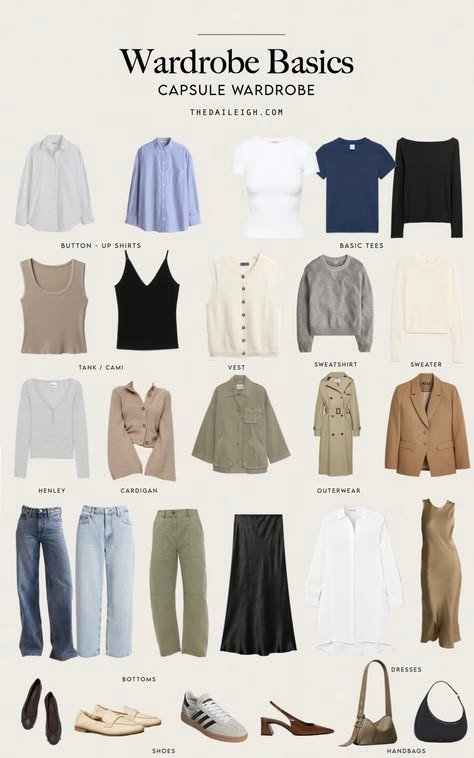
Wardrobe basics are the least exciting clothes you’ll ever buy — and the ones you’ll wear 80% of the time. The white tee, the dark jeans, the blazer that goes with everything: these unglamorous workhorses are what make getting dressed effortless. What are the must-have basics every woman should own? Here’s the definitive list, with honest notes on what to spend on and where to save.
The Tops
- 1. The perfect white tee. Not see-through, not boxy unless that’s the look, with a neckline that sits right. This is harder to find than it should be — try several brands. Buy two once you find it.
- 2. A black tee or tank. The white tee’s evening counterpart. Layers under everything, works solo.
- 3. A striped Breton top. The one “basic” with personality. Instantly polishes jeans, works under blazers, never looks try-hard.
- 4. A white button-down. Tuck it, tie it, layer it — the most versatile shirt in existence. Slightly oversized reads modern; fitted reads classic.
- 5. A quality sweater. Crewneck or v-neck in a neutral (gray, navy, camel). Merino wool if budget allows — it resists odor and lasts years.
- 6. A black turtleneck or mock neck. Fall and winter’s answer to everything. Elegant alone, perfect for layering.
The Bottoms
- 7. Dark-wash jeans that fit perfectly. This is the #1 priority basic — the one worth trying on twenty pairs to find. Dark wash dresses up or down; the fit matters more than the brand. Our guide to choosing jeans for your body shape will save you fitting-room misery.
- 8. Black trousers or pants. Not leggings — actual trousers with structure. The foundation of every “I need to look put-together” outfit.
- 9. A versatile skirt. A-line or pencil in black or navy, hitting at or just above the knee. Only if you wear skirts — don’t buy aspirational basics.
The Layers
- 10. A tailored blazer. Black or navy, single-breasted, hitting at the hip. Instantly takes jeans and a tee to “meeting-ready.” The highest-impact basic on this list.
- 11. A denim jacket. The casual layer that works over dresses, with skirts, with everything. Medium wash is most versatile.
- 12. A classic trench or wool coat. Your outerwear is what the world sees most in cold months — make it count. Camel, black, or navy. See how to choose a winter coat that lasts for years.
The Rest
- 13. A little black dress. Yes, it’s a cliché. It’s a cliché because it works — one dress that handles dinners, funerals, interviews, and events with accessory changes.
- 14. White sneakers. Clean, minimal leather or canvas sneakers go with dresses, jeans, trousers — the great casualizer. Keep them clean with our guide to keeping white sneakers looking clean.
- 15. A quality handbag in a neutral. Structured, medium-sized, black or tan. It carries daily life and anchors every outfit. Our guide to picking the right handbag size helps you choose well.
Where to Spend vs. Save
Spend on: jeans, blazer, coat, handbag, and shoes — the pieces where fit, fabric, and construction are visible and where cost-per-wear justifies it. These are also the pieces worth considering in the timeless fashion pieces that never go out of style category.
Save on: tees, tanks, and trendy-adjacent basics. A $12 tee that fits well beats a $60 tee that doesn’t. Replace yearly without guilt.
The honest truth about basics: nobody compliments a white tee, but everybody notices when your foundation is wrong. These fifteen pieces are the 80% of your wardrobe that makes the other 20% — the fun stuff — actually work. If you’re building from zero, our capsule wardrobe on a budget guide shows how to assemble them affordably.
What Are the Must-Have Basics Every Woman Should Own? Your Questions Answered
How much should I spend on basics vs. statement pieces?
A useful rule: spend on what touches your skin daily and what gets the most wear (jeans, blazer, coat, shoes, handbag), save on what layers underneath or changes yearly (tees, trendy tops). In budget terms, many stylists suggest roughly 70% of clothing spending on basics and 30% on personality pieces. The basics are the infrastructure — they’re worn constantly, photographed often, and noticed when wrong. Good Housekeeping’s clothing guides regularly test which affordable basics actually hold up, which helps direct the spending where it counts.
Do I really need a little black dress?
Only if you’ll wear it. The LBD earned its reputation because it’s the most versatile single dress — but if your life involves zero occasions for it, it’s an aspirational purchase, not a basic. The better question: what’s your equivalent? For some women it’s black trousers and a blazer; for others it’s a great jumpsuit. Basics are personal — the list is a starting template, not a mandate. Audit your actual calendar: the events you attend determine the basics you need.
How often should I replace basics?
It depends on the piece and its rotation. Tees and underwear: yearly. Jeans: every 2-3 years with regular wear (or when the fit goes). Blazers and coats: 5-10 years with care. Handbags: until they show wear. The replacement signal isn’t the calendar — it’s condition and fit. A well-kept blazer from 2019 beats a new one that fits poorly. And when basics wear out, replace with the same proven item rather than experimenting — you already did the research once.
Can basics be stylish or are they just boring?
Basics are only boring when they fit badly or look tired. A perfectly fitted white tee, dark jeans, and blazer is one of the chicest outfits in existence — it’s the uniform of women known for great style. The polish comes from fit, fabric quality, and condition, not from embellishment. And basics are the canvas that makes statement pieces work: the bold necklace needs the simple top, the great shoes need the clean silhouette. Boring is a fit problem, not a basics problem.
The Bottom Line
Fifteen basics — six tops, three bottoms, three layers, plus the LBD, white sneakers, and a neutral handbag — create a wardrobe where everything works together and getting dressed is effortless. Spend on fit-critical pieces, save on replaceables, and build slowly. Basics are boring to buy and wonderful to own.


