
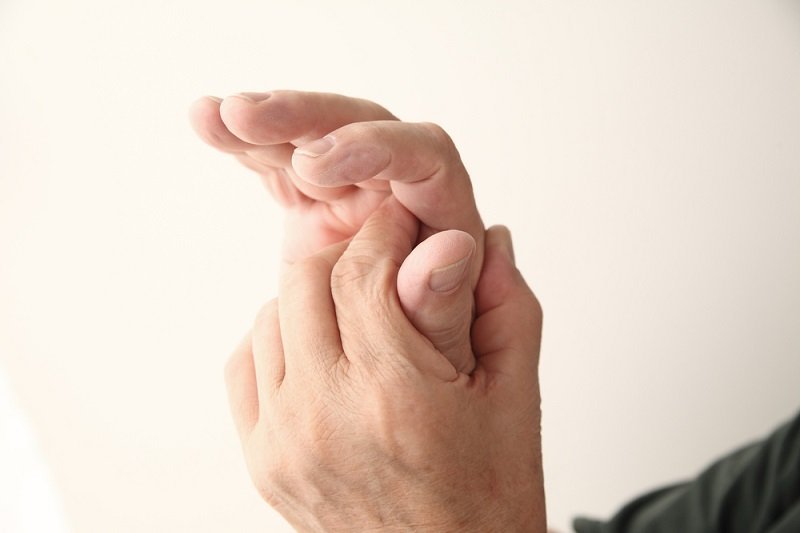
Every knuckle-cracker has heard it: “Stop that, you’ll get arthritis!” Usually from a parent, usually with total confidence, usually wrong. Is it bad to crack your knuckles? This is one of those questions where the folk wisdom and the science went in opposite directions — and the science won decisively. Let’s look at what actually makes that pop, and what decades of research found.
What Makes the Cracking Sound
For years, the leading theory was that cracking was a bubble forming in the synovial fluid that lubricates your joints. Then in 2015, researchers using real-time MRI finally watched it happen: the sound comes from a bubble collapsing — or more precisely, from the rapid formation of a gas cavity when joint surfaces separate quickly, creating a partial vacuum that dissolved gases (mostly carbon dioxide) rush to fill. The “pop” is the cavity forming, not bursting.
Here’s the part relevant to the arthritis question: after cracking, the joint enters a refractory period of about 20 minutes during which it can’t be cracked again — the gases need time to re-dissolve. This is normal joint physiology, not damage. Your joints do tiny versions of this all the time when you move; deliberate knuckle-cracking just does it more dramatically.
The Arthritis Question: What Studies Found
The evidence here is refreshingly clear. Multiple studies — including one famous case where a doctor cracked the knuckles of only his left hand for 50 years as a self-experiment (and won an Ig Nobel Prize for it) — found no link between habitual knuckle-cracking and arthritis. Larger studies comparing habitual crackers to non-crackers found no difference in arthritis rates, grip strength, or hand function.
The old warning likely came from a reasonable-sounding but wrong mechanical intuition: popping sounds like something breaking, so it must be harmful. But joints aren’t light bulbs — they’re living, self-maintaining structures designed for exactly this kind of pressure change. The National Institute of Arthritis and Musculoskeletal Diseases doesn’t list knuckle-cracking among arthritis risk factors, because it isn’t one.
The Honest Nuances
“Not harmful” isn’t quite the whole story. A few honest caveats:
- Aggressive cracking can irritate soft tissue. There’s a difference between gently popping your knuckles and violently yanking your fingers. Habitual, forceful cracking has been associated in some studies with minor soft-tissue swelling and slightly reduced grip strength — not arthritis, but not nothing either.
- It annoys people. The social cost is real. If your habit drives your partner or coworkers up the wall, that’s a legitimate reason to cut back regardless of the medical verdict.
- It can be a nervous habit. Like nail-biting or pen-clicking, compulsive cracking sometimes signals unmanaged stress or anxiety. If you can’t stop despite wanting to, the habit — not the joints — might deserve attention. Our guide to reducing stress without medication covers healthier outlets.
- New joint pain is different. If a joint starts cracking on its own with pain, swelling, or locking — especially a knee or shoulder — that’s worth getting checked. Painless habitual cracking and painful new joint noises are completely different situations.
What Actually Causes Arthritis
Since we’re debunking: the real risk factors for hand arthritis are age, genetics, previous joint injuries, and repetitive heavy loading over years (think manual labor, not typing). If you’re worried about your hands long-term, the useful interventions are maintaining a healthy weight (less load on all joints), staying active — beginner exercises at home keep joints mobile — and protecting joints from injury. Knuckle-cracking doesn’t make the list.
For keeping joints happy generally, gentle mobility work beats worrying about pops. Our morning stretching routine includes hand and wrist movements that do more for joint health than avoiding cracking ever could.
Is It Bad to Crack Your Knuckles? Your Questions Answered
Why can’t I crack the same knuckle twice in a row?
After a crack, the joint needs about 20 minutes before it can pop again. The cracking sound comes from gas bubbles forming in the synovial fluid when the joint surfaces separate — and once those gases are released into the joint cavity, they need time to re-dissolve into the fluid before the process can repeat. This refractory period is completely normal joint physiology. If a joint never cracks or suddenly stops cracking with pain or stiffness, that’s a different situation worth mentioning to a doctor — but the normal 20-minute reset is just physics.
Is cracking my neck or back the same as knuckles?
The mechanism is similar (gas bubbles in joint fluid), but the stakes are slightly different. Gentle, occasional neck cracking isn’t shown to be harmful, but forceful neck manipulation — especially rapid twisting — carries a small but real risk of arterial injury in rare cases. Chiropractic neck adjustments are a separate matter from self-cracking, but the principle holds: be gentle with your neck. For the back, the occasional stretch-induced pop is fine. If you feel you need to crack your neck or back constantly for relief, that’s a signal to address the underlying stiffness with movement and stretching rather than repeated cracking.
Do glucosamine or joint supplements prevent arthritis?
The evidence is underwhelming. Large, well-designed trials (including the NIH-funded GAIT study) found glucosamine and chondroitin no better than placebo for most arthritis sufferers, though a subset with moderate-to-severe pain reported some benefit. They won’t prevent arthritis in healthy joints. What actually protects joints: maintaining healthy weight (every pound lost removes ~4 pounds of pressure from knees), staying active (movement nourishes cartilage), strength training (muscles protect joints), and avoiding joint injuries. Supplements are an expensive bet on a weak hand; the lifestyle factors are the real game.
Why do my joints crack more as I get older?
Several age-related changes increase joint noise: cartilage thins slightly, synovial fluid volume decreases, ligaments tighten, and the smooth surfaces develop minor irregularities. Most age-related cracking is painless and harmless — it’s the soundtrack of normal wear, not a disease alarm. What matters is change: new cracking accompanied by pain, swelling, catching, or locking deserves evaluation. Painless noise that’s gradually increased over the years is just your joints narrating their biography. Keep moving — motion is lotion for joints at every age.
The Bottom Line
Cracking your knuckles doesn’t cause arthritis — decades of research, including a 50-year self-experiment, say so clearly. The pop is just gas bubbles in joint fluid, a normal physiological event. Crack gently, don’t yank aggressively, and maybe spare your coworkers’ sanity. But you can officially stop worrying about your joints every time your knuckles pop.


