
Your last restaurant visit probably involved more AI than you noticed. Not robot waiters (mostly) — but intelligent systems working behind the scenes. How are restaurants using AI to improve service? From the moment you book to the moment you pay, AI is quietly reshaping dining. Here’s what’s actually happening, beyond the hype.
How Are Restaurants Using AI to Improve Service? Before You Arrive
Reservation platforms now use AI to predict no-shows, optimize table assignments, and suggest ideal booking times — which means shorter waits and fewer empty tables. Restaurants analyze reservation patterns to staff correctly: the AI knows Friday needs six servers and Tuesday needs three, cutting both overstaffing costs and understaffed disasters.
Marketing got smarter too. AI segments customers (the anniversary crowd vs. the business lunch crowd), personalizes offers, and predicts which lapsed customers a well-timed offer will bring back. Small restaurants are using the same AI marketing playbook as other small businesses — the local bistro’s email list is now as data-driven as a chain’s.
In the Kitchen: Speed and Consistency
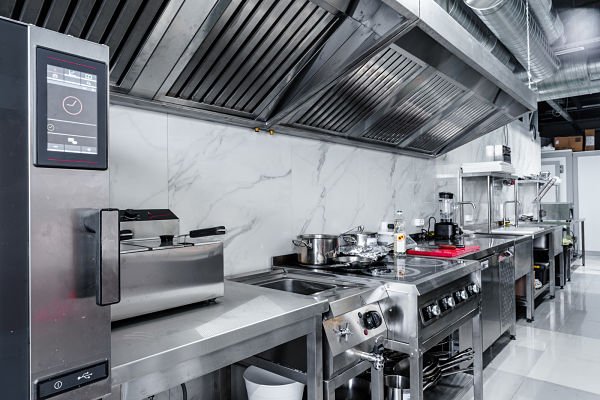
The kitchen is where AI’s impact is most tangible. Predictive ordering forecasts ingredient needs from historical sales, weather, and local events — cutting both food waste and the dreaded “we’re out of the salmon.” Fryer and grill sensors with AI monitoring flag when equipment drifts from spec. Some chains use computer vision to check order accuracy and food quality before dishes leave the kitchen.
Drive-thrus are the visible frontier: AI voice ordering handles the rush-hour crush, and it’s getting genuinely good — faster and more accurate than stressed humans at peak volume. The National Restaurant Association’s research tracks operator adoption: back-of-house automation consistently ranks as operators’ highest-ROI technology investment.
At the Table: The Guest Experience
AI chatbots handle reservations, answer “are you open Sunday?” at 2am, and manage waitlists via text. QR-code ordering systems use AI to suggest pairings and upsells based on your order. Loyalty programs got predictive — “we noticed you love the risotto; it’s back on the menu Thursday.”
But here’s the line restaurants are learning: hospitality is human. The places thriving with AI use it to remove friction (waiting, wrong orders, slow payment) while keeping humans for warmth, judgment, and the actual experience. Nobody wants a robot to notice it’s their anniversary — they want their server to. The industry’s lesson mirrors customer service’s AI story: automate the mechanical, humanize the meaningful.
The Restaurant Worker’s AI Survival Guide
If you work in restaurants, AI isn’t abstract — it’s changing your workplace. Here’s how to navigate it.
Know what’s automating: Order-taking (kiosks, QR, voice AI), phone answering (AI handles reservations and FAQs), scheduling (AI-optimized labor), inventory ordering (predictive systems). If your role is primarily these tasks, the ground is shifting — not tomorrow necessarily, but directionally.
Move toward the human premium: The roles gaining value: genuine hospitality (the host who remembers regulars), complex service (sommelier-level knowledge, handling special events), kitchen craft (AI can’t taste), and management (leading humans through change). The industry’s lesson from [[i:98|AI in customer service]] applies exactly: automate the mechanical, keep the focus on the human.
Learn the systems: The worker who can operate, troubleshoot, and optimize the AI tools becomes indispensable — the “AI-fluent” shift lead who manages both humans and systems. Volunteer for the tech rollouts; early adopters become the trainers, and trainers become managers.
For owners and managers: Deploy AI for back-of-house efficiency and front-of-house friction-removal, but protect the hospitality core — it’s your differentiator against both competitors and automation. Staff feared replaced will disengage; staff empowered by tools will excel. Communicate the plan: “AI handles X so you can focus on Y (the better part of the job).” The restaurants thriving with AI share this pattern — technology absorbing tedium while humans deliver warmth. Workers who understand the shift can ride it instead of fearing it: learn the tools, own the human parts, and become the person the AI-augmented restaurant can’t run without.
Restaurant AI FAQs
Will robots replace waiters?
For routine food-running in some contexts: increasingly yes (robot servers already work in many chains). For hospitality — the welcoming, the recommending, the handling of special moments: no. The industry is bifurcating into automated efficiency (fast food, high volume) and human experience (dining as occasion). Different segments, different futures.
Is my order data being used?
Yes — loyalty programs, apps, and delivery platforms analyze ordering patterns for personalization and pricing. It’s the standard data-for-convenience trade. If it bothers you, order direct (phone/counter) instead of through data-hungry apps, and check privacy settings on the ones you keep.
How can small restaurants afford AI?
They mostly don’t buy “AI” — they get it bundled: reservation platforms with smart features, POS systems with forecasting, free chatbot builders, the same [[i:99|free AI tools]] other small businesses use. The AI revolution for independents is happening through affordable SaaS, not custom systems. A 10-table bistro gets enterprise-grade forecasting for the price of its reservation software.
What It Means for Diners and Workers
For diners: faster service, fewer errors, more personalized experiences — and menus/prices increasingly optimized by data. For workers: the routine tasks (taking orders, answering phones) are automating, while roles requiring hospitality judgment become more valuable. The server of the future does less order-taking and more genuine hosting — arguably the better job.
The throughline: AI in restaurants isn’t about replacing the dining experience; it’s about removing everything that isn’t the dining experience. The wait, the error, the chaos — automated away. The warmth, the craft, the human touch — that’s the part worth paying for, and AI is making it the main event instead of the afterthought.
What Diners Should Know
As a customer, AI in restaurants mostly benefits you — shorter waits, fewer errors, better personalization. Two things worth knowing: your data is being collected through apps and loyalty programs (the standard trade — decide consciously), and dynamic pricing means the menu price isn’t always the price (check before ordering through delivery apps). And when service is exceptional, tip the humans generously — they’re the ones AI can’t replace, working harder than ever alongside it. The future of dining is high-tech and high-touch. Enjoy both.


