Elvis Presley: The King, the Fortune He Left and the Estate That Out-Earned Him
Written by admin
Published November 24, 2026
Reading time 10 minutes
The Numbers Born first, net worth second — the full record sits in the “By the Numbers” table after the career section.
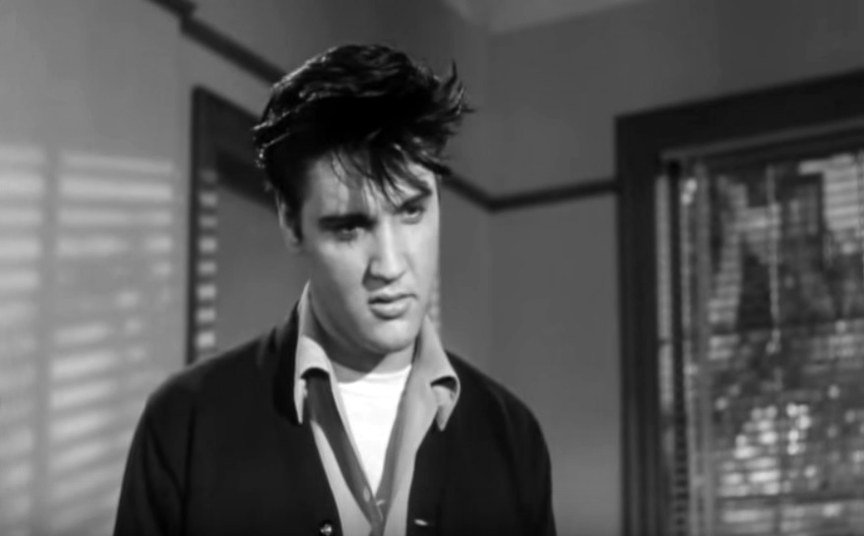
Elvis Presley: The King, the Fortune He Left and the Estate That Out-Earned Him
The Story So Far: Elvis Presley, Tupelo and Graceland
Elvis Presley died on 16 August 1977, at Graceland in Memphis, aged 42 — and this profile runs, throughout, in the past tense that fact requires. What he left behind presents a counting problem unlike any other in this series: the fortune he personally accumulated and died holding was, by the standards of his fame, surprisingly small, while the estate that administers his name, image and catalogue has since become one of the most valuable in entertainment, earning sums in strong years that dwarf what he banked in his lifetime. Both figures belong in this file, clearly separated, and the money section keeps them in separate columns with their sources named.
In his lifetime he was the best-selling solo artist in recorded music history to that point, a film star across thirty-one features, and the performer whose arrival on American television in 1956 is still treated as the starting gun of the rock and roll era. He married once, to Priscilla Presley, and had one child, Lisa Marie. The table that follows this layout’s order puts the net-worth row where it belongs — second, after Born — and the figure it carries is the lifetime figure; the money section deals with the estate’s modern value, where this profile can draw the distinction properly.
The Big Break and the Years After Graceland
1954–1956 — Sun Records and the explosion
In July 1954, during a session that was going nowhere, Presley launched into Arthur Crudup’s “That’s All Right” at a breakneck tempo, and Phillips had his record. Regional hits on Sun followed — “Blue Moon of Kentucky”, “Good Rockin’ Tonight”, “Baby Let’s Play House”, “Mystery Train” — and by late 1955 Sun Records sold his contract to RCA Victor for $35,000, then the largest such deal anyone had ever struck. In 1956 came the detonation: “Heartbreak Hotel”, his first RCA single, number one; the album Elvis Presley, number one; three appearances on The Ed Sullivan Show, the last famously filmed from the waist up; and his first film, Love Me Tender. In a single year he became the most famous young man in America and the lightning rod of a generational argument about race, sex and music that he spent the rest of his life inside.
1957–1960 — Graceland, the Army and the films begin
In March 1957 he bought Graceland, an 18-room mansion on a 13.8-acre estate in Memphis, for $102,500 — the purchase that anchors the house section below. Jailhouse Rock (1957) and King Creole (1958) showed what he might have become as an actor. Then, in March 1958, the Army drafted him, and he served two years in the United States Army in Germany as an ordinary soldier — a decision, managed by his manager Colonel Tom Parker, that protected his standing with the American public at the cost of two years of momentum. His mother died in August 1958, while he was in training, at 46; he was, by every account, devastated. He returned in March 1960 to find his popularity intact and his career about to swing almost entirely into film musicals.
1960–1968 — The Hollywood years and the comeback
The 1960s were the paradox of his career: commercially enormous, artistically narrowing. Twenty-seven films in the decade, most of them formula musicals — Blue Hawaii (1961), Viva Las Vegas (1964) among the better ones — sold soundtracks in huge quantities while the music changed around him. The Beatles, whom he had outsold, remade the culture he had started. The correction came in December 1968 with the NBC television special — the ’68 Comeback Special — in which, in black leather, in the round, singing as if his life depended on it, he re-established himself as a live performer of the first order. It remains the hinge of the whole file: everything before is the rise, everything after is the working life of a star who had proved he still could.
1969–1977 — Memphis sessions, Las Vegas and the final years
The comeback’s momentum produced the great late records: the 1969 Memphis sessions and the album From Elvis in Memphis, with “In the Ghetto” and “Suspicious Minds”, the latter his final American number one. From 1969 he was a fixture in Las Vegas, selling out the International Hotel’s showroom in residencies that set the template for the modern Vegas act, and touring arenas across America without ever performing outside North America. Aloha from Hawaii (1973), broadcast by satellite, reached an audience estimated in the hundreds of millions. Declining health and an increasingly medicated, reclusive life at Graceland marked the final years; his last concert was in Indianapolis on 26 June 1977, and he died at Graceland seven weeks later, on 16 August 1977. The official announcement recorded a heart attack; this profile states the fact of his death, its date and its place, and adds nothing further, because the record this file keeps needs nothing further.
What Tupelo Gave Elvis Presley
Elvis Aaron Presley arrived on 8 January 1935 in Tupelo, Mississippi, in a two-room house his father built, in the depths of the Depression; his birthday falls in early January, and he died at 42. His parents were Vernon Presley, who worked a succession of jobs including driving a delivery truck, and Gladys Presley, a sewing-machine operator, to whom he was exceptionally close. A twin brother, Jesse Garon, arrived stillborn and lies in an unmarked grave in Tupelo — a family fact this profile records here once, in prose, as part of the household he grew up in: his parents raised Elvis as an only child in poverty, in a family that moved to Memphis in 1948 and lived in public housing and cheap rentals while he attended Humes High School.
The music came from everywhere Memphis offered it: gospel at the Assembly of God church the family attended, blues on Beale Street, country on the radio, and the mixed air of a segregated city whose sounds crossed lines its institutions did not. He worked as an usher and a truck driver after graduating in 1953, and in the summer of that year paid a few dollars at the Memphis Recording Service — Sun Studio — to cut a two-sided acetate, officially a gift for his mother. Sam Phillips, who had been looking for a white singer with the feel of the Black artists he recorded, eventually called him back. The roots of the career are therefore documented to the hour: a truck driver, a four-dollar acetate, and a producer listening for exactly the voice that walked in.
Married Life With Priscilla
Presley met Priscilla Beaulieu in Germany in 1959, during his Army service, when she was fourteen and he was twenty-four, the stepdaughter of an Air Force officer stationed near his base. She moved to Graceland in the early 1960s, and they married in Las Vegas on 1 May 1967. Their daughter, Lisa Marie, arrived in Memphis on 1 February 1968. The marriage ended in divorce on 9 October 1973, and he did not marry again; at his death he was a divorced man, and the bank’s “wife” label the table answers in exactly those terms — a former wife, named with her dates, and no wife at the end.
Lisa Marie was nine when he died, grew up between Graceland and California, and became a recording artist in her own right and, for decades, the principal heir and public guardian of his estate; she died on 12 January 2023, aged 54, and the estate’s ownership passed in substantial part to her daughters, with Graceland held in trust. His parents frame the family’s other end: Gladys, whose death in 1958 he never fully recovered from, and Vernon, who managed his son’s affairs, survived him by two years and died in 1979 — having been, with Priscilla and Lisa Marie, a co-executor of the estate. Away from the cameras, the documented family is small and marked by early deaths: parents gone at 46 and 63, a daughter gone at 54, and the King himself at 42 — which is why the estate section below reads as it does, as the story of an institution outliving the family that created it.
The Elvis Presley File, Opened
| The Elvis Presley File, Opened | The Record |
|---|---|
| Born | 8 January 1935, Tupelo, Mississippi, United States; died 16 August 1977, Memphis, Tennessee, aged 42 |
| Net Worth | About $5 million at his death in 1977 — Celebrity Net Worth (equivalent to roughly $26–27 million in today’s money) |
| Age | 42 at his death |
| Height | 6 ft 0 in |
| Weight | No reliable published figure exists |
| Birthday | 8 January |
| Wife | Priscilla Presley (married 1 May 1967; divorced 9 October 1973) — he died unmarried |
| Children | One — Lisa Marie Presley (born 1968; died 12 January 2023) |
| Parents | Vernon Presley (died 1979) and Gladys Presley (died 1958) |
Where the Money Comes From: Graceland and Beyond
The counting needs two columns, and this profile keeps them separate with intent. Column one: Elvis Presley’s own net worth at his death. Celebrity Net Worth puts it at about $5 million in 1977, Parade corroborates that figure, and inflation-adjusted it equates to roughly $26–27 million today. For the best-selling artist in the world, it is a strikingly small residue, and the record documents the reasons: Colonel Parker’s commission, which rose to an extraordinary 50 percent in the final years; a catalogue of publishing sold or shared on terms that favoured others; the 1973 sale of his RCA recording catalogue rights back to the label for a lump sum; relentless spending; and an entourage carried on the payroll for two decades. Forbes’s estimates of his lifetime earnings run from $100 million to $1 billion — earnings, the widest range in this series, recorded as earnings and nothing else.
Column two: the estate. Elvis Presley Enterprises built, from Graceland’s opening to the public in 1982 — a decision taken because the estate needed income to survive — a licensing and tourism business of the first rank. Estimates value the estate in total at $400 million to $500 million, the figure Rolling Stone reported in 2020, and Forbes’s annual dead-celebrity earnings lists show the flow: $110 million in 2022, $100 million in 2023, $50 million in 2024, $17 million in 2025. Those are the estate’s earnings and value, accruing to his heirs and the estate’s corporate partners — never to Presley himself, who died holding about $5 million. The family connection that carried his name into a second dynasty appears in this series in the file on Michael Jackson’s own fortune and career: Jackson married Lisa Marie Presley in 1994, a brief union of the King of Rock and Roll’s heir and the King of Pop, and the two estate files remain the twin summits of posthumous entertainment earnings.
Graceland
The most famous celebrity home in America answers the house pattern in the searches. He bought Graceland in March 1957 for $102,500 — an 18-room Colonial Revival mansion on 13.8 acres on what is now Elvis Presley Boulevard in Memphis — and was his home for the remaining twenty years of his life, the place where he died and where he lies buried, in the Meditation Garden, beside his parents and grandmother. Since 1982 it has operated as a museum drawing hundreds of thousands of visitors a year, the engine of the estate’s earnings and a National Historic Landmark. No other property in his life approaches its significance, and this profile attaches no valuation to it here beyond its documented purchase price and its documented role.
Elvis’s Garage: Rolls-Royce Leads
His cars are the stuff of American folklore, and the documented core is Cadillac: he bought them in quantity, gave them away in quantity — to friends, to staff, and in famous instances to strangers whose admiration caught his eye in a showroom — and the pink 1955 Cadillac Fleetwood, bought for his mother, is among the most recognisable cars in the world. Reporting over the decades puts his lifetime purchases at more than a hundred cars, Cadillacs at the centre but Lincolns, a Rolls-Royce, a BMW and a Stutz Blackhawk among them. This profile relies on no total valuation here: the record supports the scale, the generosity and the pink Cadillac, and this profile presents them as exactly that — a documented pattern of buying and giving, not an inventoried collection with a price.
Counted plainly, then, the two columns: about $5 million held at death on the named estimate, and an estate estimated at $400–500 million built afterward from his name — the largest gap between a star’s own fortune and his posthumous one in this entire series, printed with both sources attached.
One Last Look at Elvis Presley
The story stands, nearly five decades after his death, as an institution rather than a memory. Graceland draws its visitors; the catalogue streams at a scale the 1977 balance sheet could not have imagined; Baz Luhrmann’s Elvis (2022) and the continuing reissue programme keep recruiting new audiences; and Forbes still ranks the estate among the highest-earning of all deceased celebrities in most years. The estate’s affairs, following Lisa Marie Presley’s death in 2023, passed to the next generation, and the institution’s work — licensing, tourism, the protection of the name — continues as a going concern.
His own story closed in 1977 at 42, with about $5 million, a mansion, a hundred cars given and kept, and a body of recordings that had already changed the world once. Everything since — the $400–500 million estate, the annual earnings lists, the museum — is the fortune of the name rather than the man, and this profile has counted them separately because he, of all subjects, earned the distinction.