
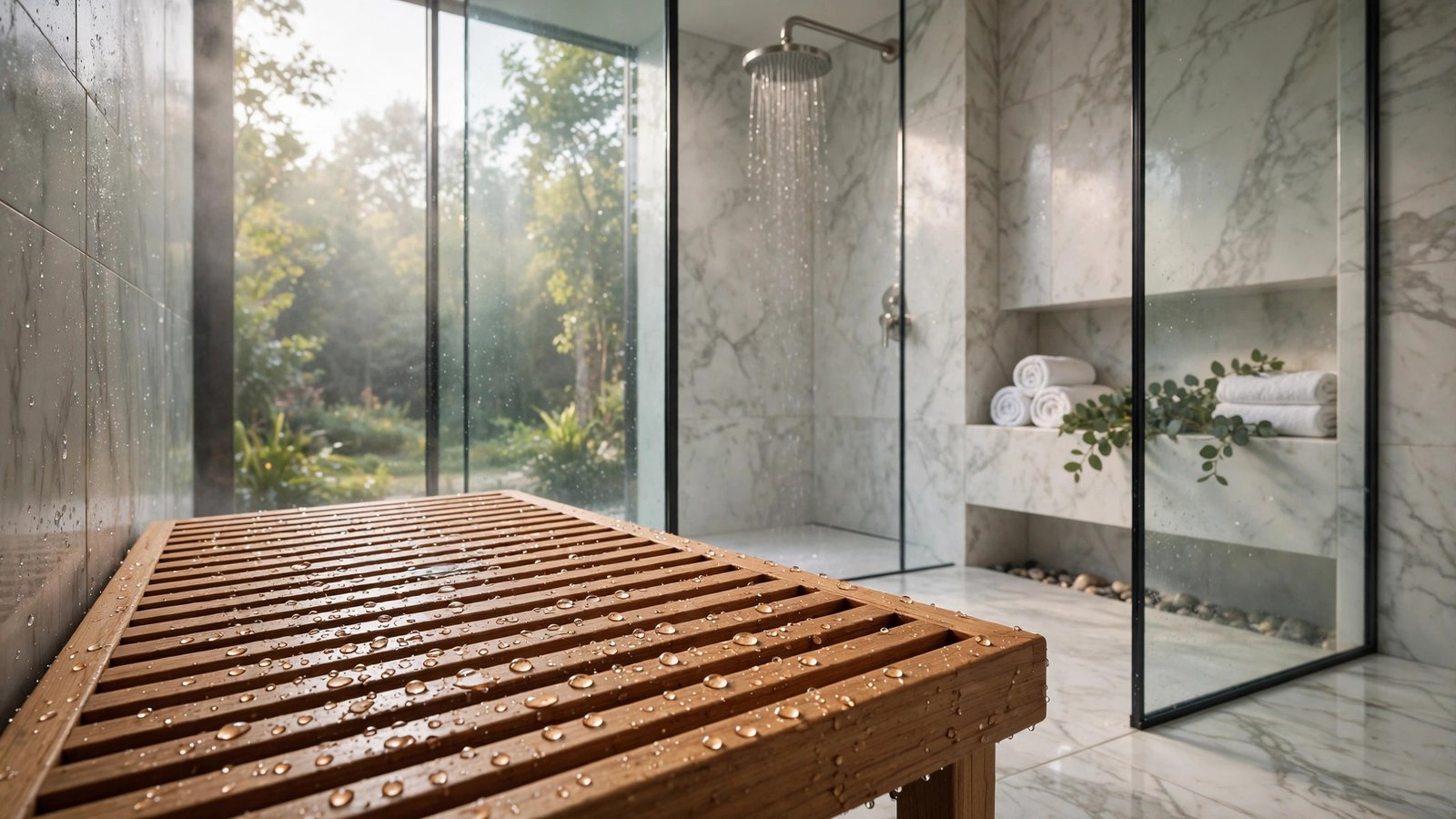
Teak Shower Bench: What You Need to Know
A teak shower bench is a small waterproof seat made from teak wood — prized because teak’s natural oils make it resistant to water, mold, and rot without chemical treatment. It gives you a place to sit, shave your legs, or rest a foot while showering, and it works in both walk-in showers and over tub edges. Prices typically run $60–$300 depending on size and quality. Here’s everything to know before buying one.
Why Teak? The Wood That Loves Water
Teak (Tectona grandis) is the gold standard for wet environments, and it’s not marketing hype — it’s chemistry. Teak heartwood is loaded with natural oils and silica that:
- Repel water instead of absorbing it, so the wood doesn’t swell, crack, or warp in a steamy shower
- Resist mold, mildew, and fungi naturally, without sealants or chemical treatments
- Withstand insects and decay — the same reason teak is used for boat decks and outdoor furniture
- Stay stable through wet-dry cycles that would destroy pine or oak in months
Cheaper “shower benches” made from bamboo or acacia can work, but they need regular sealing and have shorter lifespans in constant moisture. Plastic and aluminum benches are cheaper and lighter but feel cold and clinical. Teak hits the sweet spot: naturally durable, warm to the touch, and genuinely good-looking.
Types of Teak Shower Benches
Corner benches
Triangular benches that tuck into a shower corner. The most space-efficient option — ideal for standard tubs and smaller showers where floor space is precious (read: most NYC bathrooms). Typically seat one person and support 200–250 lbs.
Rectangular benches
The classic: a slatted bench 18–36 inches wide. More seating area and doubles as a shelf for shampoo and soap. Best for walk-in showers with room to spare. Longer models (30″+) can support 300+ lbs.
Shower stools
Compact, often round or square, and sometimes with adjustable height legs. Great for small showers and for people who mainly need the bench for shaving legs or foot care rather than full sitting.
Fold-down wall-mounted benches
Attached to the shower wall and folding up when not in use. The premium option — fantastic for tiny bathrooms and for accessibility. Requires solid wall backing for installation (tile over drywall alone won’t hold it), so it’s usually a remodel-level decision rather than an impulse buy.
Who Actually Needs One?
- Seniors and anyone with mobility issues: Sitting to shower dramatically reduces fall risk — the number-one bathroom hazard. A bench plus a grab bar is the core of an accessible shower.
- Post-surgery or injury recovery: Standing on one leg or with limited balance in a slippery shower is asking for trouble. Doctors routinely recommend shower seating after hip, knee, and foot surgery.
- Pregnancy: Shaving legs and washing feet gets acrobatic in the third trimester. A bench solves it.
- Anyone who likes a long shower: Sometimes you just want to sit under hot water for ten minutes. No judgment.
- Grooming: Leg shaving, foot scrubbing, and exfoliating are all easier seated.
What to Look for When Buying
- Solid teak, not “teak finish”: Check that it’s genuine teak heartwood, not a cheaper wood with teak-colored stain. Real teak is heavy, has a straight grain with natural oil feel, and costs more — suspiciously cheap “teak” usually isn’t.
- Slatted design: Gaps between slats let water drain instead of pooling. Solid-top benches stay wet and get slippery.
- Weight capacity: Match it to the user with margin. Standard benches handle 200–250 lbs; heavy-duty models go to 350+. When in doubt, size up.
- Non-slip feet: Rubber or silicone feet keep the bench from sliding on wet tile. Adjustable feet help on uneven shower floors.
- Smooth finish: Run your hand over it — there should be no splinters, rough spots, or sharp edges. Quality benches are sanded smooth.
- Right size for your shower: Measure your shower floor before ordering. A bench that crowds the space becomes a shin-bruising obstacle instead of a convenience.
- Sustainability certification: Look for FSC-certified or plantation-grown teak. Old-growth teak harvesting has serious environmental issues; certified plantation teak avoids them.
How to Care for a Teak Shower Bench
Teak is low-maintenance, not no-maintenance. In a shower’s constant moisture:
- Rinse it after use — a quick rinse washes away soap and shampoo residue that feeds mildew.
- Let it dry between showers — prop it up or leave the bathroom ventilated. Teak tolerates constant moisture, but drying cycles extend its life.
- Scrub occasionally with a soft brush and mild soap to remove soap scum and any early mildew. Never use bleach — it damages the wood fibers.
- Oil it once or twice a year with teak oil if you want to keep the warm golden color. Without oiling, teak weathers to an attractive silvery gray — purely cosmetic, and many people prefer it. Never use varnish or polyurethane in a shower; it peels in constant moisture.
- Sand lightly (220-grit) if the surface ever feels rough — then rinse clean.
With basic care, a quality teak bench lasts 10–20 years in a shower. That’s the real value proposition versus replacing a $30 bamboo bench every couple of years.
Safety Tips
- Place the bench on a level spot — wobbling on wet tile defeats the purpose.
- Test stability before trusting your full weight; sit down slowly the first few times.
- Pair with a non-slip bath mat under and around the bench.
- For elderly users or post-surgery recovery, combine the bench with properly installed grab bars — the bench handles sitting, the bars handle standing up.
- Check weight ratings honestly. A bench rated for 200 lbs is not a suggestion.
Teak vs. Alternatives: Quick Comparison
- Teak: Naturally water-resistant, 10–20 year lifespan, warm look, $60–$300. The best all-rounder.
- Bamboo: Cheaper ($25–$70) but needs regular sealing and lasts 2–5 years in constant moisture.
- Plastic/HDPE: Cheapest and lightest ($20–$50), zero maintenance, but looks utilitarian and can feel flimsy.
- Aluminum with teak-look slats: Rust-proof and sturdy ($80–$180), but cold to sit on and less attractive.
- Built-in tile bench: The luxury remodel option — permanent, beautiful, and expensive ($500+ installed).
If this is a long-term bathroom, teak wins on the cost-per-year math. For a rental or a temporary need (like post-surgery recovery), a cheaper plastic or aluminum bench makes more sense.
FAQs
Will a teak shower bench get moldy?
Teak’s natural oils resist mold far better than other woods, but “resistant” isn’t “immune.” Soap scum buildup in a poorly ventilated shower can grow mildew on any surface. Regular rinsing and ventilation keep it clean — if mildew appears, scrub with mild soap and a soft brush.
How much does a teak shower bench cost?
Expect $60–$120 for a small stool or corner bench, $120–$250 for a quality rectangular bench, and $200–$400+ for large or wall-mounted models. Genuine teak under $50 is a red flag — it’s likely a different wood with teak stain.
Does teak need to be sealed for shower use?
No — that’s the whole point of teak. Its natural oils are the sealant. Avoid varnish or polyurethane, which peel in constant moisture. An occasional coat of teak oil is optional and cosmetic, not structural.
Can you put a teak bench in a bathtub?
Yes — many people use them across the tub as a seat or to hold toiletries. Just make sure the feet sit stably on the tub edges and the bench is rated for the intended weight. Measure your tub width first.
How long does a teak shower bench last?
A solid teak bench with basic care lasts 10–20 years in daily shower use. It will weather to a silvery gray over time unless you oil it — that’s cosmetic and doesn’t affect durability.


