
How to Get Rid of Drain Flies: Step-by-Step Guide (2026)
To get rid of drain flies, scrub the slime inside your drains with a pipe brush, then flush with boiling water followed by an enzyme-based drain cleaner — and repeat for several days. Drain flies breed in the gelatinous gunk coating the inside of pipes, so killing the adult flies you see does nothing unless you destroy their breeding ground. The full elimination process below takes about a week.
Drain flies (also called moth flies or sink flies) are those tiny, fuzzy, moth-like insects hovering around your kitchen sink, bathroom drain, or shower. They don’t bite, but they’re a sign of buildup in your pipes — and in older NYC apartment buildings with aging plumbing, they’re practically a rite of passage. The good news: you can eliminate them yourself without an exterminator.
Confirm They’re Actually Drain Flies
Before treating, make sure you’re dealing with drain flies and not fruit flies or gnats:
- Drain flies are tiny (about 1/8 inch), gray or tan, with fuzzy moth-like wings. They fly in short, jerky hops and hang around drains, rarely venturing far.
- Fruit flies are smaller, reddish-eyed, and hover around fruit, trash, and recycling — not drains.
- Fungus gnats are slender and dark, and they hover around houseplant soil.
The tape test: Cover the suspect drain with clear packing tape (sticky side down) overnight, leaving a small gap for air. In the morning, check the tape — if tiny flies are stuck to it, you’ve found the breeding drain. Test every drain in the area, including showers, tubs, floor drains, and rarely-used sinks.
Step-by-Step: Eliminating Drain Flies
Step 1: Clean out the drain mechanically
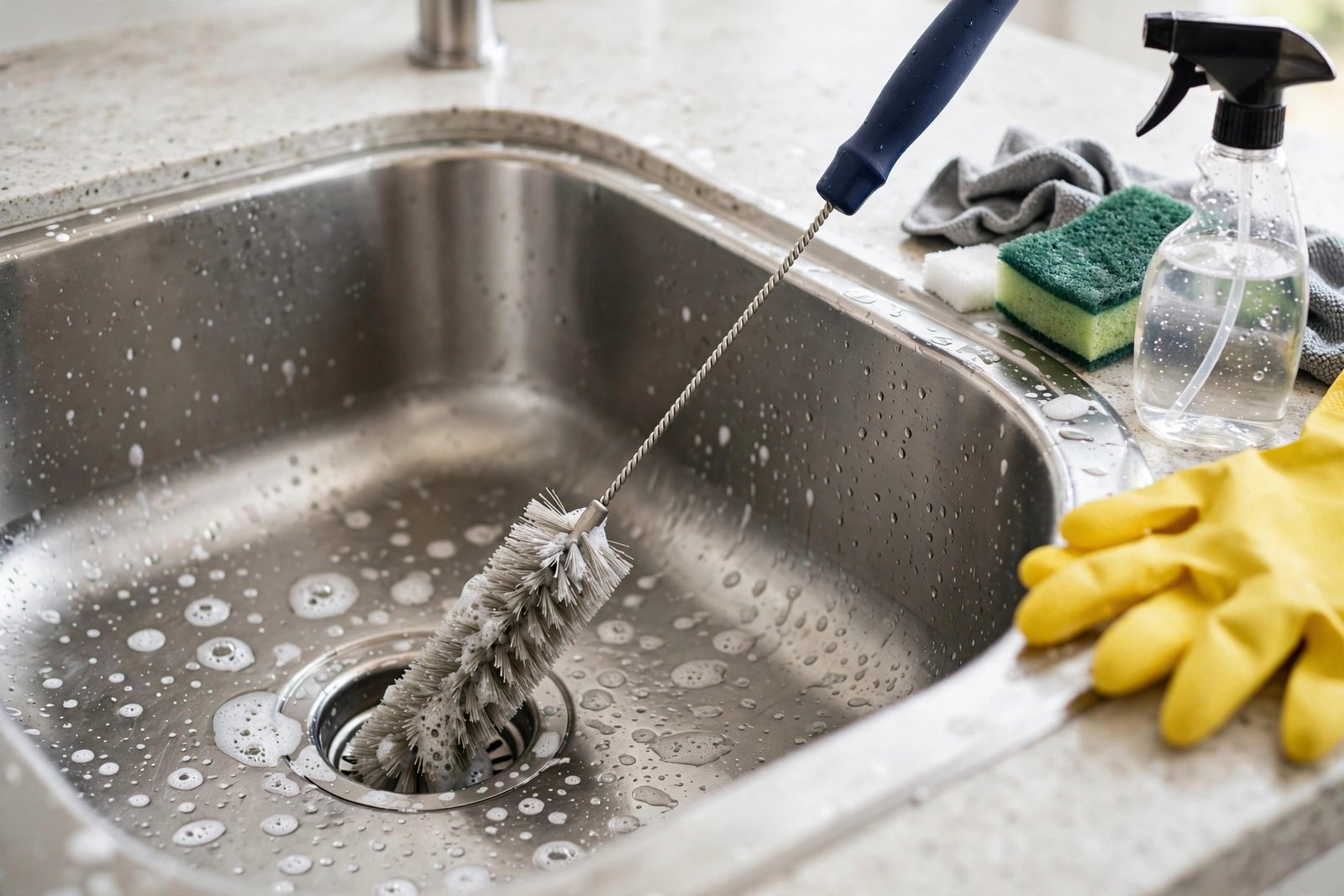
This is the step most people skip, and it’s the most important one. Drain flies lay eggs in the slimy biofilm coating the inside of pipes — no chemical fully penetrates that gunk. Remove the drain cover or stopper and scrub the inside of the drain and the first few inches of pipe with a long pipe brush or an old toothbrush. Pull out any hair and gunk you find. For shower and tub drains, a plastic drain snake (a few dollars at any hardware store) pulls out astonishing amounts of hair and slime.
Step 2: Flush with boiling water
Boil a kettle and pour it slowly down the drain. The heat kills eggs and larvae on contact and loosens the biofilm. Repeat 2–3 times. (Skip this for PVC pipes if your plumber has warned against it — most modern PVC handles boiling water fine for short pours, but when in doubt use very hot tap water instead.)
Step 3: Apply an enzyme drain cleaner
Use a bacterial/enzyme drain cleaner (like Bio-Clean or Green Gobbler Bio Flow) — not a caustic chemical drain opener. Enzyme cleaners contain live bacteria that digest the organic slime flies breed in, and they’re safe for pipes and septic systems. Pour it in before bed so it works overnight, and don’t run water down the drain for 6–8 hours afterward. Repeat nightly for 5–7 days to break the full breeding cycle.
What about baking soda and vinegar? The fizzy volcano is satisfying but mostly cosmetic — it doesn’t penetrate biofilm well. It won’t hurt, but don’t rely on it as your main treatment. Bleach is also a poor choice: it kills surface bacteria but doesn’t remove the slime layer, and the flies return within days.
Step 4: Trap the adults
While the enzyme treatment works on the larvae, catch the breeding adults so they can’t lay new eggs:
- Apple cider vinegar trap: Fill a small bowl with apple cider vinegar plus a drop of dish soap (breaks the surface tension so they sink). Cover with plastic wrap poked with small holes. Place it near the drain overnight.
- Sticky traps: Simple yellow sticky traps near the drain catch adults passively.
Step 5: Repeat and monitor
Drain fly eggs hatch in 1–2 days and the full lifecycle is about 2–3 weeks. Keep up the enzyme treatments for at least a week after you stop seeing flies, and redo the tape test to confirm the drain is clear. Declaring victory too early is the number-one reason infestations “come back.”
Finding Hidden Breeding Spots
If you’ve treated the obvious drains and flies persist, check these overlooked breeding sites:
- Rarely-used drains — guest bathrooms, basement floor drains, utility sinks. The water in the P-trap evaporates, letting flies (and sewer gas) up from below. Run water in unused drains monthly.
- Overflow holes in bathroom sinks — slime builds up inside them. Scrub with a small brush.
- Garbage disposals — the rubber splash guard and the grinding chamber harbor biofilm. Scrub the underside of the splash guard and run the disposal with ice cubes and citrus.
- Drip pans under refrigerators and condensation lines from AC units.
- Mop buckets and damp cleaning tools stored in utility closets.
- Trash chutes and compactor rooms in apartment buildings — if the flies are coming from a shared chute, that’s a building management issue, not yours. Report it.
Preventing Drain Flies From Coming Back
- Run hot water down kitchen drains for 30 seconds after doing dishes to flush away food residue.
- Clean the garbage disposal weekly — ice, citrus peels, and dish soap keep the chamber fresh.
- Pour enzyme cleaner down drains monthly as maintenance.
- Fix slow drains promptly — standing water in pipes is a nursery for flies.
- Keep drains covered when not in use in problem areas.
- In apartment buildings, coordinate with neighbors — if the breeding site is in a shared pipe, treating only your unit won’t solve it.
Mistakes to Avoid
- Only killing the adults. Spraying the flies you see is pure theater. The larvae in the pipes are the actual problem.
- Relying on bleach alone. It sanitizes the surface without removing the biofilm the flies live in.
- Stopping treatment after two days. The lifecycle is 2–3 weeks; a few days of treatment just thins the herd.
- Ignoring unused drains. That guest bathroom nobody uses is often the source.
- Pouring insecticide down the drain. It’s ineffective against larvae buried in slime, bad for plumbing, and a hazard for septic systems and waterways.
FAQs
How long does it take to get rid of drain flies?
Expect 1–3 weeks of consistent treatment. The full lifecycle from egg to adult is about 2–3 weeks, so you need to keep treating until every generation is broken. Most people see dramatic improvement within the first week.
Do drain flies bite humans?
No. Drain flies don’t bite, sting, or transmit diseases to humans. They’re a nuisance and a sanitation indicator, not a health hazard — but nobody wants them in the kitchen.
Will drain flies go away on their own?
Almost never. As long as the biofilm in your pipes remains, they’ll keep breeding indefinitely. The slime doesn’t disappear by itself, so active cleaning is required.
Can I just pour bleach down the drain to kill drain flies?
Bleach kills some surface organisms but doesn’t dissolve the slimy biofilm where eggs and larvae live, so flies typically return within days. Mechanical scrubbing plus enzyme cleaner is far more effective.
Why do I keep getting drain flies in my apartment building?
In multi-unit buildings, the breeding site may be in shared plumbing — a neighbor’s drain, a trash chute, or a basement floor drain. If your own drains are clean and flies persist, report it to building management so the common areas get treated too.


