
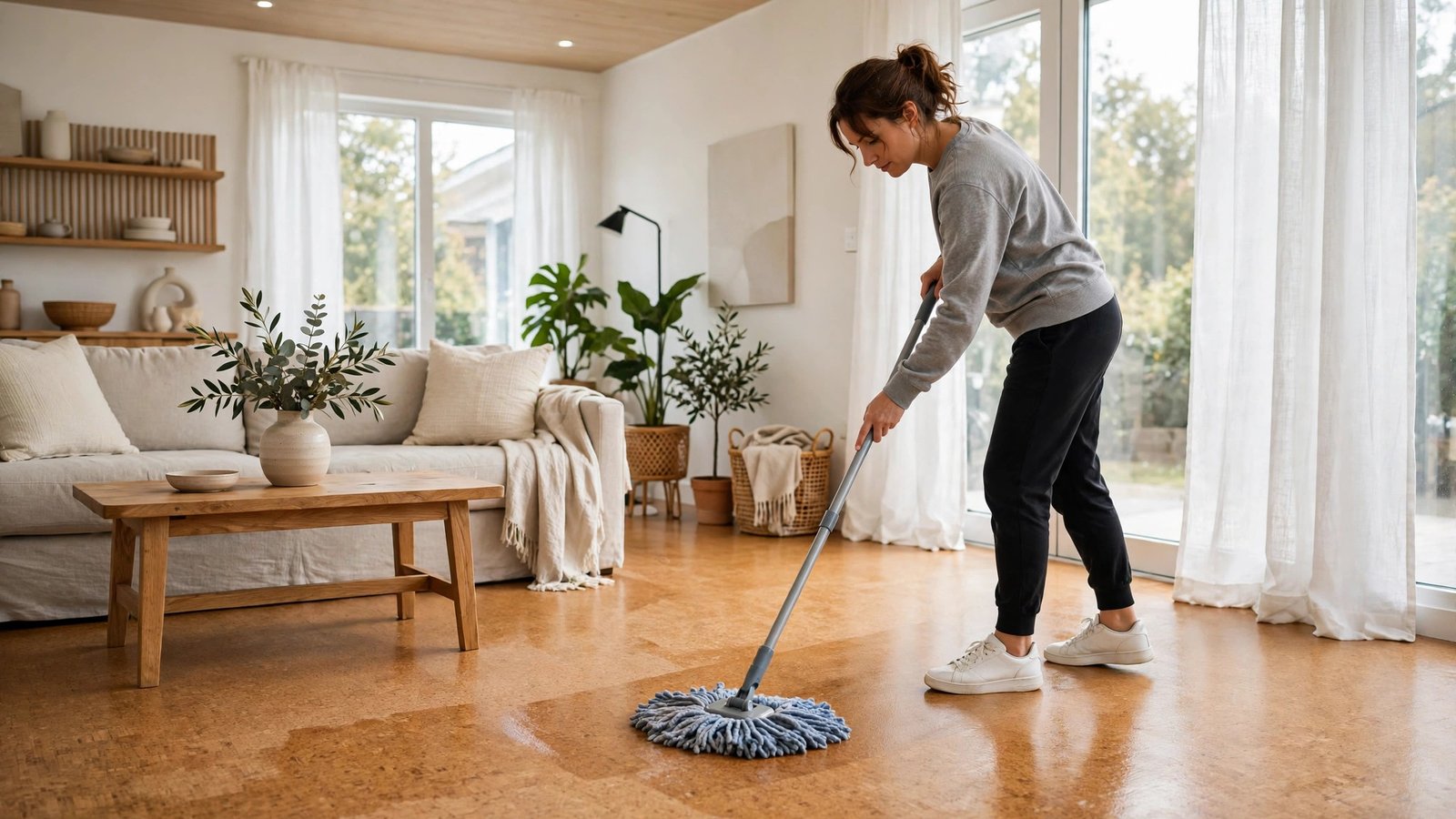
How to Clean Cork Flooring: Step-by-Step Guide (2026)
To clean cork flooring, sweep or vacuum it regularly, damp-mop with a well-wrung mop and a pH-neutral cleaner, and never soak it or use steam. Cork is naturally water-resistant but not waterproof — standing water seeps into the seams and makes the tiles swell. Done right, routine cleaning takes ten minutes and keeps cork floors looking great for decades.
Cork flooring has been having a quiet renaissance, and it’s easy to see why: it’s warm underfoot, soft on joints, naturally insulating, and sustainably harvested from cork oak bark without cutting down trees. It’s a favorite in NYC apartments precisely because it muffles footstep noise — your downstairs neighbors will thank you — and adds warmth to rooms that never quite shake a winter chill. But cork’s soft, porous nature means it needs gentler care than tile or hardwood.
Understanding Cork Flooring (Why Cleaning Is Different)
Cork floors come in two main forms, and the type affects how aggressively you can clean:
- Sealed/finished cork (polyurethane or wax finish) — has a protective topcoat. More forgiving, resists moisture better, and is the most common type in homes.
- Unsealed cork — raw and porous. Absorbs water and stains fast. Needs resealing and the gentlest possible cleaning.
Most residential cork floors are sealed. If you’re not sure about yours, drip a few drops of water on an inconspicuous spot: if it beads up, the seal is intact; if it soaks in and darkens the cork, it’s time to reseal before doing any wet cleaning.
Daily and Weekly Cleaning Routine
Step 1: Sweep or vacuum (daily or every few days)
Grit is cork’s worst enemy. Sand, dirt, and small pebbles tracked in from the street act like sandpaper on the finish, dulling it over time. Sweep with a soft-bristle broom or vacuum with a hard-floor setting (no beater bar — the rotating brush can dent and scratch soft cork). In a city apartment, a quick daily sweep of entryways makes a real difference.
Step 2: Damp-mop (weekly)
This is the core of cork floor care:
- Fill a bucket with warm (not hot) water and add a pH-neutral floor cleaner — a capful of mild dish soap works, or a cleaner made for cork or wood floors.
- Dip a microfiber mop or soft sponge mop, then wring it out thoroughly. The mop should be barely damp, not dripping. This is the single most important detail in cork care.
- Mop in the direction of the tiles or planks, working in small sections.
- Go over the floor a second time with a clean, damp (well-wrung) mop to pick up any soap residue.
- Let it air-dry. Open a window or run a fan — cork dries quickly when it’s only slightly damp.
Step 3: Deal with spills immediately
Blot spills the moment they happen with a dry or slightly damp cloth. Cork resists brief contact with water, but a puddle left sitting — especially at seams — will soak in and cause swelling or staining. Red wine, coffee, and pet accidents need immediate attention on cork.
Deep Cleaning Cork Floors
Every few months, or when the floor looks dull despite regular mopping, do a deeper clean:
- Sweep/vacuum thoroughly first — never deep-clean over grit.
- Mix warm water with a dedicated cork floor cleaner (Bona Hardwood Floor Cleaner and similar pH-neutral products work well).
- Damp-mop in sections as usual, wringing the mop nearly dry.
- For scuff marks, rub gently with a tennis ball or a damp microfiber cloth with a drop of cleaner — most scuffs lift right off.
- Buff dry with a clean microfiber cloth or dry mop to remove any haze.
If the finish itself looks worn — dull patches, water no longer beading — deep cleaning won’t fix it. The floor needs to be resealed, not scrubbed harder. Screen the surface lightly and apply a fresh coat of water-based polyurethane made for cork, following the manufacturer’s directions. Most sealed cork floors need resealing every 3–5 years in normal residential use.
Removing Stains from Cork Flooring
- Food and drink stains: Dab with a cloth dampened with warm water and mild dish soap. For stubborn spots, make a paste of baking soda and water, apply gently, let sit 10 minutes, and wipe clean.
- Grease: A drop of dish soap on a damp cloth, then rinse-wipe with a clean damp cloth.
- Pet stains: Blot up everything you can, clean with an enzyme-based pet stain cleaner (safe for sealed cork), and dry the area completely. Enzyme cleaners break down the odor-causing proteins rather than masking them.
- Ink or marker: Dab with rubbing alcohol on a cloth — test in a hidden spot first, as alcohol can dull some finishes.
- Dark water stains: These mean moisture got under the finish. Light ones sometimes fade with the baking soda paste method; deep ones usually require sanding and resealing that section.
Whatever the stain, always work from the outside in, blot rather than scrub, and dry the spot afterward. Scrubbing grinds the stain deeper and damages the cork’s texture.
What NOT to Do: Cork Flooring Enemies
- Steam mops. The heat and moisture force water into seams and can delaminate the finish. This is the fastest way to ruin a cork floor.
- Soaking/wet mopping. A dripping mop is never okay on cork.
- Vinegar and acidic cleaners. Despite being a popular “natural” cleaner, vinegar’s acidity breaks down polyurethane finishes over time.
- Bleach and ammonia. Too harsh — they discolor cork and destroy sealants.
- Abrasive scrubbers and beater-bar vacuums. Cork dents and scratches easily.
- Wax-based “mop and shine” products. They build up into a hazy, sticky layer that’s miserable to remove.
Protecting Cork Floors Long-Term
- Furniture pads: Stick felt pads on every chair and table leg. Cork dents under concentrated pressure, and pads are cheap insurance.
- Entry mats: A good doormat (plus a no-shoes policy, if that’s your household’s style) keeps abrasive grit off the floor.
- Rugs in high-traffic zones: Hallways and kitchen work areas benefit from washable runners. Use rug pads without rubber backing — natural rubber can stain cork.
- Pet nails: Keep them trimmed. Cork is softer than hardwood and shows claw marks faster.
- Sunlight: Cork fades in strong direct sun. In a bright south-facing apartment, curtains or UV-filtering window film prevent uneven fading.
- Humidity control: Cork expands and contracts with humidity swings. Keeping indoor humidity between 40–60% (a humidifier in dry NYC winters, ventilation in humid summers) prevents gaps and buckling.
Room-by-Room Cork Care: Kitchens, Bathrooms, and Entryways
Cork performs differently depending on the room, and your cleaning routine should adapt:
- Kitchens: The biggest risk is water around the sink and dishwasher, plus dropped food. Keep a washable runner in front of the sink, wipe up splashes immediately, and damp-mop weekly. Check the seams near appliances every few months for early signs of swelling — catching it early means a simple reseal instead of a tile replacement.
- Bathrooms: Honestly, cork is a risky choice for full bathrooms — constant humidity and standing water work against it. If you have it in a powder room, use bath mats religiously, ventilate well after showers, and reseal more often (every 2 years). For a full bath remodel, look at cork-look luxury vinyl instead and keep real cork in drier rooms.
- Entryways and hallways: These take the most abuse — grit, wet shoes, and heavy foot traffic. A two-mat system (a coarse outdoor mat plus an absorbent indoor mat) cuts tracked-in dirt dramatically. Consider this the zone that determines how often the whole floor needs resealing.
- Bedrooms and living rooms: The easy zones. Regular dusting and occasional damp mopping are all they need. Furniture pads matter most here, since heavy pieces sit in one place for years and can leave permanent dents.
Seasonal Cork Floor Maintenance Checklist
- Spring: Deep clean after winter’s salt and grit season. Inspect the finish — road salt is brutal on sealants. This is the best time to reseal if needed, since you can ventilate while the polyurethane cures.
- Summer: Watch humidity. Cork swells in damp summer air; run a dehumidifier or AC if indoor humidity creeps above 60%. Rotate rugs so sun fading stays even.
- Fall: Put down entry mats before the wet season. Check window seals near cork floors — a slow leak onto cork goes unnoticed until the damage is done.
- Winter: Dry heated air shrinks cork and opens gaps at the seams. A humidifier keeping indoor humidity around 40–50% prevents this. Wipe up melted snow and slush immediately — it’s the winter equivalent of a standing puddle.
Cork Flooring and Pets: Extra Care Tips
Pets and cork can coexist happily, but they need a few extra precautions since cork is softer than hardwood:
- Keep nails trimmed. Dog and cat claws leave visible scratches and dents in cork faster than in oak or tile. Regular nail trims are the single biggest favor you can do your floor.
- Clean accidents immediately. Urine soaks into cork seams fast and leaves both stains and odor. Blot thoroughly, clean with an enzyme-based pet cleaner, and dry completely. For repeat spots, an enzymatic treatment followed by resealing that area may be needed.
- Place mats under food and water bowls. Water bowl splashes are a daily mini-flood on the floor around them. A waterproof mat solves it.
- Rugs on favorite paths. Dogs tend to run the same routes — hallway to door, couch to kitchen. Runners on those paths absorb the wear.
- Litter boxes: Put a large mat under and around the box. Litter granules are abrasive, and the occasional miss is much easier to handle on a washable mat than on cork.
When to call a pro: If large areas are worn, water-damaged, or the finish is peeling across the room, a flooring professional can screen and recoat the entire floor in a day — often cheaper than replacing tiles, and the result looks brand new.
FAQs
Can you use a Swiffer on cork floors?
Yes — dry Swiffer pads are great for daily dust pickup, and Swiffer WetJet-style damp pads are fine as long as the floor is sealed and you don’t over-wet any area. Avoid letting liquid pool on the floor.
Can you steam clean cork flooring?
No. Steam mops drive heat and moisture into the seams, which swells the cork and can peel the finish. Stick to damp mopping with a well-wrung mop.
How do you make dull cork floors shine again?
First try a proper deep clean — dullness is often just soap buildup. If the floor is still dull, the finish is worn and needs resealing with a water-based polyurethane. A fresh topcoat restores both shine and protection.
Is cork flooring waterproof?
No — it’s water-resistant, not waterproof. Sealed cork handles spills and damp mopping fine, but standing water, floods, and steam will damage it. It’s a poor choice for full bathrooms; kitchens and living areas are its sweet spot.
How long does cork flooring last?
With proper care and periodic resealing, 25–40 years or more. The finish wears, not the cork itself — which is why resealing every few years is the real longevity secret.


