How to Protect Your Hearing at Concerts in New York City
How to protect your hearing at concerts in NYC: decibel dangers at real venues, the best earplugs for music lovers, and smart habits that save your ears long-term.
Written by admin
Published November 1, 2026
Reading time 6 minutes
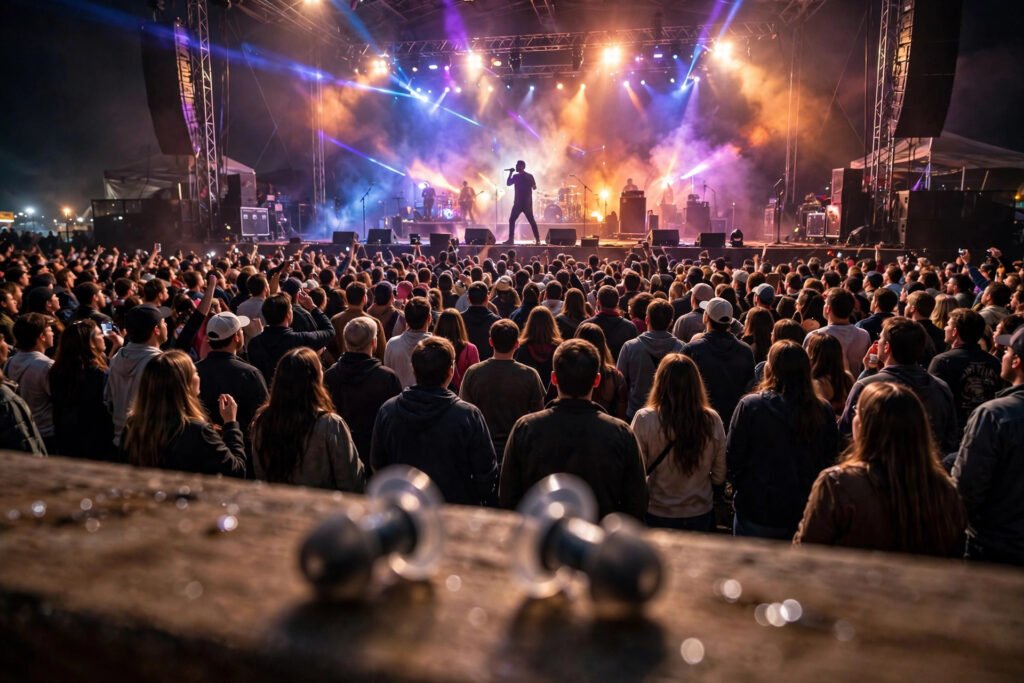
There is a specific kind of ringing in your ears after a great concert — the one that fades by morning and the one that does not. Anyone who has stood in front of the speakers at a packed New York venue knows the first kind. Too many longtime concertgoers know the second kind too: the permanent, high-pitched hiss of tinnitus, or the slow creep of hearing loss that makes conversations in noisy restaurants a guessing game by age 40.
Here is what most music fans do not realize: concert hearing damage is almost entirely preventable, it does not require giving up live music, and the fix costs less than a single drink at most Manhattan venues. If you love concerts in New York City, protecting your hearing is the single highest-return investment you will ever make in your music life.
How Loud Concerts Actually Are
Numbers make this concrete. Normal conversation sits around 60 decibels. NYC subway trains hit roughly 90–100 dB. A typical rock or EDM concert runs 100–120 dB near the speakers — and the scale is logarithmic, meaning 110 dB is ten times more intense than 100 dB.
The CDC’s guidance on noise exposure is sobering: at 100 dB, hearing damage can begin after just 15 minutes. At 110 dB, the safe window shrinks to under 2 minutes. A three-hour concert at 105 dB without protection is not a fun night out for your ears — it is an acoustic injury, repeated every time you go. And unlike a hangover, the damage accumulates silently; you do not feel your hearing cells dying.
Why Musicians’ Earplugs Change Everything
Forget the foam plugs from the drugstore — though even those are vastly better than nothing. The game-changer for concertgoers is high-fidelity (musician’s) earplugs, which use acoustic filters to reduce volume evenly across frequencies. Instead of the muffled, bass-only sound of foam plugs, you hear the music clearly — just quieter, typically by 15–25 dB.
Good options cost $15–40 for reusable universal-fit plugs from established hearing-protection brands, and custom-molded plugs from an audiologist run $150–250 — still less than most NYC concert tickets in 2026. The custom route is worth it if you attend shows monthly: the fit is perfect, the sound is the most natural, and they last for years. The NIH’s National Institute on Deafness has excellent resources on finding qualified audiologists.
The psychological barrier is the real obstacle. Nobody wants to be the person putting in earplugs while everyone else raw-dogs the sound system. Get over it: a huge share of touring musicians, sound engineers, and venue staff wear protection at every show. The people deepest in the music protect their ears the most. That tells you everything.
Smart Habits Beyond Earplugs
Earplugs are the foundation, but a few more habits multiply your protection:
Distance is free protection. Sound intensity drops fast with distance. Moving 20 feet back from the speaker stacks can cut your exposure dramatically while often improving the actual mix — front-of-house engineers mix for the middle of the room, not the front row.
Take breaks. Step into the lobby or outside between sets. Your ears partially recover during quiet intervals, and the cumulative dose is what matters.
Watch the small venues. Counterintuitively, small clubs can be worse than arenas — low ceilings and hard walls trap and amplify sound. Basement venues in Brooklyn with concrete walls are among the loudest environments in the city.
Protect your ears after, too. Give your ears 24 hours of relative quiet after a loud show. That ringing (temporary threshold shift) is your auditory system waving a red flag; repeated episodes without recovery are what convert temporary damage into permanent loss.
NYC-Specific Realities
New York’s live music scene is a hearing hazard in unique ways. The city’s legendary small rooms — the ones where you discover your next favorite band — pack incredible volume into tiny spaces. Outdoor summer festivals seem safer, but stage-side positions at events in parks can still exceed safe levels for hours. And the subway ride home at 95 dB adds to the night’s total dose, which is one more reason earplugs should live in your bag permanently.
On the positive side, NYC makes protection easy to get. Audiologists across the five boroughs offer musician’s plugs and hearing baselines, and nyc.gov’s health resources can point you to low-cost hearing services. If you are building a concert habit, start by finding free concerts in your city — and bring earplugs to every single one.
What If the Damage Is Already Done?
If you already have persistent ringing or notice you are asking people to repeat themselves, see an audiologist for a baseline hearing test — it is quick, painless, and often covered by insurance. There is no cure for noise-induced hearing loss, but hearing aids have become remarkably discreet and effective, and tinnitus management therapies help many sufferers significantly.
The key insight: it is never too late to stop further damage. Your remaining hearing is worth protecting fiercely, starting tonight. Many veteran concertgoers describe their only regret as not starting ear protection a decade earlier — do not join them.
Enjoying Music More, Not Less
Here is the paradox longtime protected concertgoers report: with high-fidelity earplugs, they actually enjoy shows more. The painful harshness is gone, the mix is clearer, vocals cut through, and there is no post-show ringing or muffled “underwater” feeling the next morning. Protection does not diminish the experience — it removes the parts of the experience that were hurting you.
Pair that with discovering new music you will actually like and you have the formula for a lifetime of live music: more shows, better sound, and ears that still work at 60.
Conclusion
Concert hearing damage is permanent, cumulative, and almost entirely preventable for the price of a cocktail. Get high-fidelity earplugs, wear them at every show without embarrassment, mind your distance from the speakers, and give your ears recovery time. New York City offers a lifetime of incredible live music — from subway platforms to stadiums — and the only way to enjoy all of it is to still be able to hear it in thirty years. Your future self is begging you: protect your ears tonight.
Frequently Asked Questions
Do earplugs ruin the concert experience?
High-fidelity musician’s earplugs reduce volume evenly without muffling, so music sounds clear — just safer. Most users report enjoying shows more, not less, once they adjust.
How loud is too loud at a concert?
Above 85 dB for extended periods risks damage; most concerts run 100–120 dB. At 100 dB, damage can begin in 15 minutes. If you have to shout to be heard by someone an arm’s length away, it is too loud for unprotected ears.
Are foam earplugs good enough?
They are far better than nothing and reduce 20–30 dB, but they muffle sound unevenly. For regular concertgoers, $20 high-fidelity reusable plugs are a major upgrade in sound quality.
Can one concert cause permanent hearing loss?
A single extremely loud exposure (like standing by pyrotechnics or speaker stacks) can cause permanent damage, though most hearing loss comes from repeated exposures accumulating over years. Tinnitus after a show that lasts more than 24 hours warrants a hearing check.
Where can I get custom earplugs in NYC?
Most audiology clinics across the five boroughs offer custom musician’s plugs with an impression appointment. Expect $150–250 and about two weeks for manufacturing; the result lasts for years.