The Correct Order to Apply Skincare Products (2026)
What is the correct order to apply skincare products? The thin-to-thick rule, full AM/PM routines, NYC climate adjustments, and layering mistakes to avoid.
Written by admin
Published October 29, 2026
Reading time 6 minutes
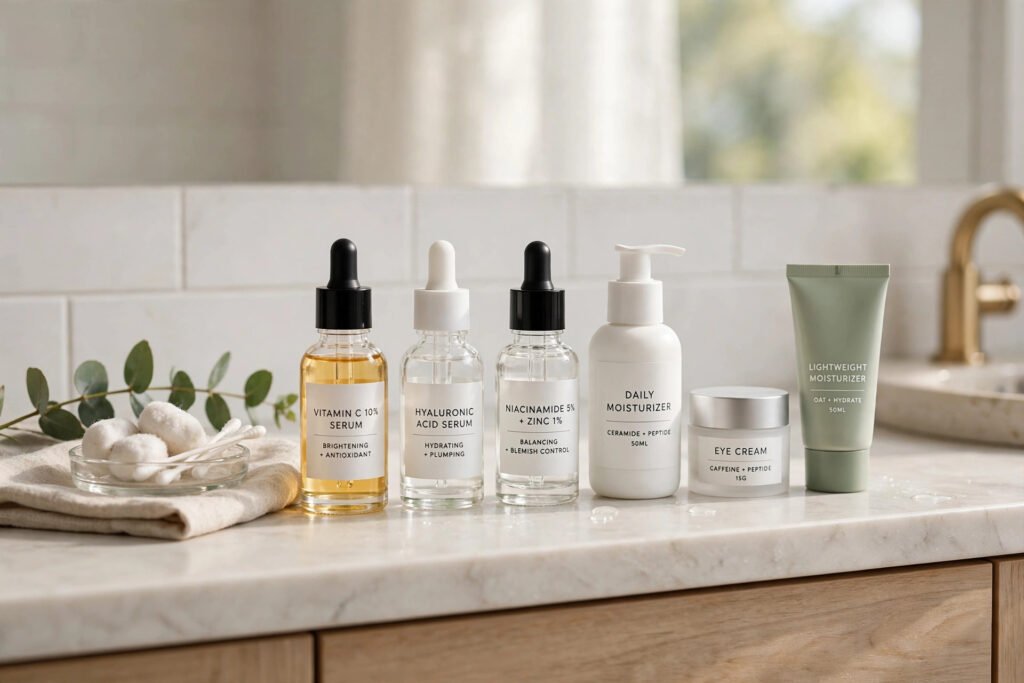
Layering skincare products in the wrong order is like putting on socks over shoes — the ingredients cannot do their job. Apply a heavy cream before a watery serum and you have just blocked the serum from ever reaching your skin. The correct order follows one simple principle: thinnest to thickest, water-based before oil-based. This guide gives you the exact order for morning and night, explains why each step sits where it does, and adapts it for New York City’s unique skin challenges — from summer subway humidity to winter wind tunnels.
The golden rule: thin to thick
Skincare layering is physics: lightweight, water-based formulas penetrate skin easily, while heavy occlusives (oils, thick creams) seal everything beneath them. Apply out of order and the heavy layer blocks the light ones — wasting product and results. The NIAMS skin health resources explain how the skin barrier works — useful background for why order matters. The universal sequence: cleanser → toner/essence → serums (thinnest first) → eye cream → moisturizer → facial oil → sunscreen (AM only). Wait 30–60 seconds between layers so each absorbs rather than pilling. You do not need all twelve steps — a routine you actually do beats a perfect routine you abandon. And remember that skin health starts from within too — the best foods for healthy skin matter as much as what you apply topically.
The morning routine (order matters most here)
Step 1 — Cleanser: a gentle cleanse removes overnight oil and product residue. Oily skin: foaming or gel cleanser. Dry/sensitive: micellar water or a splash of lukewarm water is enough — over-cleansing in the morning strips the barrier.
Step 2 — Toner/Essence: hydrating toners (glycerin, hyaluronic acid, rose water) prep skin to absorb what follows. Apply to damp skin — humectants pull moisture from their surroundings, and damp skin gives them water to grab instead of pulling it from deeper layers.
Step 3 — Serum (antioxidant): vitamin C serum goes here in the morning — it neutralizes free radicals from UV and pollution (both abundant in NYC) and boosts sunscreen’s effectiveness. Apply to dry-ish skin, 3–4 drops.
Step 4 — Eye cream: the eye area gets its own product because the skin is thinner and most facial serums are too strong for it. Ring finger, gentle patting, no dragging.
Step 5 — Moisturizer: seals in the layers beneath. Gel for oily skin, lotion for normal, cream for dry. In NYC summers, many people can skip this step if their sunscreen is moisturizing enough.
Step 6 — Sunscreen (NON-NEGOTIABLE): SPF 30+ broad-spectrum, every single day — UV penetrates clouds and office windows, and NYC’s summer UV index hits 9–10. Sunscreen always goes last in the morning (before makeup) because it needs to form an even film on the skin’s surface. The American Academy of Dermatology’s sun protection guidance is the gold standard here. Reapply every 2 hours outdoors — a sunscreen stick makes this easy over makeup.
The nighttime routine (where repair happens)
Step 1 — First cleanse (oil-based): oil cleanser or balm dissolves sunscreen, makeup, and sebum. Massage 60 seconds. Step 2 — Second cleanse (water-based): gentle foaming or cream cleanser removes the residue. This double-cleanse is the foundation — actives cannot penetrate through a day of buildup.
Step 3 — Exfoliant (2–3x/week, not daily): chemical exfoliants (AHA/BHA) go on clean skin before other actives. Do not layer multiple strong actives the same night — alternate retinoid nights and exfoliant nights.
Step 4 — Toner/Essence: same hydrating prep as morning, on damp skin.
Step 5 — Serums (thinnest first): if using multiple serums, apply the most watery first. Common night serums: niacinamide (pores, oil control), hyaluronic acid (hydration), retinoids (see below).
Step 6 — Retinoid (if you use one): tretinoin, retinol, or adapalene — the most evidence-backed anti-aging ingredients in dermatology. Apply a pea-sized amount to dry skin, 2–3 nights/week to start, building up. Buffer with moisturizer if irritating (the “sandwich method”: moisturizer, retinoid, moisturizer). Expect 4–6 weeks of adjustment (mild flaking is normal; raw burning is not).
Step 7 — Eye cream, then moisturizer, then facial oil (optional): oil last — it seals everything. In winter, this occlusive layer is essential against NYC’s brutal heating-season dryness.
Night routines pair naturally with wind-down rituals — a good bedtime routine for better sleep and your skincare routine reinforce each other beautifully.
NYC-specific adjustments
Summer (humidity + pollution): lighten up — gel moisturizer or none, mattifying sunscreen, vitamin C for pollution defense. The subway-to-street sweat cycle clogs pores; a gentle evening double-cleanse is non-negotiable. Winter (wind + indoor heating): indoor heating drops humidity to desert levels — layer hydration (hyaluronic acid on damp skin), use a heavier cream, add facial oil, and consider a humidifier (your skin and sinuses will thank you). Hard water: NYC water is moderately hard — if your skin feels tight after cleansing, try a gentler cleanser rather than blaming your serums. Year-round: pollution is a real skin stressor here — antioxidant serums (vitamin C, niacinamide) earn their place in every NYC routine.
Common layering mistakes
Mixing incompatible actives: vitamin C + retinoids in the same routine irritates most skin (use C in AM, retinoid in PM); benzoyl peroxide + retinoids deactivate each other; too many exfoliating acids at once destroys the barrier. Applying to dry skin: hydrating serums on bone-dry skin can backfire — always apply humectants to damp skin. Using too much: a pea-sized amount of retinoid, 3–4 drops of serum — more product does not mean more results, it means more irritation and pilling. Expecting overnight miracles: retinoids need 12+ weeks; vitamin C needs 4–8 weeks. Skincare is compounding interest, not a lottery ticket. Skipping sunscreen while using actives: retinoids and exfoliants increase sun sensitivity — using them without daily SPF is actively harmful.
Conclusion
The correct skincare order — cleanser, toner, serums thinnest-first, eye cream, moisturizer, oil, sunscreen last in the morning — follows the simple physics of thin-to-thick layering. Adapt it to New York: lighter layers and pollution defense in the humid summer, heavy occlusion against winter heating dryness, and sunscreen every single day of the year. Start with the basics (cleanser, moisturizer, sunscreen), add one active at a time, and give each 6–8 weeks. Your skin does not need twelve products — it needs the right products in the right order, used consistently.
Frequently Asked Questions
What order do you apply skincare products?
Thinnest to thickest: cleanser → toner/essence → serums (watery first) → eye cream → moisturizer → facial oil → sunscreen (morning only). Wait 30–60 seconds between layers.
Does the order of skincare really matter?
Yes — heavy occlusive products block lighter ones from penetrating. Applying a thick cream before a serum wastes the serum. The thin-to-thick rule ensures each layer reaches the skin.
Should vitamin C go before or after moisturizer?
Before — vitamin C serum applies to clean, toned skin in the morning, with moisturizer and sunscreen layered over it. It also boosts your sunscreen’s effectiveness.
Can I use retinol and vitamin C together?
Not in the same routine for most skin — the combination irritates. Use vitamin C in the morning and retinoids at night for the benefits of both without the conflict.
How long should I wait between skincare layers?
About 30–60 seconds — enough for each layer to absorb slightly. If products are pilling (balling up), you are applying too much or not waiting long enough.