
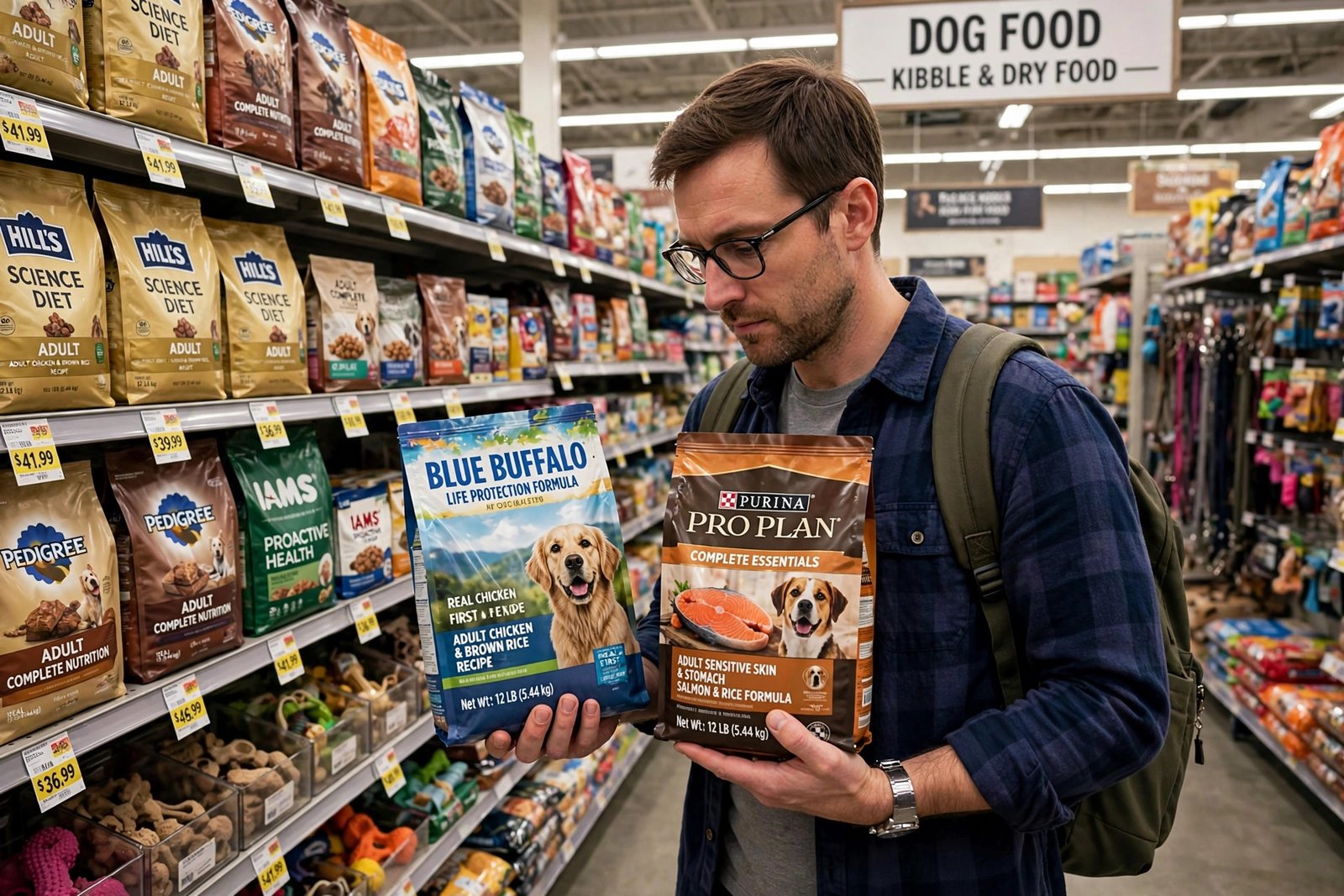
Walk down any pet food aisle and you will face a wall of bags screaming “premium,” “ancestral,” “holistic,” and “vet-recommended” — with prices ranging from $0.80 to $4+ per pound. The pet food industry is brilliant at making you feel guilty for not buying the $90 bag. But here is the truth: expensive does not reliably mean better, and choosing the right pet food is mostly about reading labels, not reading marketing. This guide shows you how to feed your pet well without overspending.
What actually matters on the label
The AAFCO statement: this is the single most important thing on the bag. Look for “formulated to meet the nutritional levels established by the AAFCO Dog/Cat Food Nutrient Profiles for [life stage]” (the AAFCO consumer resources explain exactly what that statement guarantees) — or better, a feeding trial statement. If a food lacks an AAFCO statement, skip it regardless of price or branding. This one line matters more than every other claim combined.
Named animal protein first: the first ingredient should be a named meat or meat meal (“chicken,” “chicken meal,” “salmon”) — not “meat and bone meal” (mystery source) and ideally not a plant protein doing the heavy lifting. Note: “meal” is not a dirty word — chicken meal is concentrated protein with water removed, often more protein-dense than fresh chicken.
Life-stage appropriateness: puppies/kittens, adults, and seniors have different needs. “All life stages” foods are formulated for the most demanding stage (growth) — fine for most, but large-breed puppies specifically need large-breed puppy food to control growth rate and protect joints.
What does NOT matter much: “grain-free” (unless your vet diagnosed a specific grain allergy — grain-free diets have been linked to heart issues in dogs per FDA investigation), “human-grade” (unregulated marketing term), exotic proteins (kangaroo, bison — no proven benefit for healthy pets), and beautiful packaging. The FDA’s pet food resources explain label requirements officially.
The price tiers: what you get at each level
Budget ($0.80–$1.50/lb): brands like Purina Dog Chow, Pedigree. Meet AAFCO standards; use more plant protein and by-products. Perfectly adequate nutrition — millions of healthy pets eat these. The snobbery is marketing, not science.
Mid-range ($1.50–$2.75/lb): Purina Pro Plan, Hill’s Science Diet, Royal Canin, Iams. The sweet spot for most owners — feeding trials, veterinary nutritionists on staff, consistent quality control. This is what most vets actually feed their own pets.
Premium ($2.75–$4+/lb): Orijen, Acana, Fromm, boutique brands. Fancy ingredients, beautiful marketing — but no consistent evidence of better health outcomes than mid-range foods with feeding trials. You are often paying for the story.
Prescription/veterinary diets: separate category — medically necessary for kidney disease, urinary issues, allergies. Worth every penny when prescribed; pointless (and expensive) when not.
The uncomfortable truth: a mid-range food with an AAFCO feeding-trial statement from a company employing veterinary nutritionists (Purina, Hill’s, Royal Canin) is nutritionally more validated than most $90 boutique bags. Price and quality correlate weakly in pet food — unlike almost any other product category.
How to actually save money
Buy the right size bag: the largest bag you will use within 4–6 weeks of opening (fats oxidize once opened). Cost per pound drops 20–40% at larger sizes. Subscribe and save: Chewy, Amazon, and manufacturer autoship programs cut 5–10% plus free shipping — set it and forget it. Compare cost per day, not per bag: feeding guidelines differ — a $60 bag fed at 2 cups/day can cost less per day than a $45 bag fed at 3.5 cups/day. Do the division. Warehouse clubs: Costco’s Kirkland pet food is manufactured to high standards at budget prices — one of the best values in the category. Avoid the vet-office markup trap selectively: prescription diets must come through vet channels, but everyday food is cheaper online or at warehouse clubs. Do not overfeed: the bag’s guidelines are starting points, often generous — an overweight pet eats more food and generates more vet bills. Ask your vet for your pet’s ideal daily amount. The same bulk-buying discipline applies to human groceries — saving on groceries monthly and stretching a small grocery budget use identical tactics. And nutrition is only part of health — healthy breakfast ideas remind us that consistent, balanced fuel matters for every species.
Wet vs. dry vs. raw: does format matter?
Dry kibble: the economical default — complete nutrition, convenient, good for dental health (mildly). Most pets thrive on quality kibble; there is no nutritional requirement for wet food in healthy animals. Wet food: higher moisture (great for cats, who are chronically under-hydrated, and for pets with urinary issues), more palatable for picky eaters — but 2–3x the cost per calorie and spoils once opened. A mixed approach (kibble base with wet food topper) captures most benefits at moderate cost. Raw/homemade: the most expensive and the riskiest — veterinary nutritionists warn that most homemade recipes are nutritionally incomplete unless formulated by a professional, and raw diets carry bacterial risks for pets and humans. If you go homemade, use a board-certified veterinary nutritionist’s recipe, not a blog’s. For most owners, quality kibble (possibly with wet toppers) is the rational optimum of nutrition, convenience, and cost.
When to spend more (the legitimate exceptions)
Diagnosed medical conditions: kidney disease, food allergies, urinary crystals — prescription diets are medicine, not marketing. Large/giant breed puppies: correctly formulated large-breed puppy food prevents developmental orthopedic disease — this is evidence-based, not upselling. Your pet does poorly on the current food: chronic soft stools, itchy skin, or dull coat after 6–8 weeks warrant a diet change (transition gradually over 7–10 days) — and a vet visit if it persists. Life stage transitions: puppy to adult to senior formulas at the right times. Outside these cases, switching to a pricier food because the bag looks better is not an investment in your pet’s health.
Conclusion
Choosing the right pet food without overspending comes down to: demand the AAFCO statement, pick a named-protein food in the mid-range tier from a company with veterinary nutritionists and feeding trials, buy the largest fresh-usable bag on subscription, feed the correct amount (not the bag’s maximum), and reserve premium spending for genuine medical needs. Your pet cannot read marketing copy — but their body reads nutrition labels perfectly. Feed the label, not the story, and pocket the savings.
Frequently Asked Questions
Is expensive dog food actually better?
Not reliably. Price correlates weakly with nutritional quality — mid-range foods with AAFCO feeding trials from companies employing veterinary nutritionists are often better validated than pricier boutique brands.
What should I look for on a pet food label?
The AAFCO nutritional adequacy statement (most important), a named animal protein as the first ingredient, and life-stage appropriateness. Ignore “grain-free,” “holistic,” and “human-grade” marketing claims.
Is grain-free dog food better?
No, unless your vet diagnosed a specific grain allergy (rare). The FDA has investigated links between grain-free diets and heart disease (DCM) in dogs. Grains are nutritious for most pets.
How can I save money on pet food?
Buy the largest bag you will use in 4–6 weeks, use subscription discounts (5–10% off), compare cost per day rather than per bag, check warehouse clubs, and feed the correct amount — overfeeding wastes food and creates vet bills.
When does my pet need prescription food?
For diagnosed conditions like kidney disease, urinary issues, or confirmed food allergies — as directed by your vet. Prescription diets are medicine; regular pets do not benefit from them.