Is an MBA Worth It in 2026? The Honest Math
Is an MBA worth it in 2026? The full cost-vs-payoff math, who benefits most, who should skip it, and a decision framework for your situation. Choose wisely.
Written by admin
Published October 24, 2026
Reading time 6 minutes
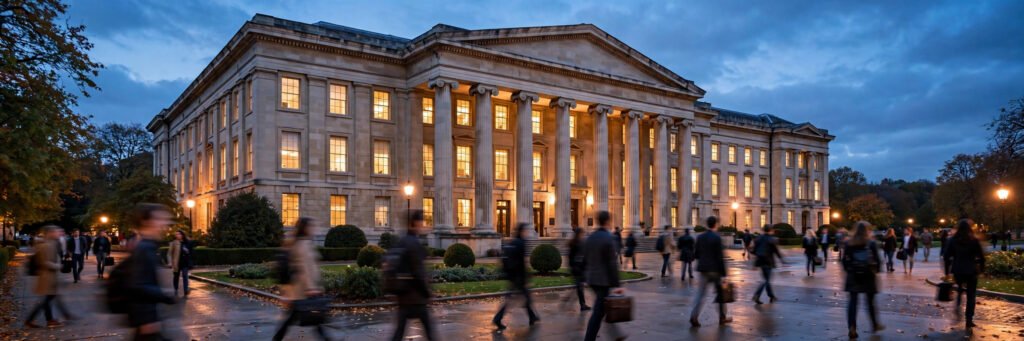
The MBA was once the closest thing the business world had to a golden ticket: two years, a prestigious name on your resume, and a near-guaranteed leap into high-paying management, consulting, or finance roles. In 2026, that story is fraying at the edges. Tuition at top programs has pushed past $200,000 all-in, employers are questioning the degree’s premium, AI is reshaping the knowledge work MBAs traditionally managed, and alternative credentials keep multiplying. So is an MBA worth it in 2026? For some people it’s still one of the highest-ROI moves available. For others it’s an expensive detour. The difference is entirely in the details of your situation.
What an MBA actually buys you
Strip away the brochures and an MBA delivers three things: a credential signal, a network, and a career-switching mechanism. The signal matters most in fields that still filter by pedigree — investment banking, top-tier consulting, and certain corporate leadership tracks. The network is the underrated asset: your classmates become hiring managers, founders, and clients for decades, and that compounds in ways salary tables don’t capture. The career switch is the most practical value — the MBA remains one of the few reliable ways to pivot from engineering, the military, or nonprofits into high-paying business roles.
What it doesn’t reliably buy anymore: automatic salary premiums in fields that never cared about the degree, entrepreneurship success (founders’ outcomes correlate with execution, not credentials), or protection from industry disruption. Know which of these you’re actually purchasing.
The brutal math: cost vs. payoff
Let’s do the arithmetic honestly. A top-15 full-time MBA now costs $180,000–$250,000 in tuition and living expenses, plus two years of forgone salary — for someone earning $90,000, that’s another $180,000 in opportunity cost. Total investment: potentially $400,000+. Against that, median starting salaries for top-program graduates hover around $175,000–$200,000 plus signing bonuses. The payback works — but it works over 5–8 years, not instantly, and it depends on actually landing those elite outcomes.
The math changes dramatically by tier. Top-15 programs feed the recruiting pipelines that justify the cost; programs ranked 30–50 have far weaker placement into high-paying roles while still charging serious tuition — that’s where the ROI most often breaks. And part-time, evening, and online MBAs rewrite the equation entirely: keep your salary, pay less, and gain the credential over 2–3 years. Before committing, research realistic outcomes — the Bureau of Labor Statistics publishes management-occupation salary data that grounds expectations, and Federal Student Aid clarifies what graduate borrowing actually entails.
Who the MBA still serves brilliantly
The degree remains a powerhouse for career switchers: the engineer moving into product management, the teacher entering corporate strategy, the military officer transitioning to civilian leadership. It’s strong for international students seeking US work authorization pathways and networks. It’s valuable for sponsored students whose employers pay — a free MBA is almost always worth it. And in prestige-driven industries (M&A advisory, private equity, top consulting firms), the credential remains close to a requirement, not an option.
It also serves a subtler group: professionals who’ve hit a ceiling that isn’t about skill but about signal. If you’ve watched less capable peers advance because they carry the credential, the MBA is buying you past a filter — which is a legitimate, if annoying, reason.
Who should skip it
Skip the full-time MBA if you’re already on a strong trajectory in a field that doesn’t reward the degree — software engineering, skilled trades leadership, sales. Skip it if you’d be borrowing $200,000 to enter a $110,000 career; the math doesn’t work and no network fixes it. Skip it if your real goal is entrepreneurship: two years and six figures of debt is the opposite of what a founder needs — that money and time build a business directly. And skip it if you’re pursuing it mainly for prestige or because you’re uncertain what else to do; “I’ll figure it out in business school” is the most expensive form of procrastination ever invented.
Consider the alternatives seriously: specialized master’s degrees (one year, focused, cheaper), executive education certificates, or simply changing jobs — AI tools that help you find a better job and targeted networking can manufacture career switches without the tuition. Many professionals find that a strategic job change plus thorough interview preparation achieves what they assumed only a degree could.
The 2026 wrinkles: AI, remote work, and program quality
Two trends complicate the 2026 decision. First, AI is compressing the junior analyst and associate work that historically justified MBA hiring — employers want graduates who can direct AI-assisted analysis, not just perform it. Programs that have integrated AI fluency into the curriculum are pulling ahead; those teaching 2015’s playbook are selling obsolescence. Ask any program you’re considering: how is AI embedded in the core curriculum, not just offered as an elective?
Second, the online and hybrid MBA market has matured enormously. Top schools now offer remote programs with real rigor, genuine alumni networks, and real career outcomes at lower cost and zero relocation. For working professionals, these have quietly become the best value in graduate business education — all of the credential, most of the network, none of the forgone salary.
How to decide: a framework
Run this decision tree: (1) Name the specific roles you want post-MBA and verify they actually recruit from your target programs — not generally, but specifically. (2) Calculate total cost including forgone salary, then model payback at realistic (median, not top-quartile) outcomes. (3) Identify your best alternative — the promotion, job switch, or specialized credential you’d pursue instead — and compare honestly. (4) Talk to recent graduates of the exact programs you’re considering, asking what they’d do differently. If the MBA wins on all four, apply with confidence. If it loses on two or more, you have your answer.
Conclusion
Is an MBA worth it in 2026? For career switchers targeting prestige-driven industries, sponsored students, and professionals buying past a credential ceiling — yes, often spectacularly. For everyone else, the $400,000 all-in cost demands brutal honesty about alternatives. The degree’s value was never in the classroom alone; it’s in the doors it opens. Make sure the doors you need are actually locked, that this key fits them, and that no cheaper key exists. Answer those three questions and the decision makes itself.
Frequently Asked Questions
How much does an MBA cost in 2026?
Top full-time programs run $180,000–$250,000 in tuition and living expenses over two years, plus forgone salary. Part-time, online, and lower-ranked programs cost substantially less — often $40,000–$120,000 total.
Does an MBA guarantee a high salary?
No. Graduates of top-15 programs see median starting salaries around $175,000–$200,000, but outcomes vary enormously by school tier, industry, geography, and individual effort. Lower-ranked programs often don’t deliver salaries that justify their cost.
Is an online MBA respected by employers?
Increasingly yes, especially from established universities. Employers care most about the school’s reputation and your capabilities; the delivery format matters far less than it did five years ago.
What is the best alternative to an MBA?
It depends on your goal: specialized master’s degrees for focused expertise, executive certificates for skill gaps, or a strategic job change for career pivots. Many professionals achieve MBA-like outcomes through these cheaper, faster paths.