
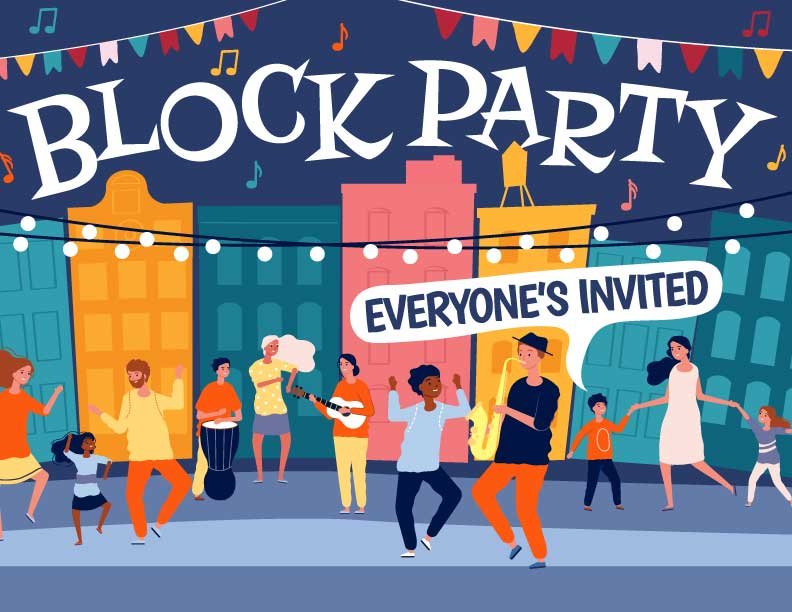
There’s something special about a street full of neighbors actually talking to each other — kids running between houses, grills going, someone’s uncle DJing from a pickup truck. Block parties are community magic, but they don’t happen by accident. Organizing a neighborhood block party takes real planning: permits, logistics, food, activities, and the diplomacy of getting a whole street on board. Here’s the complete guide, from first idea to cleanup.
How to Organize a Neighborhood Block Party: The Master Plan
Phase 1: Build support (2–3 months out)
Gauge interest first. Talk to 5–10 neighbors — if the enthusiasm isn’t there, don’t force it. You need a core group of 3–5 committed organizers; one person can’t do this alone without burning out. Form a planning committee (even an informal one) and divide roles: permits/logistics, food, activities, communications, budget. Create a communication channel — a group text, email list, or neighborhood app group. This becomes your organizing hub.
Phase 2: Permits and logistics (6–8 weeks out)
Street closure permit: most cities require one to close a residential street — apply through your city’s transportation or events department. There’s usually a fee ($25–150) and a lead time of 4–8 weeks. You’ll need signatures from a percentage of residents on the block (typically 60–75%). Check the rules: noise ordinances (when must music stop?), alcohol policies (many cities prohibit open containers even at permitted events — know before you plan), fire lane requirements (emergency vehicle access must be maintained), and insurance (some cities require event liability insurance — often available cheaply through homeowners’ associations).
Barricades: the city often provides them with the permit, or you rent them. Place them at both ends of the closed block with clear signage. Portable toilets: for 50+ people over several hours, rent 1–2 — your neighbors’ bathrooms can’t handle a block party. Power: plan for sound systems, food warmers, lighting — generator rental or borrowed from a contractor neighbor.
Phase 3: Food (the potluck question)
The potluck model works best for block parties: assign categories by house number or street section (even numbers bring sides, odd numbers bring desserts, etc.) to avoid 40 potato salads. The organizers provide: the main protein (grilled burgers/dogs in bulk, or a pig roast if you’re ambitious — my barbecue guide scales up), plus drinks, ice, plates, and utensils (buy in bulk — the per-person cost is tiny). Collect contributions: $10–20 per household covers the shared costs; be transparent about the budget. Dietary needs: ask in advance, label dishes, ensure vegetarian and allergy-friendly options exist.
Phase 4: Activities (all ages, all day)
A block party needs structured fun or it becomes 100 people standing around. The winning formula:
- Kids’ zone: bounce house rental ($150–250, the single best investment), face painting, water games, outdoor games (cornhole, giant Jenga, three-legged races)
- Tournament: cornhole or volleyball bracket with a trophy — gives the day competitive structure
- Live music: a neighbor’s band, a hired local act ($200–500), or a great playlist + speakers. Live music transforms the vibe.
- Community touches: a “meet your neighbor” bingo, a photo booth with props, a talent show (always hilarious), a pie contest
- Evening wind-down: outdoor movie as the sun sets (my backyard movie guide covers the setup) — the perfect end to the day
Phase 5: Promotion (2–4 weeks out)
Flyers in mailboxes, posts in the neighborhood group, a big banner at the block entrance. Include: date, time, what’s provided, what to bring, the schedule of activities, and a contact number. Personally invite the skeptics — the neighbors who “don’t do this kind of thing” often become the biggest fans once they’re there. And invite the whole block, even the grumpy house — exclusion breeds resentment; inclusion builds community.
Day-Of Operations
- Morning setup crew: barricades, tables, chairs, sound system, decorations — 2 hours with 6 people
- Timeline: post a schedule (2 PM setup, 3 PM kickoff, 4 PM tournament, 6 PM dinner, 8 PM movie) so people know what’s happening
- Welcome table: sign-in sheet (great for the neighborhood directory), name tags (seriously — half the point is learning names), schedule handouts
- Designated roles: grill master, DJ/MC, kids’ zone supervisor, cleanup captain — named people, not “someone should…”
- Safety: first aid kit visible, designated sober drivers discussed, kids’ boundaries clear (which streets are open to traffic?)
Budget Reality Check
A solid block party for 50–100 people runs $500–1,500 total — but per household ($10–20 each), it’s the cheapest great day of the year. Biggest costs: bounce house, portable toilets, main food, permits. Offset with: household contributions, local business sponsorships (the pizza place donates pies for a banner — everyone wins), and potluck food. Keep transparent books; post the budget afterward. Trust is the currency of community organizing.
After the Party
Cleanup crew: recruit beforehand (not after, when everyone’s leaving) — 30 minutes with 10 people handles it. Thank-yous: post photos, thank the committee publicly, share the leftover budget accounting. Debrief: what worked, what didn’t — write it down for next year. Make it annual: the first year is the hard one; year two practically organizes itself because the template exists and the community expects it. That’s how traditions are born.
The Practical Takeaway
Organizing a block party = 3–5 committed organizers + permits 6–8 weeks out + potluck food with organizers covering mains + all-ages activities (bounce house, tournament, music, movie) + clear promotion + day-of roles + transparent budget. $10–20 per household for the best day of the year.
Talk to three neighbors this week. That’s how every great block party starts — not with a permit application, but with “wouldn’t it be fun if…”
Block Party for Apartments and Condos
No closed street? No problem — the block party concept adapts. Courtyard or parking lot parties work the same way (check with property management instead of the city for permissions). Rooftop gatherings for smaller buildings. Park pavilion rental — most city parks rent pavilions cheaply ($50–150), with built-in tables, grills, and bathrooms, eliminating half the logistics. The principles don’t change: core organizers, shared food, all-ages activities, clear communication. Apartment communities sometimes have it easier — the management company may handle permits and insurance, and the built-in common areas need less setup. The goal is identical: neighbors who know each other’s names. The venue is just details.
If your block party goals include broader community building, National Night Out organizes annual neighborhood events nationwide with planning toolkits and resources.


