
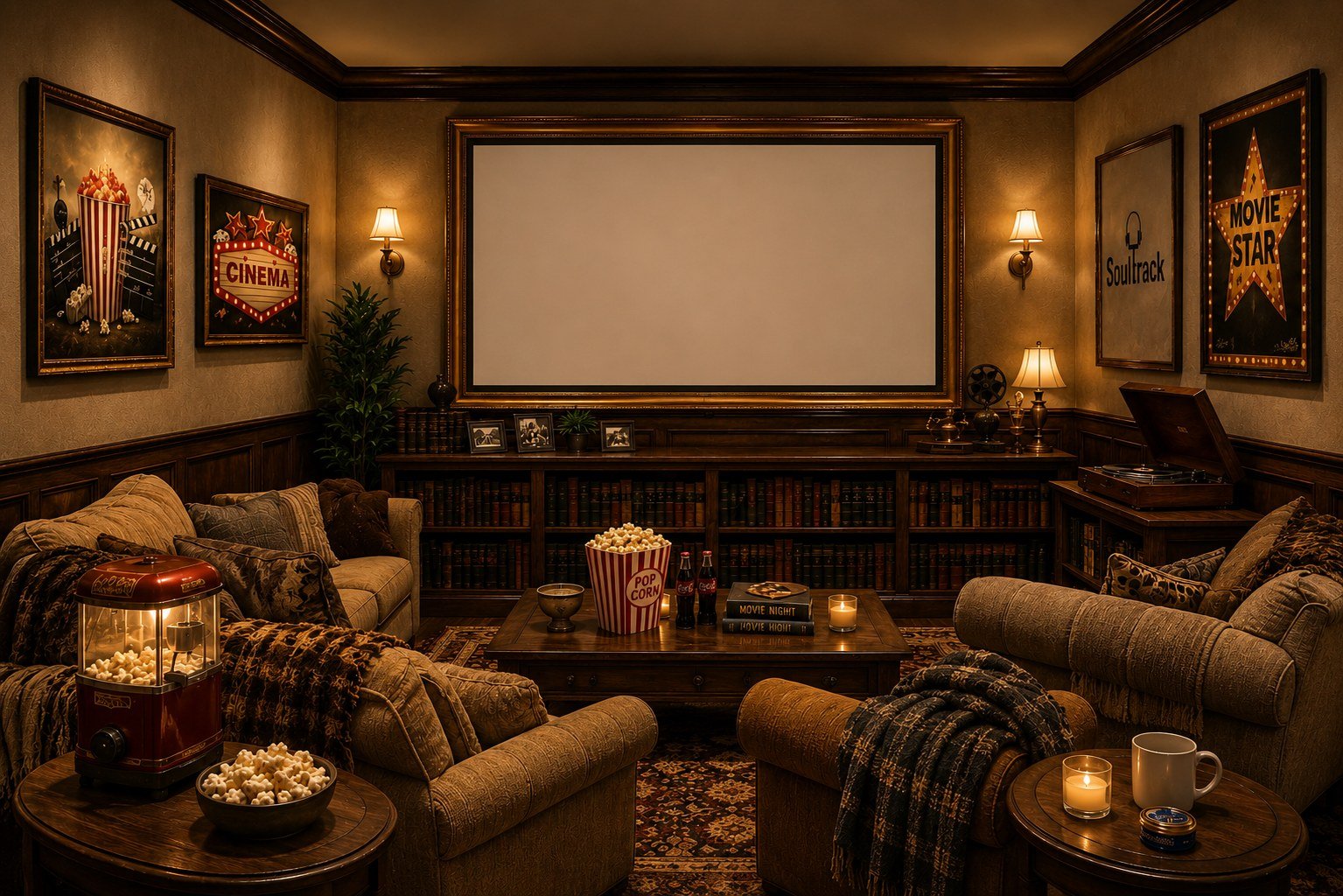
There’s a specific magic to the theater — the dark room, the huge screen, the sound you feel in your chest, the sense that this is an event. And most of it is replicable at home for less than the cost of two theater tickets. Learning how to plan a movie night at home like a theater isn’t about buying a projector (though we’ll get there) — it’s about controlling light, sound, seating, and snacks to transform your living room into a cinema.
How to Plan a Movie Night at Home Like a Theater: The Setup
1. Kill the light
This is the highest-impact, lowest-cost step. Theaters are pitch black, and contrast is what makes a screen feel cinematic. Close blinds and curtains — blackout curtains are a $30 upgrade that transforms daytime viewing. Turn off every light, including the sneaky ones: LED strips, the router’s blinking lights, the microwave clock. If you can’t get fully dark, bias lighting (a soft light strip behind the TV) reduces eye strain and makes the screen pop. But darkness first — it’s free and it matters more than any equipment.
2. Maximize your screen
You don’t need a projector, but size matters. The theater rule of thumb: sit at a distance of roughly 1.5–2.5x your screen’s diagonal. A 55″ TV at 7 feet feels cinematic; the same TV at 15 feet feels like background noise. So either sit closer or go bigger. If you’re projector-curious: a decent 1080p projector runs $300–500, needs a dark room and a blank wall or $50 screen, and delivers a genuine 100″+ image. It’s the single biggest “theater feel” upgrade per dollar — but only if you can control light. In a bright room, a good TV beats a washed-out projector every time.
3. Fix the sound (the secret weapon)
Here’s what most people miss: sound matters more than picture for the theater feel. TV speakers are thin and flat; a $150–200 soundbar with a subwoofer is transformative — suddenly explosions rumble and dialogue is clear. If you want the real thing, a 5.1 surround setup (used receivers are cheap) puts you inside the movie. Even just decent headphones for solo viewing beats TV speakers. Whatever you do, don’t skip this — it’s the difference between watching a movie and experiencing one.
4. Nail the seating
Theaters have one job for seating: comfort for two hours. Replicate it: the couch with good pillows, blankets for everyone (theater-cold is part of the vibe — set the AC a degree cooler), floor cushions or bean bags for kids, and clear sightlines — no craning necks. The “good seat” should face the screen straight-on at roughly eye level. Rearrange the furniture for movie night; it signals that this is an event, not just TV time.
The Snacks (Non-Negotiable)
Theater popcorn at home, done right: stovetop method — 3 tablespoons coconut oil (the theater secret — it’s what gives that distinctive flavor), ½ cup kernels, medium-high heat in a big pot, shake while popping. Melt real butter and drizzle it over, toss with fine salt. It demolishes microwave popcorn so completely you’ll never go back. Beyond popcorn: theater candy boxes (buy the actual boxes — the packaging is nostalgia), nachos with real cheese sauce, hot dogs for the full concession stand, or ice cream for intermission. Set up a little concession area — it takes five minutes and kids lose their minds over it.
The Event Structure
Theaters have rituals, and rituals make things feel special:
- Pick the movie beforehand. Nothing kills the vibe like 40 minutes of scrolling. Vote during the week, decide before movie night.
- Start with trailers. Pull up 2–3 trailers for upcoming movies on YouTube. It sets the theater mood instantly.
- Phones away. Theaters enforce this; you should too. Basket by the door. The movie deserves two hours of attention.
- Intermission for long films. Pause halfway for bathroom and snack refills — it prevents the restless fidgeting that ruins the second half.
- No pausing (mostly). Treat it like a theater: the movie plays straight through. It changes how everyone watches.
Picking the Movie
Some movies are just better as events: big spectacles, comedies (laughter is contagious in a group), horror (safety in numbers), and anything everyone’s been wanting to see. For family picks, my guide to the best family movies for weekends has you covered. For date night, check date night ideas beyond dinner and a movie — a theater-style movie night done elaborately is a great date. And if the weather’s nice, take the whole production outside with my backyard movie night guide.
Budget Tiers
$0: Rearrange the room, kill the lights, stovetop popcorn, phones away. This alone gets you 70% of the way there. ~$50: Add blackout curtains and theater candy. ~$200: Add a soundbar — the biggest single upgrade. ~$500: Projector + screen for the full 100″ experience. Start free; upgrade only what you’ll actually use weekly.
The Practical Takeaway
Theater-like movie night at home = total darkness + biggest screen practical (sit closer!) + real sound (soundbar minimum) + comfortable arranged seating + stovetop popcorn and a concession setup + theater rituals (trailers, phones away, no pausing).
Do the free version this weekend. I promise the stovetop popcorn alone will convert you.
Movie Night for Different Crowds
Date night: go all out — the full setup, a great film you’ve both been meaning to see, intermission dessert, phones in another room. Effort is the romance. My date night ideas guide has more inspiration. With kids: lean into the concession stand, pick the movie together during the week, and don’t stress about perfect silence — joy matters more than theater discipline. Solo: this is self-care, not loneliness — great headphones, your favorite snacks, a film you’ve been saving. With friends: add a post-movie discussion (even five minutes of “what did everyone think?” makes it memorable) or pair with a game night for a full evening. The setup stays the same; only the vibe changes.
For display calibration and honest TV/projector reviews when you’re ready to upgrade, RTINGS tests everything with rigorous, transparent methodology.


