
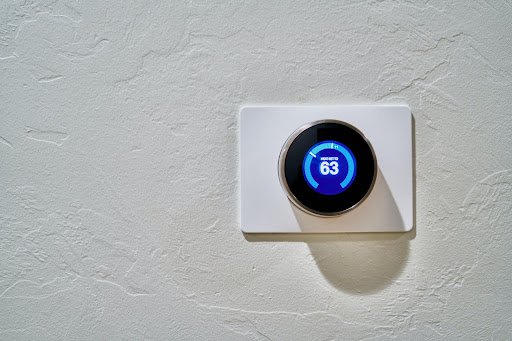
Heating and cooling eats roughly half your home’s energy bill — which makes the thermostat the highest-leverage gadget in the house. But which one actually saves money versus just looking cool on the wall? So what is the best smart thermostat for saving money? After comparing real-world savings data, features, and prices, here’s the honest breakdown: the best pick depends on your HVAC system and how much you want to spend, but the savings are real across the board.
How Much Do Smart Thermostats Actually Save?
Let’s start with the numbers, because marketing claims are… optimistic. Independent studies and manufacturer data converge around: 8–15% savings on heating and cooling, averaging ~$130–$180/year for typical US households. The savings come from three things: automatic setbacks when you’re away/sleeping, learning your schedule so you don’t have to program it, and energy reports that nudge better habits. A $170 thermostat paying back in ~12 months is genuinely good economics — Consumer Reports’ testing broadly supports these savings ranges for top models.
What Is the Best Smart Thermostat for Saving Money? The Top Picks
Best overall: Ecobee Smart Thermostat Premium (~$250)
The efficiency nerd’s choice. The included SmartSensor fixes hot/cold rooms (a huge comfort win that also saves energy — no more overcooling the whole house for one warm room), and Ecobee’s eco+ features aggressively optimize for time-of-use rates. Excellent app, room-by-room sensing with additional sensors. Best for: maximum savings, multi-story homes, time-of-use electricity rates.
Best for simplicity: Google Nest Learning Thermostat (~$280)
Learns your schedule automatically — no programming. Gorgeous hardware, dead-simple interface. Slightly less granular control than Ecobee, but the “set it and forget it” learning is unmatched for people who’ll never program a schedule manually. Best for: people who want savings without thinking about it.
Best budget: Google Nest Thermostat (~$130) or Amazon Smart Thermostat (~$80)
The regular Nest (non-learning) and Amazon’s thermostat deliver 80% of the savings at half the price. Fewer sensors, simpler apps, but the core setback-scheduling works identically. The Amazon model needs a C-wire or adapter — check compatibility. Best for: fastest payback, renters (with landlord permission), simple HVAC systems.
Best for complex systems: Ecobee (again)
Multi-stage, heat pumps with aux heat, humidifiers, ventilators — Ecobee handles complex HVAC configurations better than Nest. If your system isn’t a simple furnace + AC, Ecobee’s compatibility and configurability win.
Compatibility: Check Before Buying
- C-wire: most smart thermostats need a common wire for constant power. No C-wire? Some models include adapters; others (Nest) can sometimes work without one but may have issues. Check your wiring first — it takes 5 minutes.
- System type: conventional forced air, heat pumps, boilers (with caveats), and multi-stage systems all have compatible models — but verify on the manufacturer’s compatibility checker with your specific system.
- Line voltage systems (electric baseboard heaters): standard smart thermostats DON’T work — you need line-voltage models (Mysa, Sinopé). Different product category entirely.
- Proprietary communicating systems: some high-end HVAC uses proprietary protocols — a standard smart thermostat may lose advanced features. Check with your HVAC brand.
Maximizing Savings (The Thermostat Is Only Half the Story)
- Set it and let it work. Constant manual overrides defeat the purpose. Trust the schedule for two weeks before judging.
- Use eco/away modes aggressively. The biggest savings come from setbacks when nobody’s home — 7–10°F for 8+ hours daily.
- Pair with a ceiling fan in summer — raise the cooling setpoint 4°F with no comfort loss.
- Check utility rebates. Many utilities offer $50–$150 rebates on smart thermostats — sometimes making them nearly free. Check your utility’s website before buying.
- Time-of-use optimization: if your utility has peak pricing, Ecobee’s eco+ pre-cools/pre-heats during cheap hours automatically.
- Don’t forget the rest of the efficiency picture — a smart thermostat on a leaky house is lipstick on a pig. Air seal first.
Installation: Easier Than You Think
Most installs take 20–30 minutes: turn off HVAC breaker, photograph existing wiring, label wires, mount new base, connect wires to labeled terminals, attach thermostat, configure in app. The apps walk you through it with wire-by-wire guidance. Low-voltage thermostat wiring is among the safest DIY electrical tasks — but if your system is complex or you’re unsure, an HVAC tech installs them for $100–$200.
Thermostat Placement Mistakes That Cost You Money
The smartest thermostat in the world can’t save money if it’s reading the wrong temperature. Placement errors are shockingly common:
- In direct sunlight. A thermostat in a sunbeam thinks the house is 80°F when it’s 70°F — the AC runs pointlessly. Relocate or shade it.
- Near heat sources. Above a lamp, near the kitchen, by a drafty exterior door — all distort readings. Interior wall, central location, away from vents and windows.
- In a dead hallway. The thermostat should sample the air where you live, not an unused corridor. If relocation isn’t possible, remote sensors (Ecobee’s strength) fix this elegantly.
- Too high or too low. 52–60 inches off the floor — roughly chest height — samples representative air. Near the floor reads cold; near the ceiling reads warm.
- Behind furniture or curtains. Blocked airflow = stale readings. Keep the area around it clear.
The sensor strategy: if your home has persistent hot/cold rooms, remote sensors are transformative — the thermostat averages or prioritizes occupied rooms instead of obsessing over the hallway. Place sensors in bedrooms (prioritize at night) and living areas (prioritize by day); most systems let you schedule which sensors matter when. This single feature often delivers more comfort improvement than the “smart” scheduling itself.
Calibration check: place an accurate thermometer next to the thermostat for an hour. If readings differ by more than 1–2°F, check placement first, then look for a calibration offset in the settings. A thermostat fighting a 4°F placement error wastes energy every single day — the fix is free and takes minutes.
The Practical Takeaway
The best smart thermostat for saving money is the Ecobee Smart Thermostat Premium for maximum savings and complex systems, the Nest Learning Thermostat for effortless automation, or the budget Nest/Amazon models for fastest payback — all save 8–15% on HVAC, paying for themselves in about a year. Check C-wire compatibility before buying, claim your utility rebate, and let the scheduling do its job without constant overrides. It’s the rare gadget that’s both genuinely convenient and genuinely profitable.


