
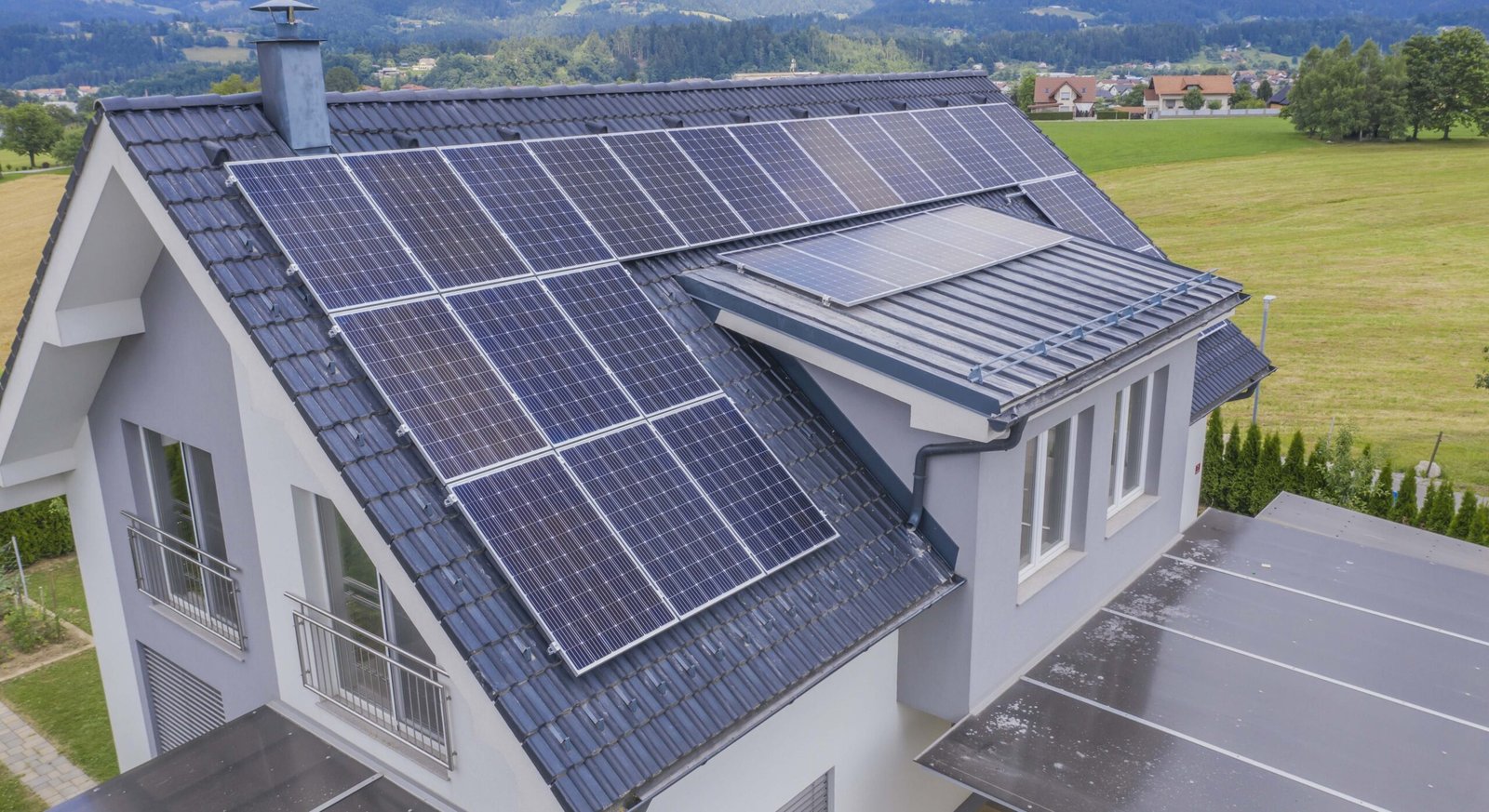
Solar salespeople make it sound like free money. Skeptics call it a scam. The truth, as usual, is in the middle — and it depends entirely on your roof, your location, and your electric bill. So is it worth installing solar panels on my roof? For many American homeowners in 2026, yes — with payback periods of 6–10 years and 25-year panel warranties. But “many” isn’t “all.” Here’s how to figure out if you’re a good candidate.
The Math: What Solar Actually Costs in 2026
- System cost: roughly $2.50–$3.50 per watt installed before incentives. A typical 6kW residential system runs $15,000–$21,000 gross.
- Federal tax credit: the Investment Tax Credit (ITC) — check the current rate at the Department of Energy, as it phases down on a set schedule. At 30%, that’s $4,500–$6,300 off the example system.
- Net cost after federal credit: roughly $10,500–$14,700 for that 6kW system.
- State and local incentives: vary enormously — some states add thousands in credits/rebates, net metering policies differ, and some utilities offer performance payments. Your state’s energy office website has the details.
- Annual savings: a 6kW system in a sunny state produces ~9,000 kWh/year. At $0.17/kWh average, that’s ~$1,500/year off your bill — more where electricity is expensive (California, Northeast), less where it’s cheap.
- Payback period: typically 6–10 years; 25-year equipment warranties mean 15+ years of nearly free electricity after payback.
Is It Worth Installing Solar Panels on My Roof? The Suitability Checklist
Solar is likely worth it if you check most of these boxes:
- High electric bills. $150+/month is the sweet spot — bigger bills mean bigger savings and faster payback. If your bill is $60/month, the math gets thin.
- Good sun exposure. South-facing (or west-facing) roof with minimal shade, 4+ peak sun hours daily. North-facing or heavily shaded roofs kill production. Google’s Project Sunroof gives a free roof assessment.
- Roof in good condition. Panels last 25+ years — if your roof needs replacing in 5, do the roof first (or bundle both; some companies do). Installing $15k of solar on a failing roof is an expensive mistake.
- You own the home (and plan to stay). Solar pays back over years — renters can’t do it, and sellers recoup only part of the cost if they move early (though owned systems do add home value; leased systems can complicate sales).
- Favorable local policies. Full net metering (sell excess at retail rates) dramatically improves economics. Time-of-use rates and demand charges change the math — get quotes that model your utility’s rate structure.
Own vs. Lease vs. PPA: Read This Before Signing
- Buying (cash or loan): you get the tax credit, all the savings, and the home value boost. Solar loans ($0-down options common) let you own with monthly payments often below your current electric bill. Best financial outcome by far.
- Lease/PPA: $0 down, you pay a fixed monthly lease or per-kWh rate lower than utility prices. You save a little with no investment — but the company keeps the tax credit and most of the value, and contracts (20–25 years) can complicate home sales. Fine if you can’t use the tax credit or finance, but ownership wins on economics.
- Never sign at the door. Get 3+ quotes from local installers (not just the national giants). Prices vary 20–30% between companies for identical equipment. Check reviews, years in business, and warranty terms — the installer matters as much as the panels.
The Honest Downsides
- Upfront cost is real even with credits — $10k+ net is a serious purchase.
- Payback takes years. If you might move in 3–4 years, you won’t break even (though owned solar adds ~4% to home value per multiple studies).
- Maintenance is minimal but not zero — occasional cleaning, inverter replacement around year 10–15 ($1,000–$2,000).
- Aesthetics and HOAs. Some HOAs restrict panels (many states limit their power to do so — check your state’s solar access laws).
- Not every roof qualifies — age, angle, shading, and structural capacity all matter. A reputable installer tells you “no” when it’s no; a pushy one doesn’t.
Maximizing the Investment
Pair solar with efficiency first — every dollar of home energy efficiency reduces the system size you need. A smart thermostat, LED lighting, and sealed air leaks might cut your usage 20–30%, meaning a smaller, cheaper solar array covers you. And consider your EV plans — if an electric car is in your future, size the system for it now; adding panels later costs more per watt.
Solar Batteries: Are They Worth Adding?
Panels generate; batteries store. But at $10,000–$15,000 installed for a typical home battery (Tesla Powerwall and competitors), the math is tougher than the panels themselves:
- When batteries make sense: frequent outages (medical devices, work-from-home critical), time-of-use rates with big peak/off-peak spreads (store cheap midday solar, use it during expensive evenings), or no net metering (without it, self-consumed solar is worth far more than exported).
- When they don’t: reliable grid + full net metering + flat rates. The battery’s financial return in this scenario is weak — you’re paying $12k to solve a problem you don’t have.
- The outage reality: a single Powerwall (~13.5 kWh) runs essentials (fridge, lights, wifi, some outlets) for roughly a day, not the whole house indefinitely. Whole-home backup needs multiple batteries. Size for critical loads, not everything.
- Battery lifespan: 10–15 years with degradation — shorter than panels. Factor one replacement into lifetime economics.
- The phased approach: install panels now, add batteries later. Most modern inverters are battery-ready; adding storage in 3–5 years (when prices fall further) is straightforward.
Alternatives to batteries: a portable power station ($500–$2,000) covers short outages for essentials; a small generator ($500–$1,000) covers longer ones with fuel. Neither integrates as elegantly, but both cost a tenth of a whole-home battery. Match the solution to the actual problem: occasional 4-hour outages don’t need $12,000 of batteries.
The broader point stands regardless: reduce consumption first through efficiency upgrades, size solar to the reduced load, then decide about storage with clear eyes. And pair the system with a smart thermostat that can pre-cool or pre-heat during solar production hours — shifting load to match generation is free, and it shrinks the battery you’d need.
The Practical Takeaway
Solar panels are worth it for homeowners with high electric bills, sunny roofs in good condition, and plans to stay put — expect 6–10 year payback and decades of savings after. Buy (don’t lease) if you can use the tax credit, get 3+ local quotes, and do the roof first if it’s aging. Skip it (for now) if your bills are low, your roof is shaded or failing, or you’re moving soon. Run your address through Project Sunroof, get real quotes with your utility’s rates modeled, and let the numbers — not the salesperson — decide.


